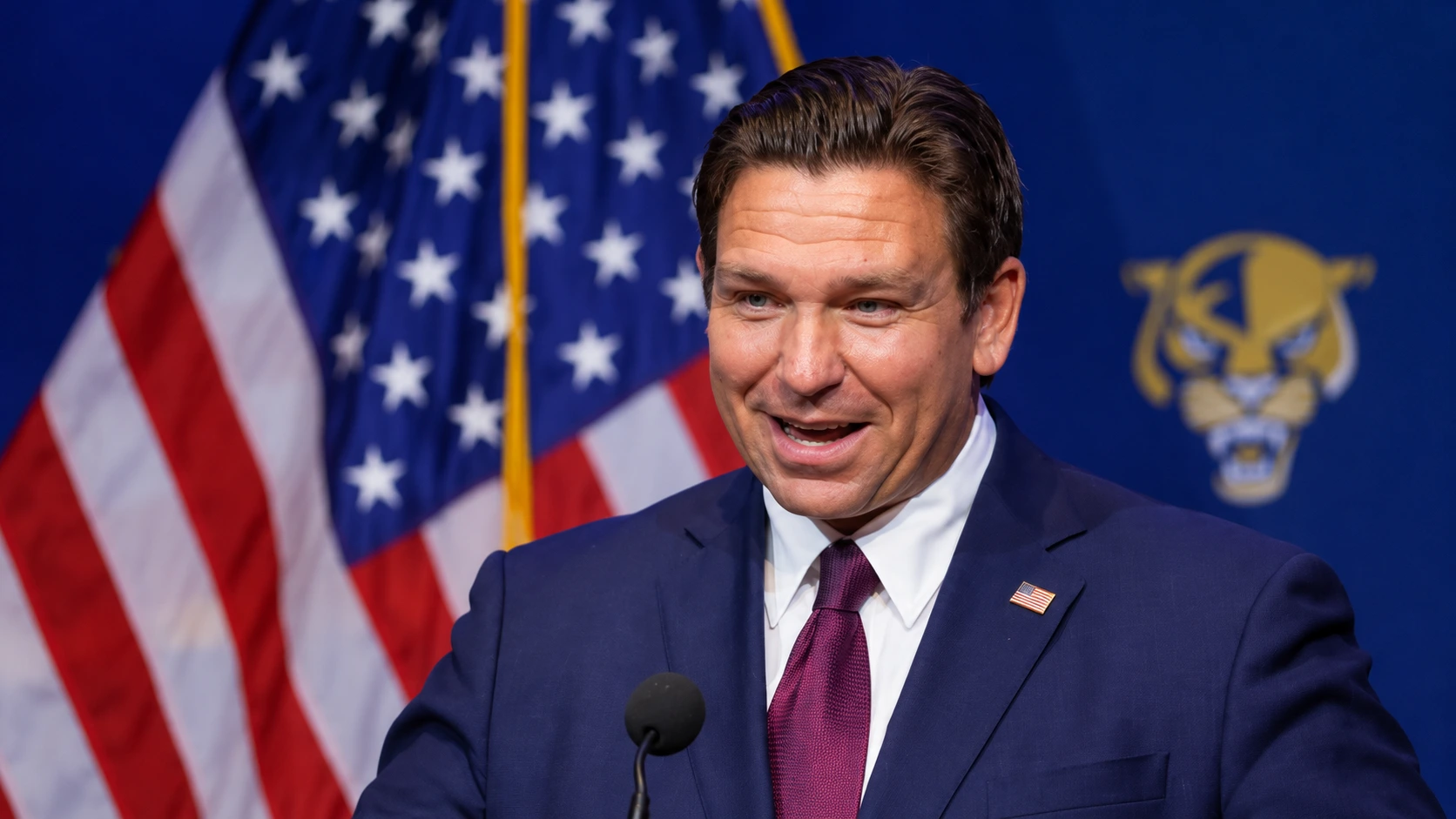
Florida Governor Ron DeSantis secured a major legal victory on October 7, 2026, when the First District Court of Appeal ordered the complete expungement of a grand jury report investigating the Hope Florida Foundation.
The ruling overturned a lower court decision that had already removed most of the report. The appeals court found that the grand jury exceeded its authority by declaring a $10 million payment unlawful while declining to indict anyone. It also found that state officials improperly distributed the confidential report before the people named in it had an opportunity to challenge its publication.
The decision, documented in the court’s October 7 appellate opinion, changes the legal standing of one of Florida’s most contentious political investigations. It does not, however, erase the underlying financial transactions or establish that every decision surrounding them was beyond criticism.
How The Centene Settlement Triggered The Investigation
The controversy began with a dispute involving Centene Corporation, a healthcare company accused of overbilling Florida’s Medicaid program.
In September 2024, the state reached a settlement worth approximately $67 million. Under the agreement, Florida received about $57 million, while a separate $10 million payment went directly from Centene to the Hope Florida Foundation.
The foundation was associated with Hope Florida, an initiative championed by First Lady Casey DeSantis to connect people in need with community services and charitable assistance.
The additional payment attracted scrutiny because the foundation did not retain the money for long. It approved two grants of $5 million each to Secure Florida’s Future and Save Our Society From Drugs. Those organizations subsequently transferred millions to Keep Florida Clean, a political committee opposing Florida’s 2024 recreational marijuana legalization amendment.
CBS Miami’s original reporting on the grand jury findings detailed the movement of funds through these organizations and the questions investigators raised about the stated purposes of the grants.
The financial trail became central to the investigation because it connected a Medicaid-related settlement to political spending during a major ballot campaign.
Why The Grand Jury Report Became A Legal Fight
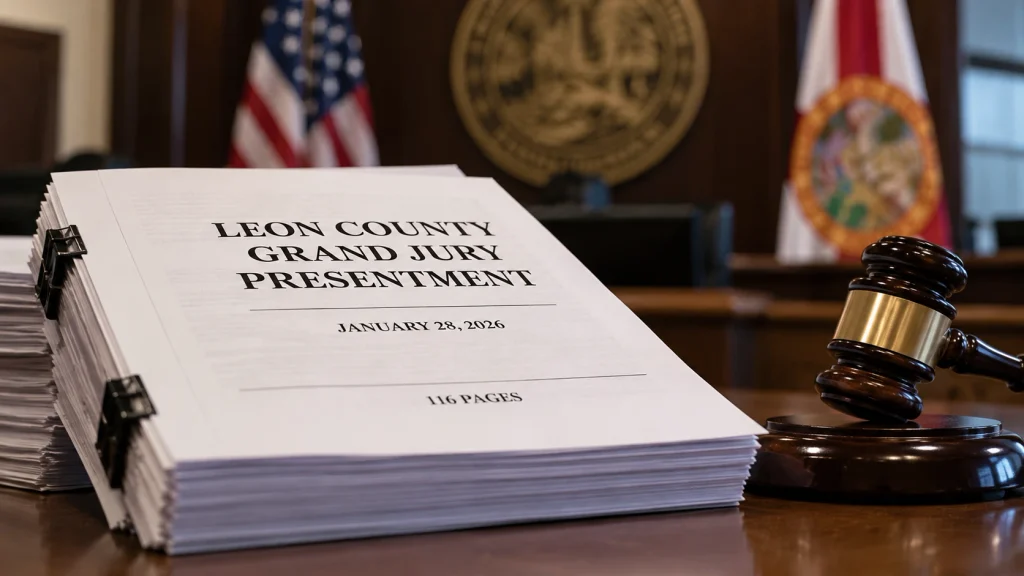
A Leon County grand jury investigated the transaction and issued a 116-page presentment on January 28, 2026. The report characterized the payment as misappropriated money used to support political activities.
Yet the grand jury returned no indictment, stating that the evidence was insufficient to bring criminal charges.
That distinction became central to the legal challenge. A grand jury can investigate public administration and report on matters within its authority, but the appeals court held that it could not declare conduct unlawful and condemn named individuals without indicting them.
The report also faced a separate challenge over confidentiality. Florida law gives people named in certain grand jury reports an opportunity to seek suppression or expungement before publication. The appellate court found that the report had been distributed too broadly before that process was completed.
The case therefore turned on two questions: whether the grand jury had the authority to make its conclusions and whether the state had followed the rules governing confidential reports.
Why The Appeals Court Ordered Full Expungement
In its October 7 opinion, the First District Court of Appeal identified two independent grounds for removing the entire report.
The Money Was Not State Property
The court rejected the grand jury’s central legal conclusion that the $10 million had been misappropriated from Florida.
According to the opinion, Centene paid the money directly to the Hope Florida Foundation. The payment did not reimburse the state for its losses, nor did the funds become state property before reaching the foundation.
The court also noted that Florida law did not prohibit the type of third-party settlement payment at issue. It distinguished the transaction from arrangements involving money that had already become public funds.
This finding matters because the legal restrictions governing state revenue cannot automatically be applied to every payment arising from a dispute involving a government program.
The court’s reasoning did not amount to a general endorsement of every third-party settlement. It addressed the specific payment, the relevant statutes, and the conclusions the grand jury had drawn.
The Grand Jury Exceeded Its Authority
The court also found that the report went beyond a lawful presentation of investigative findings.
Although grand juries can examine public officials’ conduct, the panel described named individuals as participants in a scheme to misappropriate funds while acknowledging that it lacked sufficient evidence to charge anyone.
The court concluded that this combination exceeded the grand jury’s authority. It also found that the report’s improper conclusions could not be removed without fundamentally changing the document.
For that reason, the court directed the lower court to expunge the presentment in its entirety rather than preserve selected passages.
How Florida Law Protects Confidential Grand Jury Reports
The decision relied on Florida Statutes Section 905.28, which governs the publication of grand jury reports that do not result in indictments.
The statute provides protections for people named in such reports and establishes a process through which they can challenge material before public release. The court found that the handling of the Hope Florida report failed to respect those protections.
The opinion also criticized the state’s distribution of the confidential document through mass emails to dozens of recipients, including people who had no role in the proceedings.
This part of the ruling has significance beyond the Hope Florida investigation. It reinforces that public interest in an investigation does not remove the legal obligations attached to confidential grand jury material.
DeSantis Calls The Decision A Major Victory
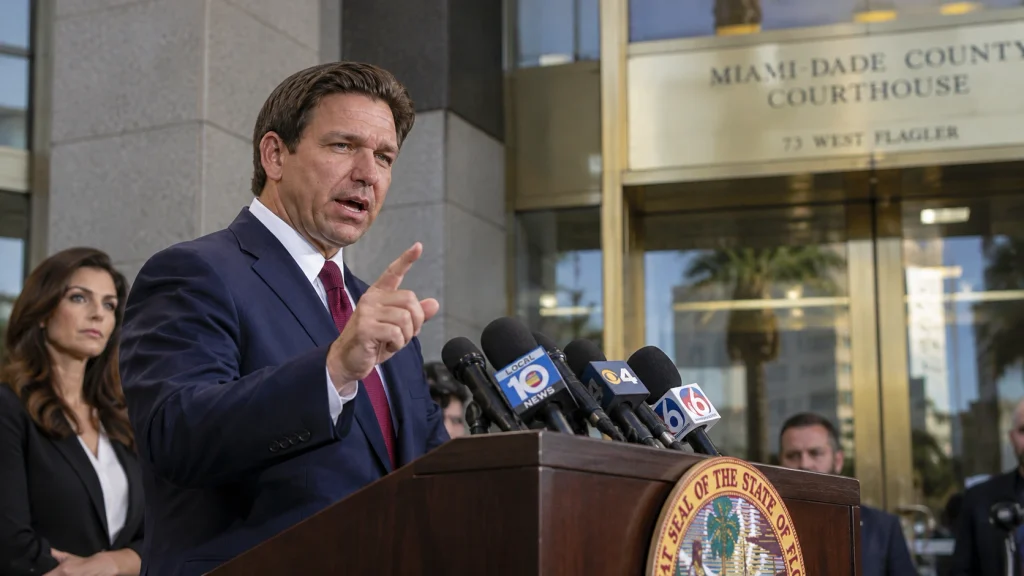
DeSantis welcomed the ruling and described it as a sweeping judicial rebuke of the investigation. His response framed the decision as confirmation that the allegation of misappropriation had no legal basis.
The ruling gives his administration a strong legal answer to the grand jury’s central accusation. It also removes the report as an official court document.
However, the court did not conduct a criminal trial, because the grand jury had returned no indictments. Nor did expungement automatically eliminate financial records, settlement documents, or other independently available evidence concerning the transfers.
The legal outcome should therefore be distinguished from the political debate. The court rejected the report’s legal conclusions and found its publication unlawful. Broader questions about the transparency of the settlement and the governance of the foundation remain separate from that determination.
What The Hope Florida Ruling Means
The immediate consequence is that the grand jury presentment must be removed in full from the relevant court record. The decision also reverses related orders requiring the state attorney to notify outside parties about the appeal.
For legal observers, the case illustrates the limits of grand jury authority and the importance of distinguishing investigative concerns from established legal findings.
For government agencies, it highlights the need to document settlement decisions clearly, identify the legal status of funds, and comply with statutory requirements before releasing confidential investigative material.
For the public, the case demonstrates why a grand jury report should not be treated as equivalent to a conviction or a judicial finding of criminal liability.
The appeals court has resolved the legal status of the report. The larger debate over how government-related settlements should be handled, and how public officials can be held accountable within the law, is a separate question.