
More than three years after Alexee Trevizo was charged following the death of her newborn son, her criminal case has reached a significant turning point.
On July 30, 2026, the New Mexico Supreme Court unanimously upheld a lower court’s decision that Trevizo did not voluntarily waive her physician-patient privilege during a hospital encounter. The court therefore left in place the suppression of evidence obtained through those protected communications.
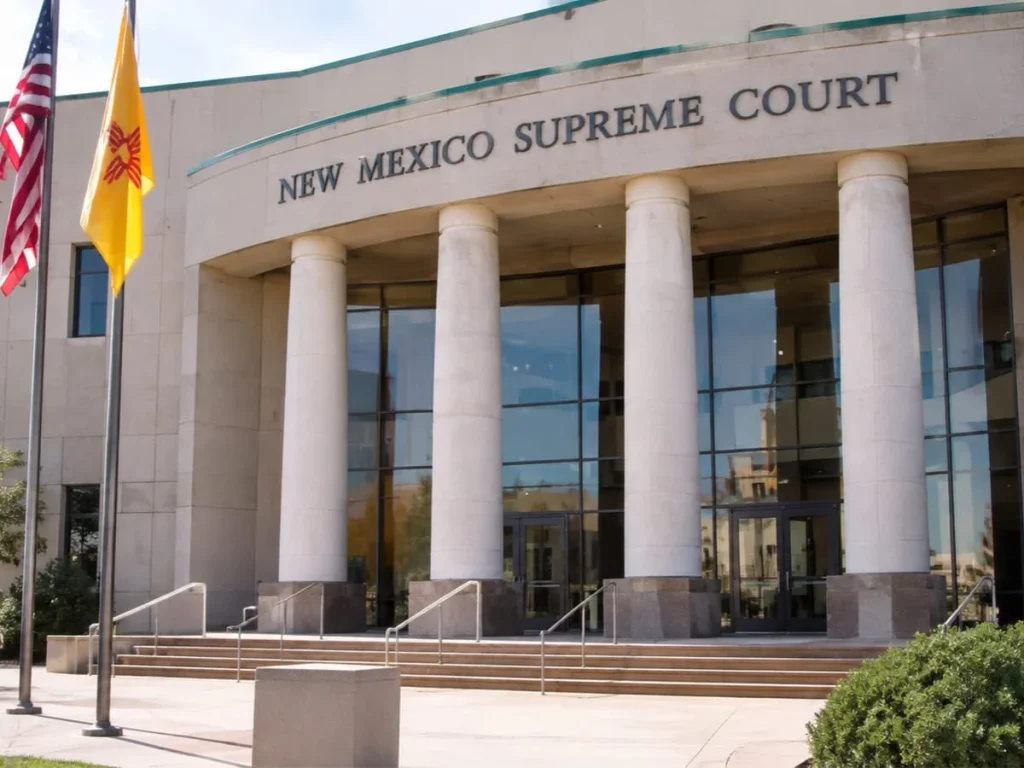
The decision resolves a major appellate fight over what prosecutors can present in court. It does not resolve the underlying murder prosecution.
The case now moves back to the Fifth Judicial District Court, where the parties must determine how the prosecution will proceed under the Supreme Court’s ruling.
What the New Mexico Supreme Court Decided
The case, State v. Trevizo, No. S-1-SC-40478, reached the state’s highest court as an interlocutory criminal appeal from Eddy County. The State challenged the district court’s decision to suppress evidence based on physician-patient privilege.
At issue was what happened when Trevizo was being treated at Artesia General Hospital after arriving with severe lower-back pain.
The State argued that she had waived the privilege because her mother and police officers were present when she spoke with medical personnel.
The Supreme Court rejected that argument after examining the circumstances of the encounter. The justices considered Trevizo’s medical condition, recent childbirth, blood loss and medication, along with the fact that she was not given an opportunity to exclude others before her medical condition was discussed in the room.
The court concluded that the circumstances did not establish a voluntary waiver.
The decision also addressed New Mexico’s mandatory-reporting exception. The court did not interpret that exception as allowing all communications between a patient and medical providers to become evidence simply because a report to authorities was required, according to the New Mexico Supreme Court’s July 30, 2026 release.
How a Hospital Visit Became the Center of the Legal Fight
The case began in the early hours of January 27, 2023, when 19-year-old Trevizo went to Artesia General Hospital with her mother because of severe lower-back pain.
According to the Supreme Court’s summary of the record, she told the emergency-room physician she was not pregnant. Medical testing was ordered, and she received intravenous medication, including morphine.
The court’s account says Trevizo was later informed that she was pregnant while police were already present in the hospital room.
A little more than an hour after treatment began, she asked to use a bathroom. The body of a newborn was later discovered there by hospital staff after blood was found in the bathroom and hallway. Police were notified, and the doctor arranged for Trevizo to be transferred to another hospital because of her condition and severe bleeding following childbirth.
Police then became involved in the hospital-room encounter that would eventually become the center of the evidentiary dispute.
According to the Supreme Court’s account, the doctor entered Trevizo’s room with two officers after speaking with police. The doctor informed Trevizo and her mother that a dead newborn had been found. Trevizo responded with statements about the baby and what she had done in the bathroom.
Those statements, along with recordings and other evidence connected to the encounter, later became the subject of the suppression litigation.
What Evidence Is Now Off Limits?
The Supreme Court affirmed the lower court’s suppression of evidence protected by physician-patient privilege.
That includes the protected communications between Trevizo and medical personnel that were at issue in the appeal. Related recordings from the hospital encounter have also been described in coverage of the ruling as being affected by the suppression order.
The distinction is important because the ruling does not erase the entire investigation.
Evidence must still be evaluated individually to determine whether it falls within the privilege or can otherwise be admitted under the rules of evidence.
That leaves prosecutors with a different evidentiary landscape than the one they had before the appeal.
Why Did the Case Stall for So Long?
The suppression ruling became a major procedural roadblock because the State challenged it instead of proceeding directly toward trial.
A jury trial had been scheduled for August 26, 2024. That date was removed from the docket after the State appealed the suppression decision to the New Mexico Supreme Court.
The Supreme Court classified the matter as an interlocutory criminal appeal. Its records show the case was submitted for consideration after oral arguments on September 4, 2025.
The justices did not issue their decision until July 30, 2026.
That appellate process effectively kept the central evidentiary question unresolved for nearly two years after the scheduled 2024 trial date disappeared.
What Charges Does Alexee Trevizo Face?
Trevizo was arrested on May 10, 2023, after an investigation into the newborn’s death.
She was charged with first-degree murder and tampering with evidence and pleaded not guilty.
She was released from custody on a $100,000 unsecured bond. Contemporary reporting said her release conditions included a 7 a.m. to 7 p.m. curfew, counseling and permission to attend school. She was not placed under house arrest or required to wear an ankle monitor.
The criminal case has not reached a verdict.
That is why Trevizo remains a defendant awaiting further proceedings rather than a person serving a sentence.
What Does the Medical Evidence Say About the Newborn?
The circumstances of the baby’s death remain one of the central factual issues in the criminal case.
Trevizo’s defense has maintained that she did not know she was pregnant and that the baby was stillborn.
Prosecutors have disputed that account.
Previous reporting on the case said an autopsy found evidence that the infant had breathed, including air in the lungs and stomach. The medical examiner classified the death as a homicide and found the findings inconsistent with a stillbirth, according to reporting from the case.
The defense has challenged the prosecution’s interpretation of what happened and has also pointed to the medication Trevizo received at the hospital.
Those competing accounts remain part of the broader criminal case. The Supreme Court’s July ruling did not determine which account is correct.
Why Is Trevizo’s Lawyer Also Suing the Hospital?
The same events have produced a separate civil lawsuit against Artesia General Hospital and medical personnel.
Trevizo’s legal team alleges that medical negligence and the treatment she received contributed to the baby’s death. Her attorney has specifically argued that medication administered at the hospital and the way her condition was handled played a role.
Those allegations are claims in a civil proceeding, not findings by a court that the hospital caused the death.
The civil lawsuit and criminal prosecution therefore present two different legal questions.
The criminal case concerns Trevizo’s alleged conduct and whether prosecutors can prove the charged offenses. The civil case concerns alleged negligence and potential liability on the part of the hospital and medical providers.
Can Prosecutors Still Prove the Case?
That question remains open.
The Supreme Court did not review the entire body of evidence against Trevizo and did not decide whether the remaining admissible evidence is enough to establish the murder and evidence-tampering charges beyond a reasonable doubt.
The State had argued for the admission of the disputed hospital evidence, while the defense has maintained that the suppressed material was critical to the prosecution.
After the district court’s 2024 suppression ruling, Trevizo’s attorney told KOAT that he believed the State did not have a case without the excluded medical records and statements. That was the defense’s argument, rather than a finding by the court about the ultimate strength of the prosecution.
The prosecution must now decide how to proceed using evidence that survives the Supreme Court’s ruling.
What Happens Next?
The case returns to the Fifth Judicial District Court now that the Supreme Court has resolved the privilege appeal.
The next proceedings could address the admissible evidence, scheduling and other pretrial matters.
No new jury trial date has been publicly confirmed in the reliable sources reviewed for this update.
The State could continue toward trial, seek additional rulings on evidentiary questions or pursue another legally available resolution. The defense will have an opportunity to challenge whatever evidence prosecutors intend to rely on.
For now, the most important change is clear: evidence from the hospital encounter that falls within the physician-patient privilege cannot be used in the prosecution as the Supreme Court has ruled.
The question that remains is what the prosecution’s case looks like without it.
As of August 2026, Trevizo remains out of custody on pretrial release, the criminal charges remain unresolved and the case is awaiting its next move in district court.