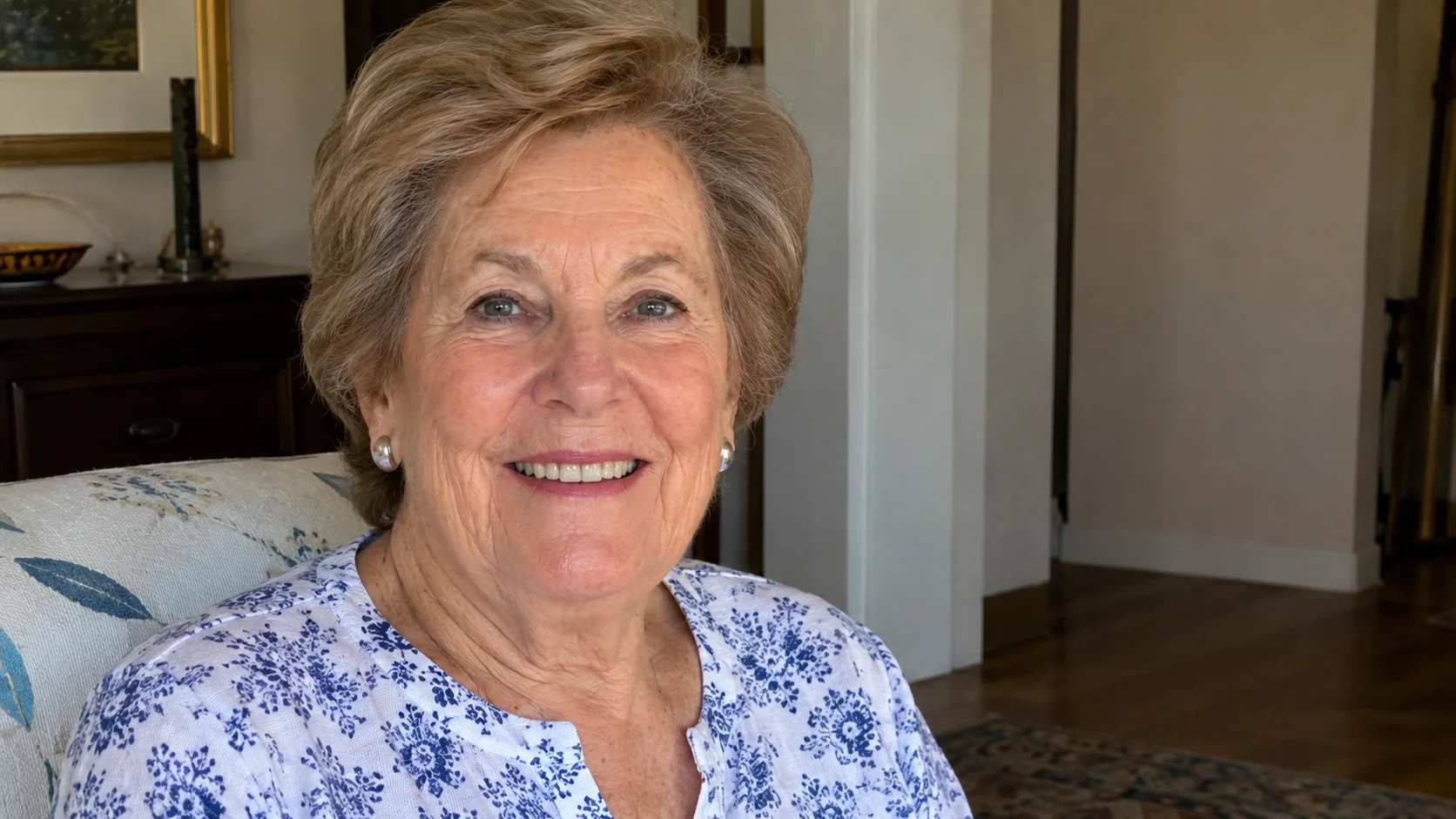
More than eight months after 84-year-old Nancy Guthrie disappeared from her home near Tucson, Arizona, investigators are still searching for answers. Pima County Sheriff Chris Nanos has expressed confidence that authorities will eventually solve the case, but no suspect has been publicly charged with her abduction as of October 9, 2026.
The investigation has involved surveillance footage, complex DNA testing, ransom communications and thousands of investigative leads. Some developments have helped clarify the circumstances surrounding the disappearance, while others have generated speculation without producing a confirmed breakthrough.
In late September, authorities dismissed a new ransom-related message as not credible. Earlier developments included the release of purported ransom notes, a federal prosecution involving a fake ransom demand, and the discovery of human remains that authorities had not linked to Guthrie.
How Nancy Guthrie Disappeared
Nancy Guthrie is the mother of Savannah Guthrie, co-anchor of NBC’s Today show. She lived in the Catalina Foothills area outside Tucson, Arizona.
Guthrie was last seen on January 31, 2026, after spending the evening with family members. The following morning, relatives became concerned when she failed to attend a scheduled virtual church service. They went to her home and contacted authorities.
Investigators subsequently treated the disappearance as an abduction.
Surveillance footage recovered during the investigation showed a masked individual near the residence. The person appeared to be wearing gloves and carrying a backpack. Authorities released images in the hope that members of the public might recognize the individual or provide information about a vehicle or other relevant activity.
The footage became one of the investigation’s most significant public leads. However, authorities have not publicly identified the person shown in the images or established how many individuals may have been involved.
What the Sheriff Has Said About an Arrest
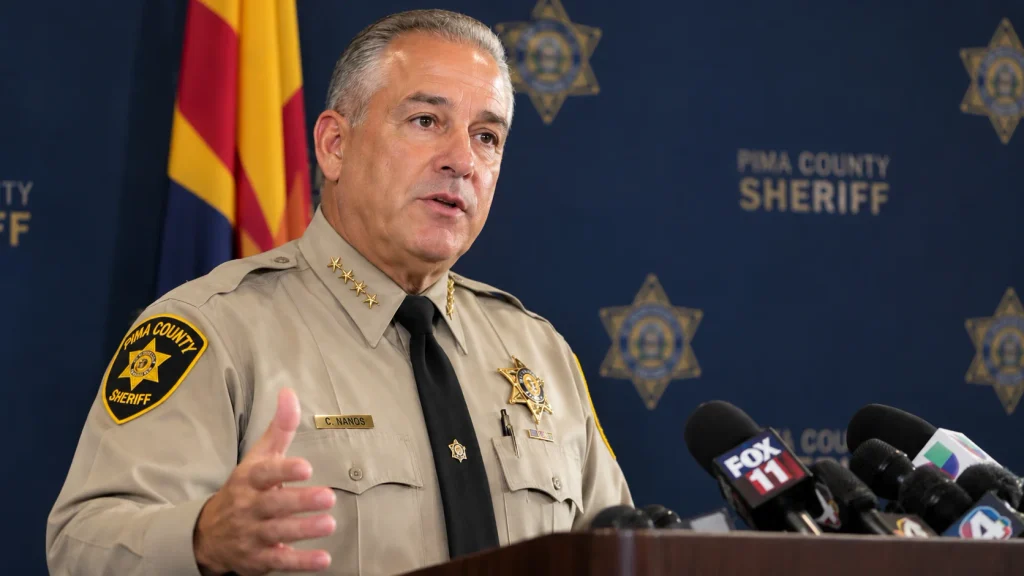
Sheriff Chris Nanos has maintained that investigators are working toward a resolution.
In May, approximately 100 days after Guthrie disappeared, Nanos said he believed an arrest would eventually be made. He did not provide a specific date or announce that investigators had identified a suspect.
His comments reflected confidence in the investigation rather than confirmation that an arrest was imminent.
That distinction is important. Detectives may develop a strong theory about a crime while continuing to collect the evidence needed to establish probable cause against a particular individual.
An arrest also does not guarantee a conviction. Prosecutors must ultimately prove the defendant’s guilt beyond a reasonable doubt if the case proceeds to trial.
The sheriff’s public statements therefore provide an indication of his confidence, but they do not establish how close investigators are to identifying the person responsible.
DNA and Surveillance Evidence
Forensic analysis has been a major component of the investigation.
Investigators recovered biological material from Guthrie’s residence and submitted samples for testing. Some samples have presented technical difficulties because they may contain genetic material from multiple individuals.
Mixed DNA can be challenging to interpret. Laboratories must determine which genetic markers belong to different contributors and whether the resulting profiles are sufficiently reliable for comparison.
Investigators have also discussed familial DNA genealogy as a possible investigative tool. This method can sometimes help identify potential relatives of an unknown contributor, creating new leads for detectives. Any resulting connection must be independently verified before it can support an accusation.
For general background, the National Institute of Justice’s DNA evidence resources explain how forensic DNA analysis can assist criminal investigations.
Reconstructing the Suspect’s Movements
Surveillance footage offers another avenue.
Investigators can compare the masked individual’s appearance with recordings from nearby properties, businesses and roads. A sequence of recordings may help establish the person’s movements before and after the disappearance.
Digital evidence can also provide information about communications, electronic accounts and possible connections between individuals.
The challenge is to establish a reliable chain of evidence. A person resembling the individual in a recording, or a DNA profile that raises a question, does not independently prove involvement in a kidnapping.
Authorities have not publicly announced a DNA match or surveillance identification that establishes the identity of Guthrie’s alleged abductor.
Ransom Messages and the Fake Demand Prosecution
Ransom communications have generated several developments, but investigators have had to distinguish potentially relevant information from fraudulent claims.
In July, authorities released two purported ransom notes that had been sent to a Tucson television station in February. One demanded millions of dollars in cryptocurrency, while the other claimed Guthrie had died after being taken.
The messages offered conflicting accounts of her fate. Investigators have not publicly established that the claims in either message were true.
According to CBS News’ coverage of the ransom communications, the release was intended to encourage anyone who recognized the wording or possessed relevant information to contact authorities.
The September Message
On September 28, another possible ransom communication came to the attention of authorities. After examining it, the Pima County Sheriff’s Department and FBI determined that the message was not credible.
Officials warned the public about people attempting to exploit the case for money or attention.
This episode reinforced the need to authenticate each communication rather than assume that every ransom demand came from the person responsible for the disappearance.
Derrick Callella’s Federal Case
A separate prosecution involved Derrick Anthony Callella, a California man who sent false ransom-related communications to members of Guthrie’s family.
According to the U.S. Department of Justice, Callella pleaded guilty to two counts of harassment using a telecommunications device. His prosecution concerned those communications, not the kidnapping itself.
The case illustrates how people can commit separate crimes by exploiting the distress of a missing person’s family. It does not establish that Callella participated in Guthrie’s abduction.
Human Remains Found Near Tucson
In August, authorities reported the discovery of human remains in a desert area near West Ajo Way and South La Cholla Boulevard in Tucson.
Because the location was approximately 15 miles from Guthrie’s residence, the discovery prompted questions about a possible connection.
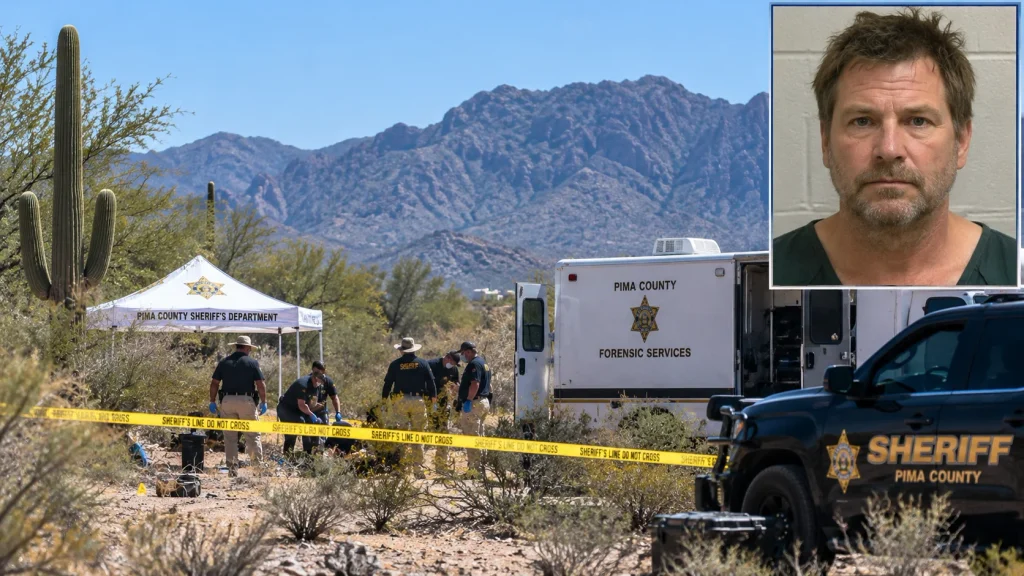
Authorities said there was no indication at the time that the remains were related to her disappearance. No public announcement has established that they belonged to Guthrie.
The discovery should therefore be treated as a separate event unless investigators provide evidence linking it to the case.
Luke Daley’s Arrest Was Unrelated
Luke Daley, who had previously been detained during the investigation, was booked into the Pima County Adult Detention Complex on September 30.
The sheriff’s department stated that this booking was unrelated to Guthrie’s disappearance. Daley had previously been released without charges connected to the abduction, and his attorney denied his involvement.
His later arrest should not be interpreted as a breakthrough in the kidnapping investigation. An arrest for an unrelated matter does not establish that a person committed another crime.
What Arizona Law Requires for a Kidnapping Case
The investigation’s legal framework helps explain why identifying a suspect and establishing the necessary evidence are separate challenges.
Under Arizona Revised Statutes § 13-1304, kidnapping involves knowingly restraining another person with specified criminal intent. The statute includes holding someone for ransom, inflicting physical injury and certain other unlawful purposes.
If evidence establishes that Guthrie was restrained and taken for ransom, the circumstances could fall within the statute. Prosecutors would still need to establish the relevant facts and connect the alleged conduct to a defendant.
Probable Cause and Criminal Charges
An arrest warrant generally requires probable cause, meaning a reasonable factual basis to believe that a particular person committed an offense. This standard is lower than the proof beyond a reasonable doubt required for a criminal conviction.
Arizona’s criminal procedure framework governs arrest warrants and subsequent court proceedings. The Arizona Judicial Branch’s guide to criminal cases explains the stages that may follow an arrest, including initial appearances, charging procedures and later hearings.
If an arrest occurs, investigators and prosecutors will need to ensure that the evidence supports the charges and can withstand legal scrutiny.
Could Federal Law Apply?
Federal jurisdiction may also be relevant. Under 18 U.S.C. § 1201, federal kidnapping law covers specified circumstances involving interstate or foreign commerce and other jurisdictional conditions.
The FBI’s involvement does not establish which federal charges, if any, prosecutors might pursue. That decision would depend on the evidence, the applicable jurisdictional requirements and the findings of investigators.
What Could Lead to a Breakthrough?
Investigators have several avenues available, including forensic comparisons, surveillance analysis, witness information and examination of electronic communications.
A breakthrough could come from a DNA match, a recording that helps identify a vehicle, a witness who recognizes the masked individual or evidence connecting a person to the ransom communications.
These are possibilities, not confirmed developments. Authorities have not publicly disclosed a definitive identification of the alleged abductor.
The family and investigators have continued to seek information from the public. Anyone with credible evidence should contact the investigating agency rather than circulate unverified accusations online.
What Comes Next in the Nancy Guthrie Case?
The investigation remains unresolved, with the identity of the alleged abductor and Guthrie’s whereabouts still unknown.
Sheriff Nanos has expressed confidence that investigators will eventually make an arrest, but the publicly available developments do not establish that one is imminent. The forensic evidence, surveillance footage and other investigative leads will need to be connected to a particular individual before authorities can bring a case forward.
For Guthrie’s family, the priority remains finding out what happened to her. For investigators, the task is to turn the available information into reliable evidence that can establish responsibility and withstand scrutiny in court.
Until authorities announce a verified breakthrough, the case remains an active investigation rather than a solved crime.