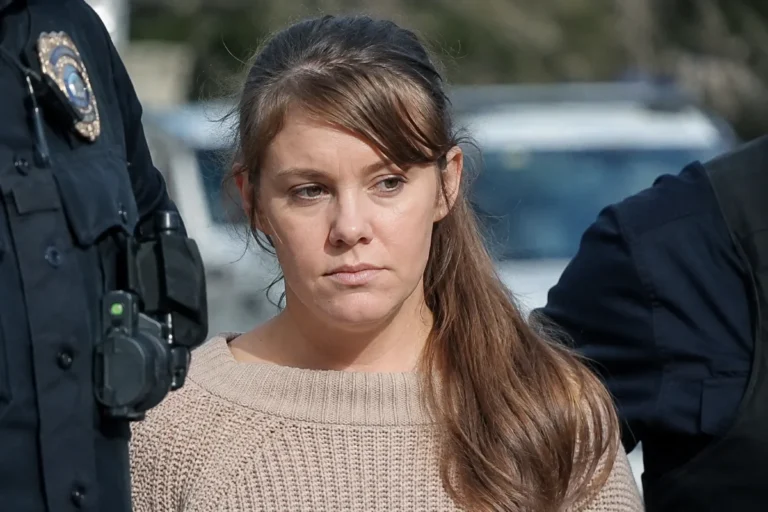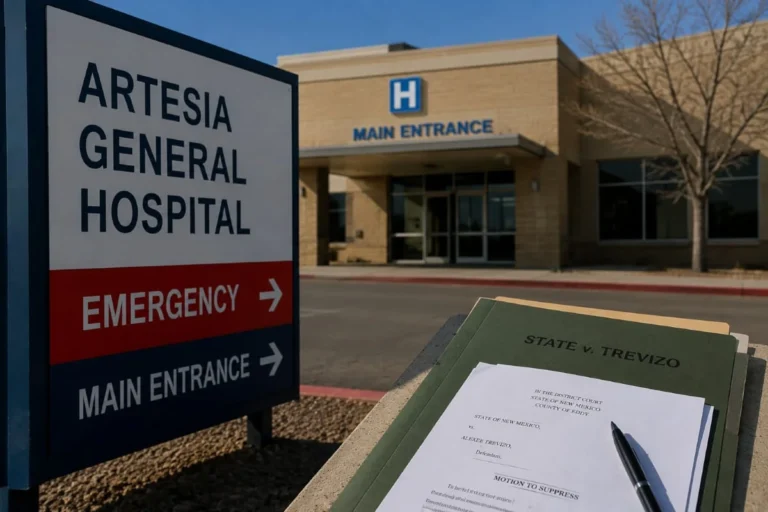

Alexee Trevizo is facing criminal charges over the death of her newborn son, but she is not the only party facing legal action connected to what happened at Artesia General Hospital.
A separate wrongful death lawsuit alleges that the hospital, its emergency-room staff and treating physician failed to provide appropriate medical care before Trevizo gave birth alone in a hospital bathroom.
The central allegation is not simply that a tragedy occurred inside the hospital. The lawsuit argues that medical decisions made during Trevizo’s treatment, including the administration of medication and the response after a pregnancy test came back positive, may have contributed to the death of the newborn.
The civil case was filed on behalf of the estate of Alex Ray Fierro, the newborn who died on January 27, 2023. The wrongful death lawsuit against Artesia General Hospital has placed the hospital’s actions under separate legal scrutiny.
None of those allegations have been proven in court. The lawsuit presents the plaintiff’s theory of what happened and seeks to establish whether the defendants can be held civilly liable.
The Hospital Lawsuit and the Criminal Case Follow Different Legal Paths
The criminal prosecution focuses on allegations against Trevizo, who was charged with first-degree murder and tampering with evidence after the newborn was found dead in a trash can inside the hospital.
The wrongful death lawsuit focuses instead on the care Trevizo received before and during the events surrounding the birth.
That means the two cases can involve many of the same facts while asking different legal questions.
In the criminal case, prosecutors must prove the charges against Trevizo beyond a reasonable doubt. The civil lawsuit examines whether alleged negligence by the hospital and medical providers contributed to the baby’s death.
A ruling in one case does not automatically determine the outcome of the other.
What Does the Lawsuit Say Happened at Artesia General Hospital?
The civil complaint provides a detailed timeline of the hours leading up to the baby’s death.
According to the allegations, Trevizo arrived at Artesia General Hospital at approximately 11:47 p.m. on January 26, 2023, complaining of severe lower-back and abdominal pain.
She was seen in the emergency department shortly after midnight and reported that her pain was severe. She denied being pregnant and told medical staff that she was on her period.

According to the complaint, Trevizo first received cyclobenzaprine and acetaminophen at approximately 12:18 a.m. About 10 minutes later, she was given intravenous fluids along with ketorolac, ondansetron and morphine.
A blood pregnancy test was collected shortly afterward.
The complaint states that the positive result was reported to hospital staff at approximately 12:51 a.m. The lawsuit alleges that the medications, including morphine, were not immediately stopped after staff learned Trevizo was pregnant.
At approximately 1:39 a.m., according to the complaint, Trevizo went to the bathroom after her IV was removed.
Her mother checked on her more than once, and hospital staff later checked on her as well. Trevizo left the bathroom at approximately 1:57 a.m.
The complaint alleges that she gave birth without medical assistance while inside.
At approximately 2:38 a.m., the newborn, Alex Ray Fierro, was pronounced dead.
The lawsuit uses that sequence of events to support its broader allegations of failures in assessment, diagnosis, monitoring and treatment. The first amended wrongful death complaint identifies Arthur Bustos as the wrongful death personal representative of the estate and names the Artesia Special Hospital District, doing business as Artesia General Hospital, Dr. Heather Marshall Vaskas and other defendants.
Because these details come from the civil complaint, they remain allegations that must be proven through the legal process.
Why Does the Lawsuit Focus on Morphine and Other Medication?
Medication is one of the most closely watched parts of the wrongful death case.
The lawsuit alleges that Trevizo received several medications before hospital staff learned she was pregnant and that some of the medications carried warnings concerning use during pregnancy.
The complaint further alleges that treatment continued after the positive pregnancy test was reported.
Gary Mitchell, Trevizo’s attorney and an attorney involved in the wrongful death case, has argued that experts consulted by the plaintiff concluded that the hospital’s treatment and medication played a direct role in the baby’s death.
In a 2024 interview, Mitchell specifically pointed to morphine and what he described as failures in the hospital’s care. Gary Mitchell’s account of the medication and negligence allegations presents the plaintiff’s position that the newborn did not have a realistic chance of survival because of the alleged medical negligence.
That conclusion remains disputed.
The existence of morphine in the medical timeline does not, by itself, establish that the medication caused the baby’s death. Establishing causation is one of the issues the civil litigation would have to address.
The Lawsuit Also Questions How the Hospital Responded After the Pregnancy Test
The medication allegations are only one part of the case.
The lawsuit also argues that hospital staff should have responded differently once Trevizo’s pregnancy was confirmed.
According to the complaint, Trevizo had arrived with severe pain and symptoms that, the plaintiff alleges, should have led medical providers to consider pregnancy and the possibility that she was in labor.
The lawsuit claims that hospital staff failed to properly assess and monitor her after receiving the positive test result.
It also challenges the decision to allow Trevizo to go to the bathroom without assistance despite the pregnancy result and the medication she had received.
The plaintiff’s theory is that proper monitoring and intervention could have changed the outcome.
The hospital and medical providers are entitled to challenge those allegations, including the claim that any alleged failure was a legal cause of the newborn’s death.
What Did the Autopsy Find?
The autopsy findings are central to understanding why the medical issues are so heavily disputed.
Previous reporting has stated that the medical examiner found evidence indicating that the newborn had breathed after birth, including air in the lungs and stomach.
The reported cause of death was entrapment, and the manner of death was classified as homicide.
The medical findings have been important to the prosecution’s theory that the baby was born alive.
The defense, however, has disputed the interpretation of what happened and has raised questions about the role of the medication Trevizo received during treatment.
The Supreme Court’s 2026 opinion also describes the medical and hospital timeline surrounding Trevizo’s treatment and childbirth, including the medications administered before the birth. The New Mexico Supreme Court’s opinion in State v. Trevizo provides the court’s account of the underlying events relevant to the physician-patient privilege dispute.
The autopsy evidence and the competing medical interpretations are separate from the question of whether the hospital committed negligence.
Who Filed the Wrongful Death Lawsuit and Who Is Being Sued?
The lawsuit was filed by Arthur Bustos as the wrongful death personal representative of the estate of Alex Ray Fierro.
The named defendants include the Artesia Special Hospital District, which does business as Artesia General Hospital, as well as Dr. Heather Marshall Vaskas and other defendants identified in the complaint.
The lawsuit seeks to hold the defendants responsible for alleged failures in Trevizo’s care and for their alleged role in the death of the newborn.
The complaint includes claims involving alleged negligence, medical treatment and other actions connected to the hospital’s handling of Trevizo’s emergency-room visit.
The case places the conduct of the hospital and its providers directly under examination, but naming a defendant does not establish liability.
What Is the Current Status of the Civil Case?
The wrongful death lawsuit remains separate from the criminal prosecution and, based on the latest reliable public reporting reviewed for this article, no final public resolution has been established.
The civil defendants have the right to contest the allegations and challenge whether the plaintiff can prove negligence, causation and damages.
That distinction is especially important because some of the most widely discussed claims in the case, including the alleged role of morphine, come from the plaintiff’s legal and expert theory rather than a final court finding.
Until the civil case reaches a settlement, dismissal, judgment or another final resolution, the allegations against the hospital and its medical providers remain contested.
The Civil Rights and Medical Privacy Dispute Adds Another Layer
The hospital encounter also produced a separate dispute over medical privacy.
The wrongful death complaint alleges that protected medical information, records and hospital videos were shared without proper authorization.
Those allegations overlap with the same hospital encounter that later became the focus of the New Mexico Supreme Court’s ruling on physician-patient privilege in the Alexee Trevizo case.
In July 2026, the New Mexico Supreme Court upheld the suppression of evidence covered by Trevizo’s physician-patient privilege. While that decision concerned the use of protected communications in the criminal prosecution, the civil allegations raise separate questions about the hospital’s handling of medical information.
Why the Hospital Lawsuit Matters
The lawsuit against Artesia General Hospital adds a second major legal dispute arising from the events surrounding Alex Ray Fierro’s death.
One case examines whether Trevizo committed the crimes alleged by prosecutors.
The other examines whether the hospital and medical providers failed in their duty of care and whether any such failures contributed to the death.
Those questions may involve overlapping evidence, but they must be resolved under different legal standards and through separate court proceedings.
For now, the key allegation behind the wrongful death lawsuit is clear: the plaintiff claims that medical decisions, medication, monitoring and the hospital’s response after Trevizo’s pregnancy was confirmed were not merely background circumstances, but factors that may have contributed to the newborn’s death.
Whether the evidence ultimately supports that claim has not yet been finally decided by a court.