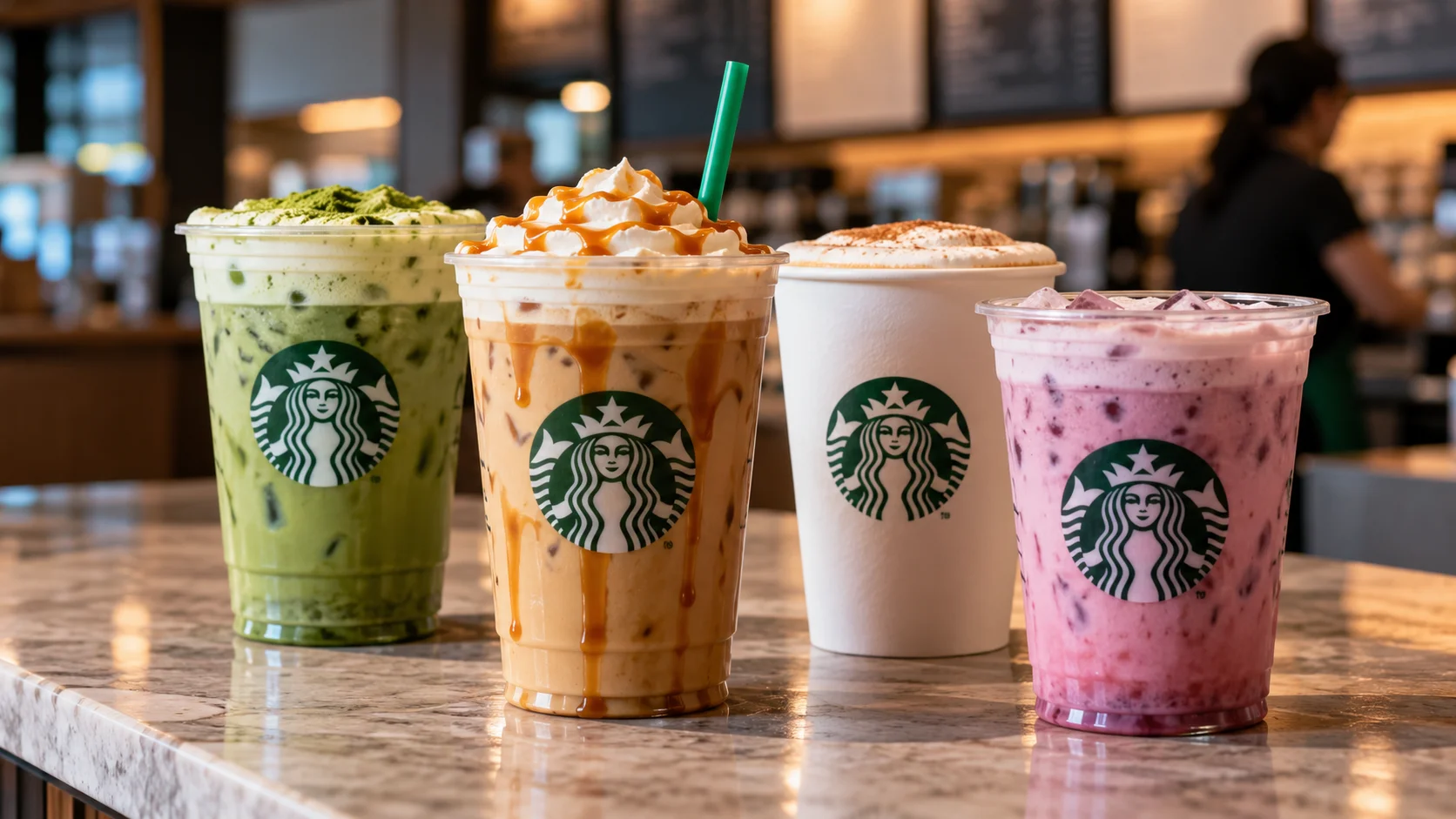
A customer walks into Starbucks looking for a protein-rich drink without the sugar. The menu offers an option that appears to fit: a sugar-free protein latte or matcha. But the nutritional information tells a more complicated story.
Some large servings of these beverages reportedly contain as much as 21 grams of sugar, according to a proposed class-action lawsuit filed against Starbucks on October 2, 2026. Three consumers allege that the coffee chain misled customers by putting the words “sugar-free” in the names of drinks that contain substantial amounts of naturally occurring milk sugar. Reuters reported on the lawsuit and its central allegations.
The case does not establish that Starbucks has broken the law. Instead, it raises a specific question with consequences for food labeling across the industry: can a beverage be marketed as sugar-free when its syrup contains no sugar, but its milk contributes more than the amount permitted under federal labeling rules?
The answer could affect how consumers interpret nutrition claims and how companies name products designed to appeal to health-conscious customers.
How Starbucks’ Sugar-Free Label Became a Legal Dispute
The lawsuit targets eight beverages introduced as part of Starbucks’ protein drink range: hot and iced versions of its Sugar-Free Vanilla Protein Latte, Sugar-Free Caramel Protein Latte, Sugar-Free Vanilla Protein Matcha and Sugar-Free Caramel Protein Matcha.
Starbucks announced its expanded protein beverage offering in September 2025, aiming to meet growing demand for drinks that combine coffee-shop convenience with additional protein. The launch was part of a broader effort to compete in the market for functional beverages.
The disputed products combine protein-boosted milk with coffee or matcha and flavored syrups. Starbucks says the drinks contain no added sugar and use sugar-free syrups for flavor.
However, milk naturally contains lactose, a type of sugar. That ingredient becomes central to the legal argument because the plaintiffs say customers see the product name as a description of the entire drink, not merely the syrup used to flavor it.
The complaint was filed in the U.S. District Court for the Western District of Washington by three consumers who purchased the beverages in California, New York and Washington. According to the allegations, the drinks contain between 13 and 21 grams of sugar per serving.
The plaintiffs argue that the naming creates an inaccurate impression about what customers are buying. Starbucks disputes the allegations and says it intends to defend itself.
Which Starbucks Drinks Are Named in the Complaint?
The lawsuit covers four drink varieties, each available hot or iced.
- Sugar-Free Vanilla Protein Latte
- Sugar-Free Caramel Protein Latte
- Sugar-Free Vanilla Protein Matcha
- Sugar-Free Caramel Protein Matcha
The iced versions of all four are also included, bringing the total to eight beverages.
The reported sugar content depends on the drink and serving size. A large Sugar-Free Caramel Protein Matcha was listed with 21 grams of sugar, while other drinks contain lower amounts.
For context, 21 grams is approximately five teaspoons of sugar by weight. That comparison illustrates the quantity, but it does not mean five teaspoons of sweetener were added to the beverage. The plaintiffs attribute the sugar largely to lactose in the protein-boosted milk.
The figures are not interchangeable across every drink or size. Customers can check the latest figures using Starbucks’ nutrition and product information, because recipes, serving sizes and nutritional values can change.
What Federal Law Says About Sugar-Free Claims
The legal argument depends on a distinction that is easy to overlook on a coffee menu: a product with no added sugar is not necessarily a sugar-free product.
Under the U.S. Food and Drug Administration’s nutrient-content labeling rules, a food generally must contain less than 0.5 grams of sugars per reference amount customarily consumed and per labeled serving to qualify for a sugar-free claim, subject to the regulation’s other requirements.
The FDA explains these requirements in its official guidance on sugar-free claims. The rules also address circumstances in which a product must carry a disclaimer about its calorie content or weight-control suitability.
The plaintiffs argue that Starbucks’ beverages exceed the permitted sugar threshold and that the company’s use of “sugar-free” in their names therefore violates federal labeling requirements. They also challenge the absence of what they allege are required calorie-related disclaimers.
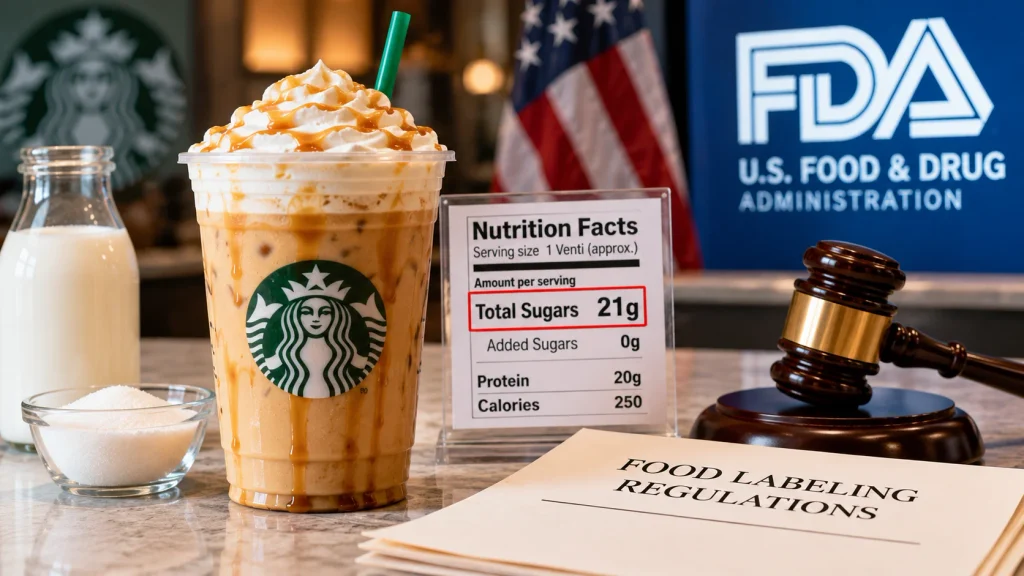
This is the legal foundation of the dispute. The case is not about whether lactose qualifies as sugar in ordinary nutritional terms. It does. The question is whether the finished drinks meet the legal requirements for the claim used to market them.
The FDA rules also distinguish sugar-free claims from “no added sugar” claims. The latter concern whether sugars were added during processing or preparation, subject to the conditions in the regulation. Naturally occurring sugars can remain in a product that qualifies for a no-added-sugar claim.
That distinction helps explain Starbucks’ position, but it does not by itself determine whether the names challenged in the lawsuit comply with federal law.
Starbucks’ Response to the Allegations
Starbucks has rejected the claims, saying it believes the lawsuit has no merit.
The company says it has consistently provided information about its protein beverages, customization options and nutritional content through product announcements, menus, its website and its mobile app. It also maintains that the sugar comes from its protein-boosted milk rather than added sugar in the flavored syrups.
That response points to a central disagreement: whether disclosing the nutritional figures and explaining the ingredients adequately addresses the impression created by the words “sugar-free.”
The plaintiffs contend that the name itself can mislead consumers, particularly those deliberately avoiding sugar. Starbucks, meanwhile, argues that it provides information customers can use to understand the products.
Both positions will need to be considered through the legal process. A company’s explanation does not automatically settle whether its labeling complies with the law, just as a complaint does not prove that its labeling is unlawful.
The lawsuit announcement from plaintiff-side law firm Hagens Berman outlines the consumers’ allegations and the relief they are seeking. It should be read as the plaintiffs’ account of the case, not as a judicial finding.
What the Consumers Want From the Lawsuit
The three plaintiffs are seeking to represent a wider group of consumers who purchased the challenged beverages. Their complaint seeks damages and asks the court to restrict Starbucks from using sugar-free descriptions for products that do not meet the applicable legal standard.
The claims include alleged violations of federal food-labeling requirements and consumer-protection laws. The plaintiffs also argue that the marketing could mislead customers who rely on nutrition claims when deciding what to purchase.
However, the proposed class action has not automatically become a certified class. The court must determine whether the case meets the legal requirements for proceeding on behalf of a broader group.
The filing date is also important. The complaint was filed on October 2, 2026, and the reports cited here describe allegations at the start of the legal dispute. They do not establish that a court has ruled against Starbucks. Readers should not interpret the filing as proof of wrongdoing.
For consumers, the potential outcome could clarify how regulated nutrition claims apply when a beverage combines sugar-free flavoring with ingredients that naturally contain sugar.
Why the Difference Matters to Customers
For someone simply ordering coffee, the difference between total sugar and added sugar might seem technical. For someone actively limiting sugar, it can influence a purchasing decision.
Consider two statements:
- No added sugar: No sugar has been added under the conditions required for the claim, but naturally occurring sugars may still be present.
- Sugar-free: The finished product must meet the applicable FDA definition, including the limit on sugar content.
These statements are not interchangeable. A drink can contain no added sugar while still contributing a meaningful amount of total sugar to a person’s daily intake.
That distinction is particularly relevant for milk-based beverages. Lactose occurs naturally in milk, so replacing a conventional flavored syrup with a sugar-free version does not remove the sugar already present in the milk.
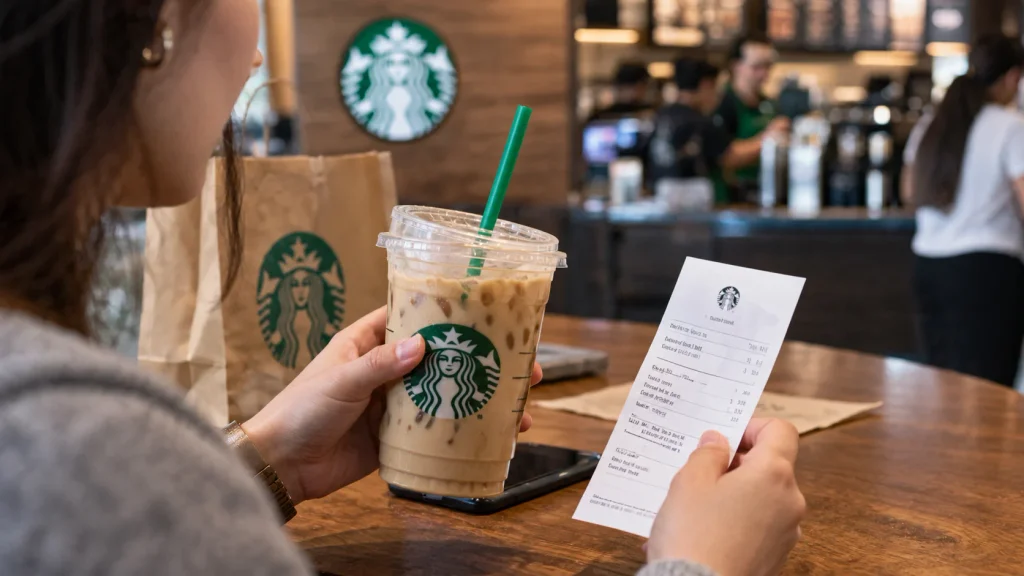
Customers who want to reduce their intake can compare total sugar, added sugar and serving size rather than relying on a product name alone. Those monitoring blood glucose or following specific dietary advice may also need to consider the drink’s full nutritional profile.
The broader lesson for beverage companies is equally straightforward: nutrition-related marketing claims must accurately reflect the finished product and satisfy the relevant regulations.
What Happens Next in the Starbucks Sugar-Free Drink Lawsuit?
The case now turns on the plaintiffs’ ability to establish their allegations and Starbucks’ defense of its labeling practices. Relevant questions include whether the challenged product names comply with federal standards, whether the alleged calorie disclaimers were required and whether consumers were misled under the applicable consumer-protection laws.
The court will also need to address any procedural questions, including whether the case can proceed as a class action. Until the litigation develops further, the outcome remains uncertain.
The dispute is significant because it tests the difference between how a company describes an ingredient and how customers understand the product as a whole. A sugar-free syrup may be exactly that, but the drink containing it is a separate product with its own nutritional composition.
For Starbucks, the lawsuit challenges whether its naming approach meets the legal standard. For consumers, it highlights why nutrition claims deserve closer attention, especially when those claims help guide choices about sugar intake.
Ultimately, the case will not be decided by how reassuring the words “sugar-free” sound on a menu. It will be decided by the applicable labeling rules, the evidence presented and the court’s interpretation of the law.