
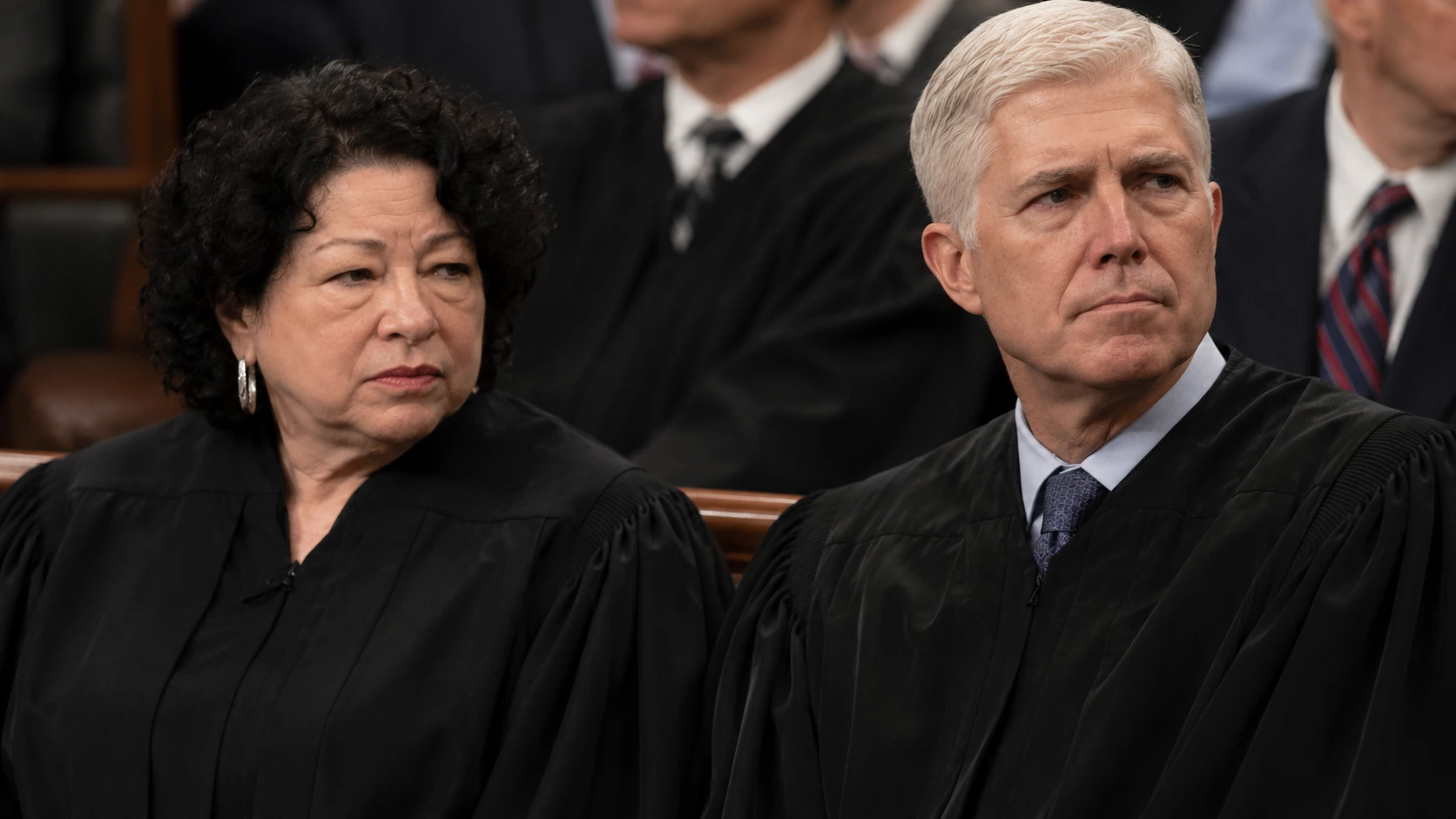
On October 13, 2026, Supreme Court Justices Sonia Sotomayor and Neil Gorsuch raised serious constitutional concerns about a Mexican immigrant who was convicted twice of being unlawfully present in the United States following an earlier deportation.
The justices did not overturn the conviction. The Supreme Court declined to hear Jesus Herrera-Salazar’s appeal, leaving the lower court’s ruling intact. However, their statement in Herrera-Salazar v. United States questioned whether the government could prosecute someone again for the same continuing offense when its own supervision conditions effectively prevented him from leaving the country.
The dispute centres on the Fifth Amendment’s protection against double jeopardy and how federal law defines the crime of being “found in” the United States after removal.
How Herrera-Salazar Was Prosecuted Twice
Herrera-Salazar was deported in 2015. In 2020, federal authorities found him in Texas and prosecuted him under 8 U.S.C. § 1326, which criminalises certain forms of unlawful reentry and presence in the United States following removal.
He pleaded guilty and served a prison sentence. After his release, he was placed under supervised release and instructed not to leave Oklahoma’s Eastern District.
On April 1, 2022, a traffic stop in Heavener, Oklahoma, led to his arrest and a second prosecution under the same statute. A jury convicted him, and in 2024 he received another prison sentence of 21 months, followed by three years of supervised release.
Herrera-Salazar challenged the second conviction, arguing that the government had prosecuted him twice for the same continuing offense without establishing that he had left the country and subsequently reentered.
The U.S. Court of Appeals for the Tenth Circuit’s September 26, 2025, decision rejected his arguments and upheld the conviction. He then petitioned the Supreme Court to review the case.
Why the Justices Raised Double Jeopardy Concerns
The Fifth Amendment states that no person shall “be subject for the same offence to be twice put in jeopardy of life or limb.” This protection generally bars a second prosecution for the same offense after conviction, as well as multiple punishments for the same offense.
The central question was whether Herrera-Salazar’s second prosecution concerned a legally distinct offense or merely another point in the same continuous period of unlawful presence.
Sotomayor questioned whether the statutory phrase “found in” could reasonably apply again to someone the government had already identified, prosecuted and placed under supervision.
Her concern went further. Even if the statute could support a second charge, she questioned whether the government’s interpretation was compatible with the Constitution when Herrera-Salazar had not left the United States between the two prosecutions.
The justice explained that treating different points in a continuous offense as separate crimes could permit prosecutors to bring repeated charges based on the same underlying conduct. She warned that the government’s reasoning could theoretically support charges for every week, or even every day, that a person remained in the country.
That possibility formed the basis of her warning about a “constitutional absurdity.”
The Government’s Role in the Dispute
A significant feature of the case was Herrera-Salazar’s supervised release. After serving his first sentence, he was instructed not to leave the Eastern District of Oklahoma.
Sotomayor argued that this created a legal predicament: the government required him to remain under its supervision while treating his continued presence in the United States as grounds for another prosecution.
She described the circumstances as a “Hobson’s choice,” meaning a situation in which the available options are severely constrained or undesirable.
The concern was not that federal immigration law can never support a second prosecution. Rather, it was whether the government could repeatedly prosecute a continuing offense when the circumstances that kept the defendant in the country were partly created by its own restrictions.
Why Gorsuch Joined Sotomayor
Gorsuch’s decision to join Sotomayor’s statement drew attention because the two justices were appointed by presidents from different political parties. Sotomayor was appointed by President Barack Obama, while Gorsuch was appointed by President Donald Trump.
Their agreement in this case focused on a constitutional question rather than establishing a shared position on immigration policy.
The statement highlighted the limits of interpreting a criminal statute in a way that could expose a defendant to repeated prosecutions for essentially continuous conduct. It also urged courts to give meaningful effect to the Double Jeopardy Clause when similar circumstances arise.
However, neither justice issued a binding ruling overturning the conviction. Their statement accompanied the Court’s refusal to review the case.
Why the Supreme Court Declined Review
The Supreme Court denied Herrera-Salazar’s petition on October 13, 2026. The official docket records the denial and Sotomayor’s statement, joined by Gorsuch.
Sotomayor explained that she concurred with the decision not to grant review because she hoped the circumstances were unusual and noted that Herrera-Salazar had since been removed from the United States.
A denial of certiorari does not mean the Supreme Court endorsed every aspect of the lower court’s reasoning. It means the Court declined to take up the appeal, leaving the existing judgment in place.
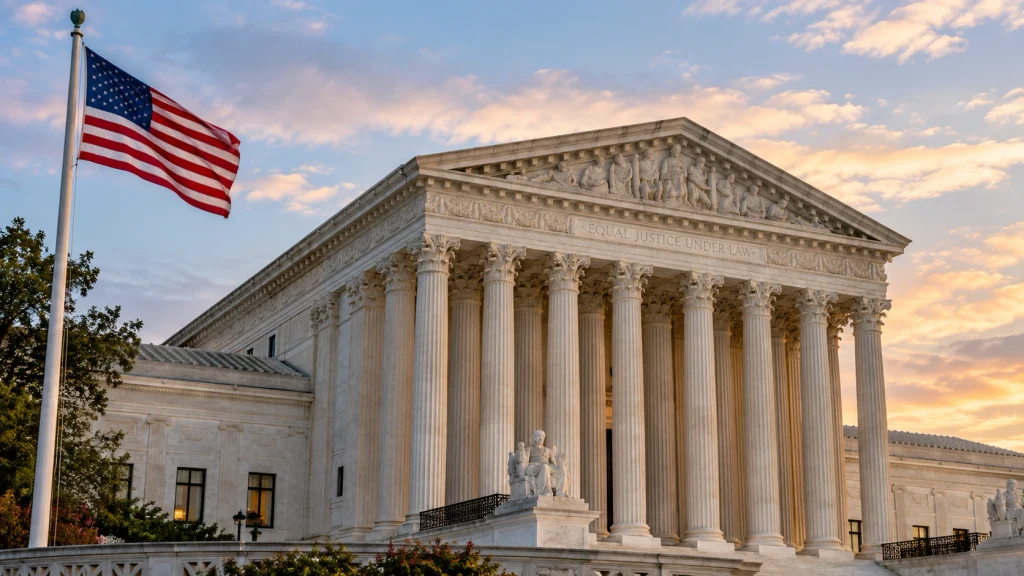
The decision therefore did not establish a nationwide rule prohibiting repeat prosecutions under Section 1326. The constitutional concerns identified by the two justices remain relevant to future cases, but their statement is not a binding majority opinion resolving the issue.
What the Case Means for Immigration Law
The case highlights a dispute over the permissible unit of prosecution under Section 1326. In other words, how many separate offenses can the government charge when a person remains in the United States after a single unlawful reentry?
The Tenth Circuit concluded that the statute did not require a separate reentry before a later “found in” prosecution could proceed. Its reasoning differed from approaches discussed in other federal appellate decisions, including cases from the Fifth, Seventh and Ninth Circuits.
Sotomayor’s statement questioned the consequences of allowing multiple prosecutions based on separate points in one continuous period of unlawful presence. The concern is that prosecutors could circumvent double jeopardy protections by dividing a continuing offense into separate periods.
The Supreme Court’s refusal to hear Herrera-Salazar’s case leaves the lower court’s judgment intact. A future case may provide another opportunity for the Court to examine how Section 1326 interacts with the Fifth Amendment when a defendant has already been convicted and remains in the country under government supervision.
For now, the case serves as a pointed warning: federal immigration enforcement remains subject to constitutional limits, and the government’s interpretation of a criminal statute cannot be considered in isolation from the protections guaranteed by the Constitution.