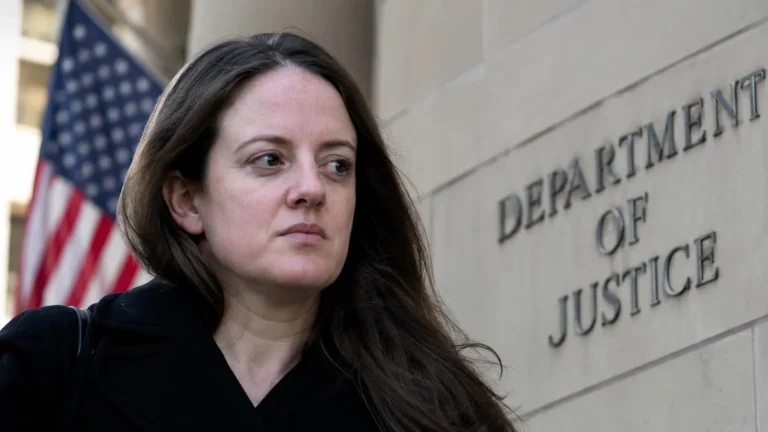
A federal judge has dismissed a lawsuit brought by two police officers who defended the U.S. Capitol during the January 6, 2021 attack, ruling that they lacked the legal standing required to challenge the government’s handling of a memorial plaque.
Former U.S. Capitol Police officer Harry Dunn and Metropolitan Police Department officer Daniel Hodges sued the Architect of the Capitol after Congress ordered a permanent memorial recognizing the law enforcement officers who responded to the attack.
U.S. District Judge Dabney L. Friedrich dismissed the case on September 30, 2026. The judge found that the officers had not established the concrete injury required under Article III of the Constitution.
The decision, however, did not determine whether the current plaque complies with Congress’s 2022 requirements.
Congress Ordered A Memorial For Jan. 6 Officers
The dispute began with the Consolidated Appropriations Act of 2022.
Congress directed the Architect of the Capitol to obtain an honorific plaque recognizing law enforcement officers who responded to the January 6 attack. The law specifically called for a plaque listing the names of the responding officers and required it to be placed at a permanent location on the western front of the Capitol.
The requirement appears in Section 214 of the 2022 appropriations law, which gave the Architect one year from March 15, 2022, to complete the memorial. The federal statute establishing the January 6 memorial requirement sets out the congressional directive.
The deadline passed without the required installation.
The delay eventually pushed two officers involved in the response to take the dispute to court.
Harry Dunn And Daniel Hodges Filed The Lawsuit
Dunn and Hodges filed their lawsuit in June 2025 against Architect of the Capitol Thomas Austin and the Architect’s office.
Their case sought to compel the government to carry out Congress’s directive concerning the memorial.
Both officers had been directly involved in the Capitol response. Their complaint also described the personal consequences they said they experienced after January 6, including harassment, threats and psychological harm.
The judge later considered those allegations when determining whether the officers had established the injury necessary to bring their case in federal court.
The federal court’s September 30 memorandum opinion provides the court’s detailed account of the officers’ claims and the reasons for dismissal.
The Capitol Plaque Was Finally Installed
The memorial was eventually installed in March 2026 after years of delay.
But its final design became another point of disagreement.
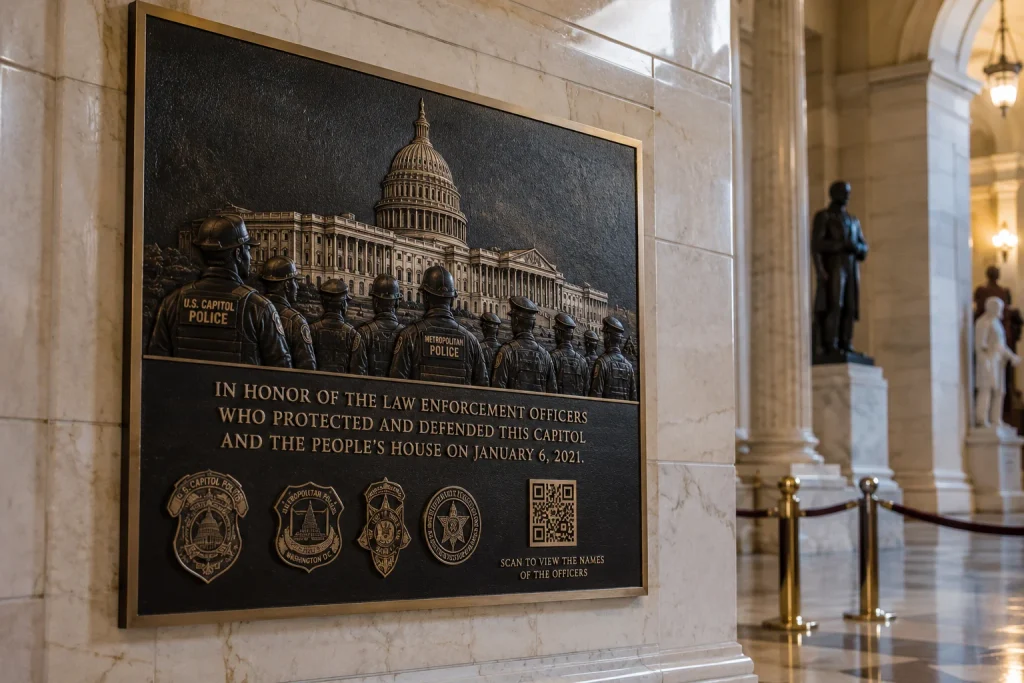
The physical plaque does not list every responding officer by name. Instead, it identifies the participating law enforcement agencies and includes a QR code that provides access to individual officers’ names.
The Architect of the Capitol’s official January 6 plaque information describes the memorial and identifies the participating law enforcement organizations.
That design raised an obvious question for the plaintiffs because Congress had specifically called for a plaque listing the names of the officers.
Dunn and Hodges argued that installing a memorial was not necessarily the same as complying with the precise language of the congressional directive.
The Plaque’s Location Also Became A Dispute
The officers also challenged the memorial’s location.
The plaque was installed inside the Capitol near the West Front, but questions arose over whether its placement satisfied the statutory requirement for a permanent location on the western front.
The Washington Post’s coverage of the plaque’s installation reported on the location and the officers’ continuing objections.
The dispute therefore involved both the plaque’s content and its placement.
Neither issue was resolved by the latest court decision.
Senate Action Added Pressure
Congress continued addressing the memorial while the lawsuit was pending.
In January 2026, the Senate adopted a resolution concerning the display of the completed plaque while questions surrounding its permanent placement remained.
The measure called for the memorial to be prominently displayed in a publicly accessible location in the Senate wing until its permanent location could be established.
The action came after years of delay and increased congressional attention to the missing memorial.
By March, the plaque had finally been installed.
The installation did not end the officers’ lawsuit because they maintained that the finished memorial still differed from what Congress had required.
Judge Friedrich Focused On Article III Standing
The September 30 ruling turned on a constitutional issue that came before the underlying dispute over the plaque.
Under Article III, federal courts can hear only actual cases and controversies. A plaintiff generally must show a concrete and particularized injury that is connected to the challenged conduct and likely to be addressed through the requested judicial relief.
Judge Friedrich concluded that Dunn and Hodges had not met that requirement.
The officers argued that the government’s failure to properly recognize them contributed to psychological injuries, harassment and threats.
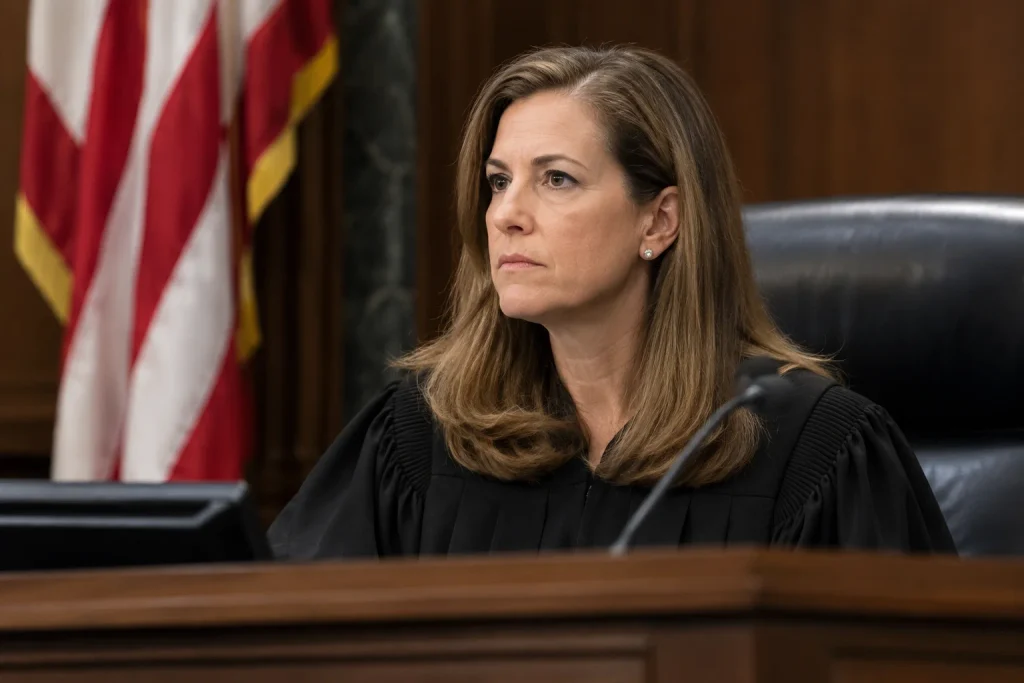
The judge examined whether those injuries were sufficiently connected to the government’s handling of the memorial.
The court concluded that the connection was not strong enough to establish standing.
Court Found The Alleged Harm Too Indirect
A major part of the decision concerned causation and redressability.
The officers’ position depended partly on the argument that proper official recognition could help address some of the consequences they experienced after January 6.
The court found that theory too uncertain.
Even if the plaque had been installed exactly as the officers requested, the judge concluded that it was not sufficiently established that doing so would change the conduct of third parties, prevent harassment or resolve the psychological injuries described by the officers.
That meant the plaintiffs could not establish the necessary connection between the government’s conduct and their alleged injuries.
They also could not show that the requested court order would likely remedy those injuries.
The Court Did Not Decide Whether The Plaque Complies With The Law
This is the most important point in the ruling.
Judge Friedrich did not rule that the current plaque complies with federal law.
The court did not decide whether displaying agency names rather than individual officers’ names satisfies Congress’s statutory language.
It also did not determine whether the current location meets the requirement for a permanent location on the western front.
The case was dismissed because the court found that Dunn and Hodges lacked Article III standing.
Because the court determined that the plaintiffs lacked standing, it did not reach the underlying merits of their statutory argument.
The Physical Memorial Differs From Congress’s Wording
The disagreement becomes clearer when the law and the finished memorial are compared.
Congress directed the Architect to obtain an honorific plaque listing the names of the responding officers.
The finished memorial identifies participating law enforcement agencies, while individual names are available through its digital component.
The Architect of the Capitol’s official description of the memorial explains how the physical plaque recognizes the agencies involved in protecting the Capitol.
That difference formed an important part of the officers’ argument.
But the court never decided whether the difference constitutes a violation of the 2022 statute.
Why Standing Decided The Case
The ruling demonstrates the difference between having a direct personal connection to a government action and having legal standing to challenge it in federal court.
Dunn and Hodges were among the officers the memorial was intended to recognize.
But that connection alone did not satisfy Article III.
They still had to demonstrate a concrete injury caused by the government’s conduct that could likely be addressed through a court order.
Friedrich concluded that the injuries alleged by the officers did not meet that constitutional threshold.
As a result, the court did not reach the broader question of whether the Architect properly followed Congress’s instructions.
What Happens To The Capitol Plaque Now
The September 30 dismissal leaves the existing memorial in place.
The ruling does not require the Architect of the Capitol to redesign the plaque, add individual names to its physical surface or move it.
It also does not establish that no changes can be made in the future.
Congress could address the matter through additional legislation or oversight. The Architect could also make changes to the memorial’s presentation or location.
The officers could seek appellate review of the standing decision if they decide to continue the legal challenge.
For now, however, the district court case has been dismissed.