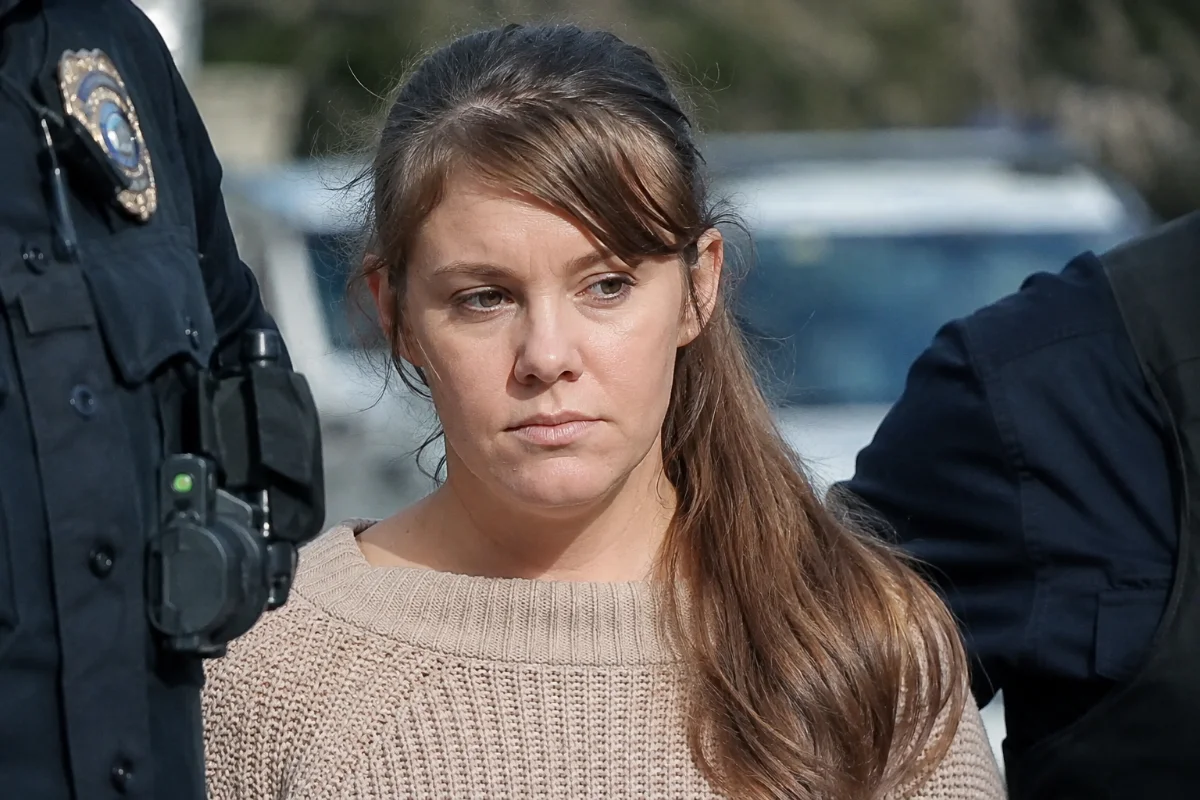
Kendra Duggar’s arrest came shortly after her husband, Joseph Duggar, was taken into custody in connection with a separate criminal case involving allegations from Florida.
The timing created confusion. Joseph’s arrest involved allegations of sexual misconduct against a child, while Kendra was suddenly facing eight criminal charges of her own in Arkansas. But the cases were separate.
Kendra’s charges arose from an Arkansas investigation involving the home she shared with Joseph and their four children. Both parents were ultimately charged with four counts of second-degree endangering the welfare of a minor and four counts of second-degree false imprisonment.
The Arkansas case has since taken another turn. After initially pleading not guilty, Kendra and Joseph entered a court-approved advisement arrangement that could result in the charges being dismissed if they comply with its conditions.
Joseph’s Arrest Started the Timeline, but Not Kendra’s Case
The legal developments began when Joseph Duggar was arrested in March 2026 on charges filed in Florida.
According to the Associated Press report on Joseph Duggar’s Florida case, the allegations stemmed from a 2020 family trip to Panama City Beach. Joseph was accused of lewd and lascivious conduct involving a child under the age of 12. He has denied the allegations and pleaded not guilty.
Those allegations are separate from the criminal case involving Kendra.
After Joseph’s arrest, authorities searched the family’s Arkansas property. The investigation that followed focused on conditions involving the couple’s four children and eventually resulted in criminal charges against both parents.
Kendra was arrested on March 20, 2026, and booked on four counts of second-degree endangering the welfare of a minor and four counts of second-degree false imprisonment.
What Reportedly Led to Kendra Duggar’s Arrest
The explanation for the Arkansas charges emerged after authorities examined the Duggar home.
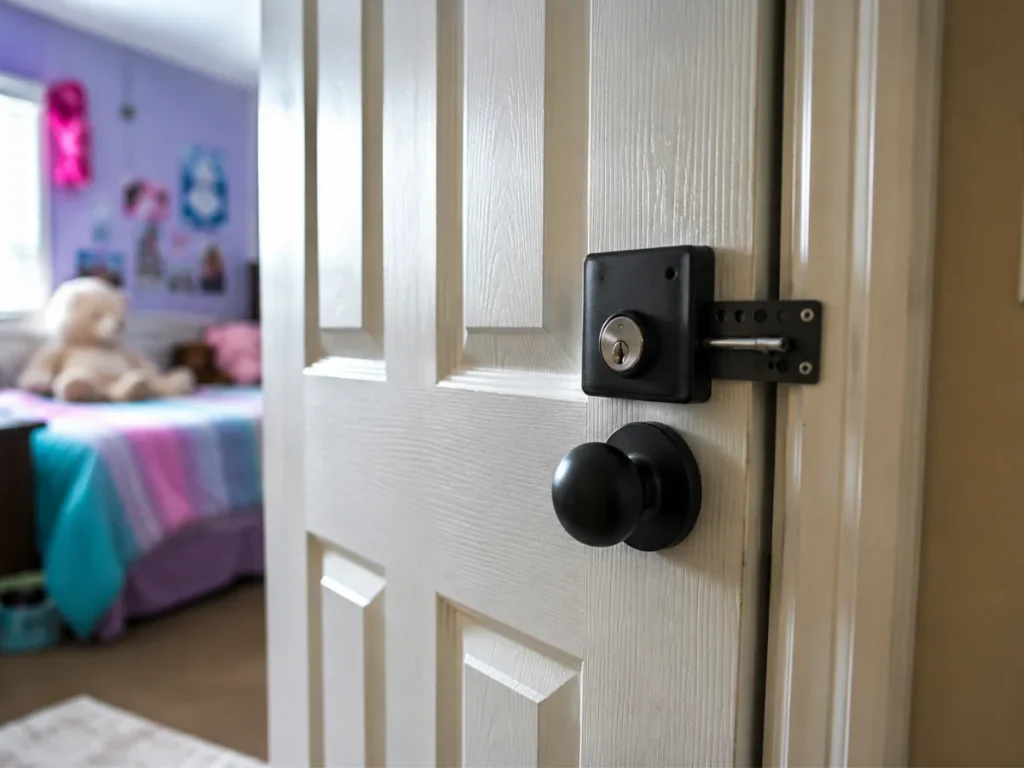
In her report Andrea Eastman cited a source close to the family who said investigators found locks positioned on the exterior of the children’s bedroom doors.
According to the source, the locks were installed as a safety measure. Authorities were reportedly concerned that exterior locks could also prevent the children from leaving their rooms.
That reported discovery became the central explanation surrounding the charges of child endangerment and false imprisonment.
However, the complete evidence gathered during the investigation was never publicly presented in a full criminal trial. Authorities did not release a detailed public account explaining exactly how the locks were used, whether the children were regularly confined or what specific conduct was attributed individually to Kendra and Joseph.
The distinction is important because the case did not produce a jury verdict establishing the underlying allegations as proven facts.
Why Kendra Duggar Faced Eight Separate Charges
Kendra was charged with eight misdemeanors:
- Four counts of second-degree endangering the welfare of a minor
- Four counts of second-degree false imprisonment
Joseph faced the same eight charges.
The separate counts were connected to the couple’s four children. Rather than filing one general charge involving the household, authorities treated the alleged conduct involving each child as the basis for separate criminal counts.
Although the offenses were misdemeanors, eight separate allegations created potentially serious consequences if the case had proceeded to conviction and sentencing.
What Arkansas Law Says About Child Endangerment
Kendra was charged under Arkansas’s second-degree endangering-the-welfare-of-a-minor statute.
Under Arkansas Code § 5-27-206, the offense generally involves knowingly engaging in conduct that creates a substantial risk of serious harm to the physical or mental welfare of a person known to be a minor.
The charge is classified as a Class A misdemeanor.
If the case had gone to trial, prosecutors would have been required to prove the elements of the offense beyond a reasonable doubt.
The legal issue was therefore not simply whether authorities disagreed with a parenting practice. The prosecution would have needed to establish that the alleged conduct reached the level required under the Arkansas criminal statute.
How the False-Imprisonment Charges Fit Into the Case
The other four counts involved second-degree false imprisonment.
Under Arkansas Code § 5-11-104, the offense generally involves knowingly restraining another person without consent and without lawful authority in a way that substantially interferes with that person’s liberty.
The reported exterior locks help explain why authorities considered restraint-related charges.
If investigators believed the children could be intentionally prevented from leaving their bedrooms, that could potentially form the basis for a false-imprisonment allegation.
But the specific facts supporting each of the four counts were never fully developed through public testimony. The case moved away from a conventional trial before a jury could hear and evaluate the evidence.
The Arrest Led to a No-Contact Order
Kendra was released from custody, but the criminal case immediately affected her contact with her children.
A court order initially prohibited her from contacting the alleged victims in the case. Because the charges involved her children, the restriction temporarily separated her from them.
Kendra later asked the court to lift the no-contact order. The request was ultimately granted, allowing the Arkansas Department of Human Services to facilitate the reunification process.
The decision did not dismiss the charges. It only changed the conditions under which Kendra could have contact with the children while the criminal case remained pending.
Kendra and Joseph Initially Pleaded Not Guilty
Both Kendra and Joseph initially denied the Arkansas allegations and entered not-guilty pleas.
At that stage, the case could have continued toward additional hearings and eventually a trial. Prosecutors would have been required to prove the allegations, while the defense would have had the opportunity to challenge the evidence.
Instead, the proceedings changed direction several months later.
In August 2026, Kendra and Joseph withdrew their previous not-guilty pleas and submitted pleas by order.
The Los Angeles Times report on the plea change described how the Arkansas case moved away from a traditional trial after the couple changed their pleas.
The Case Was Placed Under a One-Year Advisement Period
The major development came in August 2026, when the court approved a one-year advisement arrangement.
Under the terms of the arrangement, Kendra and Joseph must comply with conditions that include:
- Not committing new criminal offenses
- Maintaining good behavior
- Following court orders
- Complying with applicable requirements involving the Arkansas Department of Human Services
- Paying $1,850 in fines and costs
The arrangement could ultimately lead to the dismissal of the charges.
According to Court TV’s report on the Arkansas case resolution, the charges are expected to be dismissed if the couple successfully completes the required period and complies with the court’s conditions.
A review hearing is scheduled for August 4, 2027.
What the Advisement Period Means for Kendra’s Case
The current arrangement is different from both a conviction and an acquittal.
Kendra was not found not guilty by a jury, because the evidence was never presented in a full public trial. She also was not immediately sentenced to jail on the Arkansas charges.

Instead, the case has been placed under advisement for one year.
If Kendra successfully complies with the conditions imposed by the court, the charges against her are expected to be dismissed at the end of the period.
Until that happens, the dismissal remains conditional.
Joseph’s Florida Case Is Still Separate
The resolution of the Arkansas case does not end Joseph Duggar’s legal problems.
His Florida prosecution concerns separate allegations involving a child during a 2020 trip to Panama City Beach.
Kendra has not been charged in connection with those allegations.
The Arkansas case concerns allegations involving the welfare and alleged restraint of the couple’s four children, while the Florida prosecution concerns entirely different alleged conduct in another state.
Where Kendra Duggar’s Case Stands Now
Kendra Duggar was charged after an Arkansas investigation involving the home she shared with Joseph Duggar and their four children.
She faced four counts of second-degree endangering the welfare of a minor and four counts of second-degree false imprisonment.
Reporting connected the investigation to locks allegedly found on the exterior of the children’s bedroom doors, but the complete evidence behind the charges was never publicly litigated at trial.
Kendra initially pleaded not guilty and was temporarily prohibited from contacting her children under a court order that was later lifted.
In August 2026, she and Joseph withdrew their not-guilty pleas and entered an arrangement placing the Arkansas cases under advisement for one year.
If Kendra complies with the court’s conditions and completes the advisement period successfully, the eight charges against her are expected to be dismissed following the scheduled 2027 review.
Her Arkansas case therefore remains on a conditional path toward dismissal rather than having been resolved by a traditional finding of guilt or innocence.
Joseph’s separate Florida case, meanwhile, continues on its own legal track and is not part of the criminal allegations that led to Kendra’s arrest.