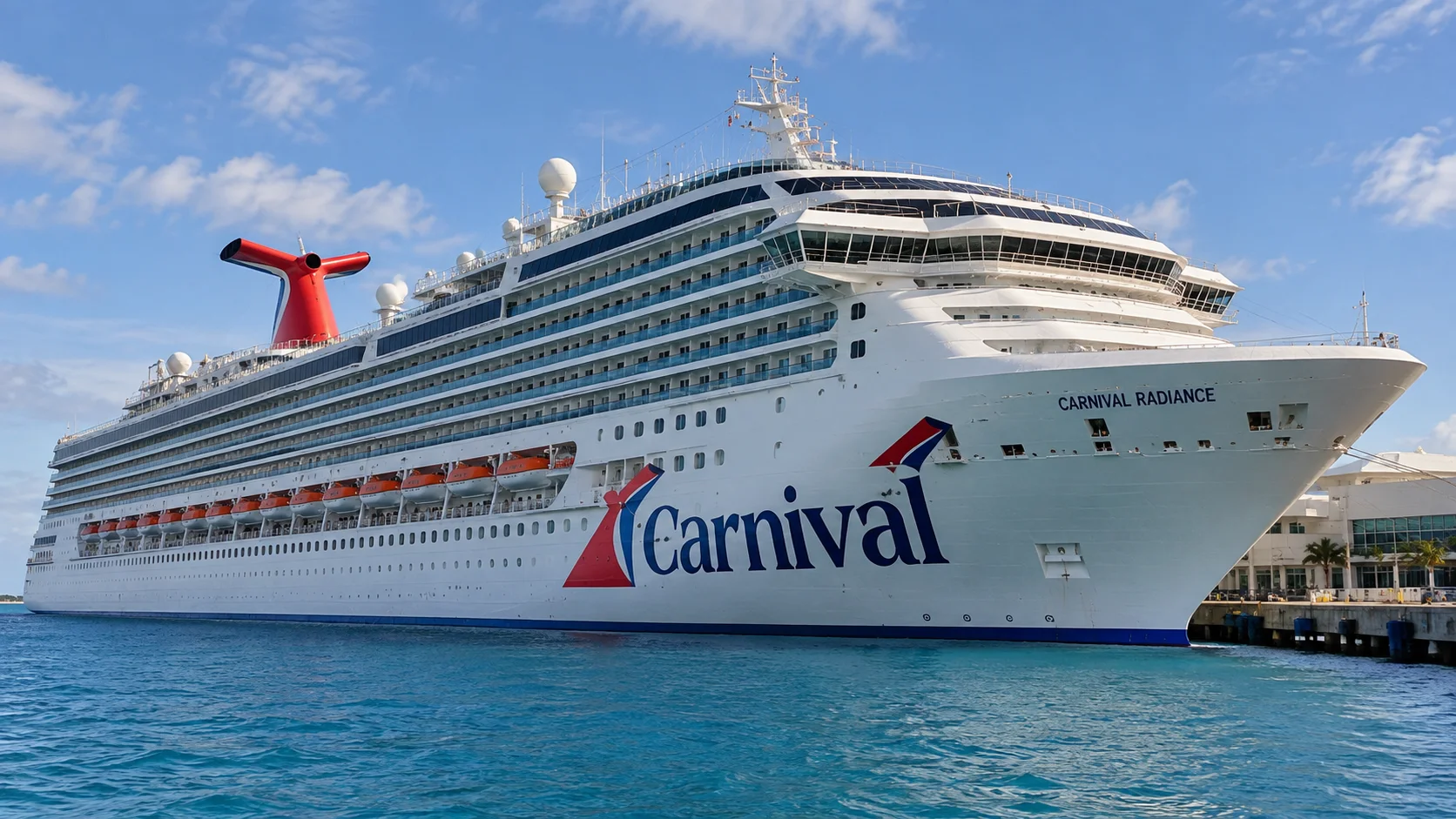
A cruise vacation ended in a federal courtroom for Diana Sanders, a California nurse who said she was served at least 14 shots of tequila aboard Carnival Cruise Line’s Carnival Radiance before falling down a staircase and suffering serious injuries. On April 10, 2026, a federal jury in Miami found Carnival negligent and awarded her $300,000, assigning 60% of the responsibility to the cruise company and 40% to Sanders herself.
The verdict followed a legal battle that placed Carnival’s alcohol-service practices, the circumstances surrounding Sanders’ fall, and a gap in surveillance footage under scrutiny. Carnival disputed the outcome and announced plans to seek a new trial and appeal.
What Happened to Diana Sanders on the Carnival Radiance?
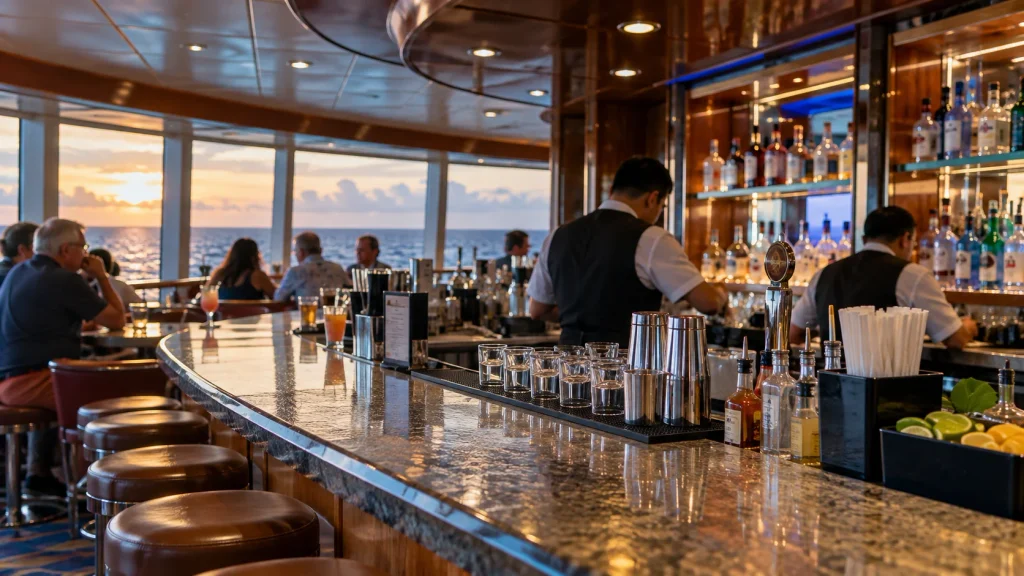
On January 5, 2024, Sanders was aboard the Carnival Radiance when she began drinking at different venues around the ship. According to her lawsuit, Carnival’s bartenders served her at least 14 shots of tequila between approximately 2:58 p.m. and 11:37 p.m.
The drinks were served over roughly eight and a half hours. Sanders’ attorney has described the total as 15 shots, while several news reports and the complaint refer to at least 14. The difference reflects the way the amount has been reported, so the more consistently documented figure is at least 14.
The lawsuit alleged that Sanders displayed visible signs of intoxication, including slurred speech, swaying and belligerent behaviour, yet crew members continued serving her alcohol. These allegations were central to the claim that Carnival failed to exercise reasonable care.
What happened next transformed a night of drinking into a serious personal injury case.
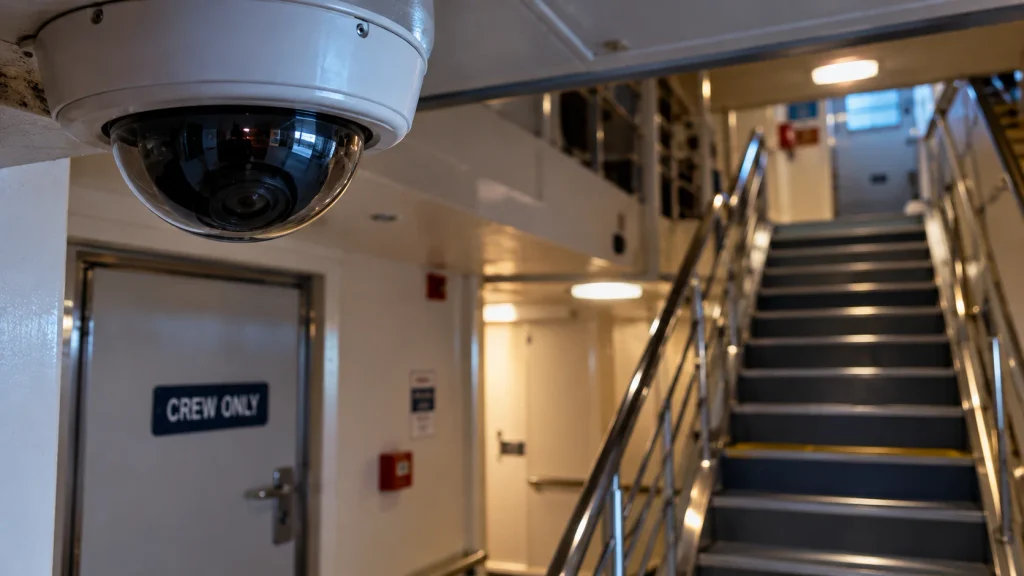
Between approximately 11:45 p.m. and 12:20 a.m., Sanders fell down a staircase in a crew-only area and was found unconscious. Her complaint described a concussion, headaches, a possible traumatic brain injury, back and tailbone injuries, bruising and other harm.
The injuries and the circumstances of the fall became the foundation of her lawsuit. The central issue was not simply how much alcohol Sanders had consumed. It was whether Carnival’s staff should have recognised the risk and stopped serving her before the incident.
Why Did Sanders Sue Carnival Cruise Line?
Sanders’ lawsuit alleged that Carnival’s employees continued providing alcohol despite signs that she was intoxicated, contributing to the fall and resulting injuries.
In personal injury litigation, proving that a person consumed alcohol is not enough by itself. A claimant generally must establish a legal duty, a breach of that duty, causation and compensable damages.
Sanders’ case therefore required the jury to consider the conduct of the cruise line alongside her own actions. If the evidence established that staff should reasonably have recognised her condition and that their continued service contributed to the accident, Carnival could potentially be held liable even though Sanders had voluntarily consumed the drinks.
The case was not a claim that every intoxicated passenger who falls is automatically entitled to compensation. It concerned the specific circumstances of the alcohol service and the injuries that followed.
What Role Did the Missing Surveillance Footage Play?
The dispute extended beyond the drinks and the staircase. Sanders’ attorney, Spencer Aronfeld, said jurors heard evidence about a gap of approximately 30 minutes in surveillance footage covering the period after she left the casino bar and before she was found unconscious. Some reports describe the gap as approximately 35 minutes.
The missing footage mattered because it could potentially have helped establish how Sanders reached the crew-only area and what happened during the period she could not recall.
Reports also described concerns Sanders raised about the possibility of sexual assault during her blackout. According to accounts of the lawsuit, she said a security officer reassured her that footage covered the incident and that nothing had happened to her. She consequently declined a sexual-assault forensic examination.
Those circumstances are serious, but they must be described carefully. The reported possibility of an assault is not proof that one occurred. Similarly, missing footage does not, on its own, establish deliberate destruction of evidence or concealment by Carnival.
The Cruise Law News account of the case discusses the surveillance dispute and the wider legal issues surrounding the incident.
The reported jury verdict concerned negligence arising from the alcohol service and Sanders’ injuries. It should not be interpreted as a finding that Carnival was liable for a sexual assault or that it deliberately destroyed evidence.
How Did the Jury Reach the $300,000 Verdict?
On April 10, 2026, a federal jury in Miami found Carnival negligent and awarded Sanders $300,000 in damages. According to reporting on the verdict, Sanders had sought $250,000 during the trial, making the award higher than the amount her legal team had requested.
The jury also divided responsibility between the two parties:
- Carnival Cruise Line: 60% of the responsibility.
- Diana Sanders: 40% of the responsibility.
The allocation reflects the principle of comparative negligence. Under this framework, a claimant’s own conduct can be considered alongside the defendant’s negligence when determining responsibility for an injury.
The jury did not find Sanders entirely blameless. Nor did it conclude that her decision to drink eliminated Carnival’s responsibility. Instead, it found that both parties bore responsibility under the circumstances presented at trial.
The reported $300,000 award should be distinguished from any assumed calculation of damages before the allocation of fault. Without the complete verdict form and relevant court orders, it would be inappropriate to infer a separate underlying damages figure from the percentages alone.
Which Legal Principles Apply to the Carnival Tequila Lawsuit?
Cruise passenger injury cases commonly involve federal maritime law, although the precise rules depend on the claim and circumstances.
One foundational authority is Kermarec v. Compagnie Générale Transatlantique, 358 U.S. 625 (1959). The United States Supreme Court addressed a shipowner’s obligation to exercise reasonable care under the circumstances toward persons aboard its vessel.
That principle helps explain why a cruise operator may have legal responsibilities toward passengers beyond simply providing transportation and entertainment. It does not mean that every accident aboard a ship establishes negligence. The evidence must still support the elements of the particular claim.
In Sanders’ case, the relevant questions included whether Carnival’s employees should have recognised the danger posed by continued alcohol service, whether their conduct fell below the applicable standard of care, and whether that failure contributed to the fall.
The case also illustrates the importance of causation. Even if a business fails to follow a safety practice, a claimant generally must establish a legally sufficient connection between that failure and the injury for which compensation is sought.
These principles make the verdict relevant to cruise safety litigation, but it should not be treated as a universal rule that serving a passenger 14 drinks automatically creates liability.
Why Did Carnival Disagree With the Verdict?
Carnival said it respectfully disagreed with the jury’s decision and believed grounds existed for a new trial and an appeal.
During the litigation, the company challenged whether the evidence established negligence by particular crew members. Reports also described its position that Sanders had not sufficiently identified the employees responsible for the alleged overservice.
A motion for a new trial asks the trial court to reconsider the result on recognised legal grounds. An appeal asks a higher court to review issues that are properly appealable, such as alleged legal errors. Neither process automatically overturns a jury verdict.
The jury’s award is therefore the reported trial outcome, while any later proceedings must be assessed separately. The company’s stated intention to challenge the verdict should not be presented as proof that the award was subsequently reversed.
For the latest procedural status, readers should consult the relevant court docket and any subsequent orders rather than relying exclusively on early news coverage.
What Does the Verdict Mean for Cruise Ship Alcohol Policies?
The case has drawn attention to the responsibilities of cruise lines that operate multiple bars and offer passengers convenient access to alcohol throughout a voyage.
Sanders’ attorney argued that all-inclusive drink packages can encourage excessive consumption and create pressure to prioritise sales over safety. That is an argument advanced by her legal team, not a finding that every cruise line’s beverage policies are unsafe.
The wider issue is how businesses respond when customers appear too intoxicated to make safe decisions. Responsible alcohol service, employee training, incident documentation and timely intervention may all be relevant to reducing foreseeable risks.
For cruise operators, the case highlights the potential legal consequences of continuing to serve a passenger when the circumstances indicate a significant safety concern. For passengers, it demonstrates that personal responsibility does not necessarily eliminate a business’s separate duty to exercise reasonable care.
The verdict does not establish automatic liability for every alcohol-related accident. Its significance lies in the jury’s assessment of the evidence in this particular case.
Frequently Asked Questions
What Was the Verdict in the Carnival Tequila Lawsuit?
A federal jury in Miami awarded Diana Sanders $300,000 on April 10, 2026, after finding Carnival negligent in connection with the alcohol service preceding her fall.
How Many Tequila Shots were Sanders Served?
Her lawsuit alleged that she was served at least 14 shots between approximately 2:58 p.m. and 11:37 p.m. on January 5, 2024. Her attorney has also described the total as 15.
What Injuries Did She Report?
The complaint described a concussion, headaches, a possible traumatic brain injury, back and tailbone injuries, bruising and other harm. The wording about a possible traumatic brain injury should not be interpreted as confirmation of permanent brain damage.
Was Carnival Entirely Responsible for the Accident?
No. The jury reportedly assigned 60% of the responsibility to Carnival and 40% to Sanders, recognising shared responsibility for the incident.
Is the $300,000 Verdict Final?
Carnival announced plans to pursue a new trial and appeal. The trial verdict and the ultimate conclusion of any subsequent proceedings are separate matters, so the latest court record should be checked before describing the case as finally resolved.
Does the Case Mean Cruise Lines Cannot Serve Intoxicated Passengers?
The verdict does not establish a universal numerical limit on drinks. It highlights the importance of assessing the circumstances, including whether staff should have recognised intoxication and whether continued service contributed to a foreseeable injury.