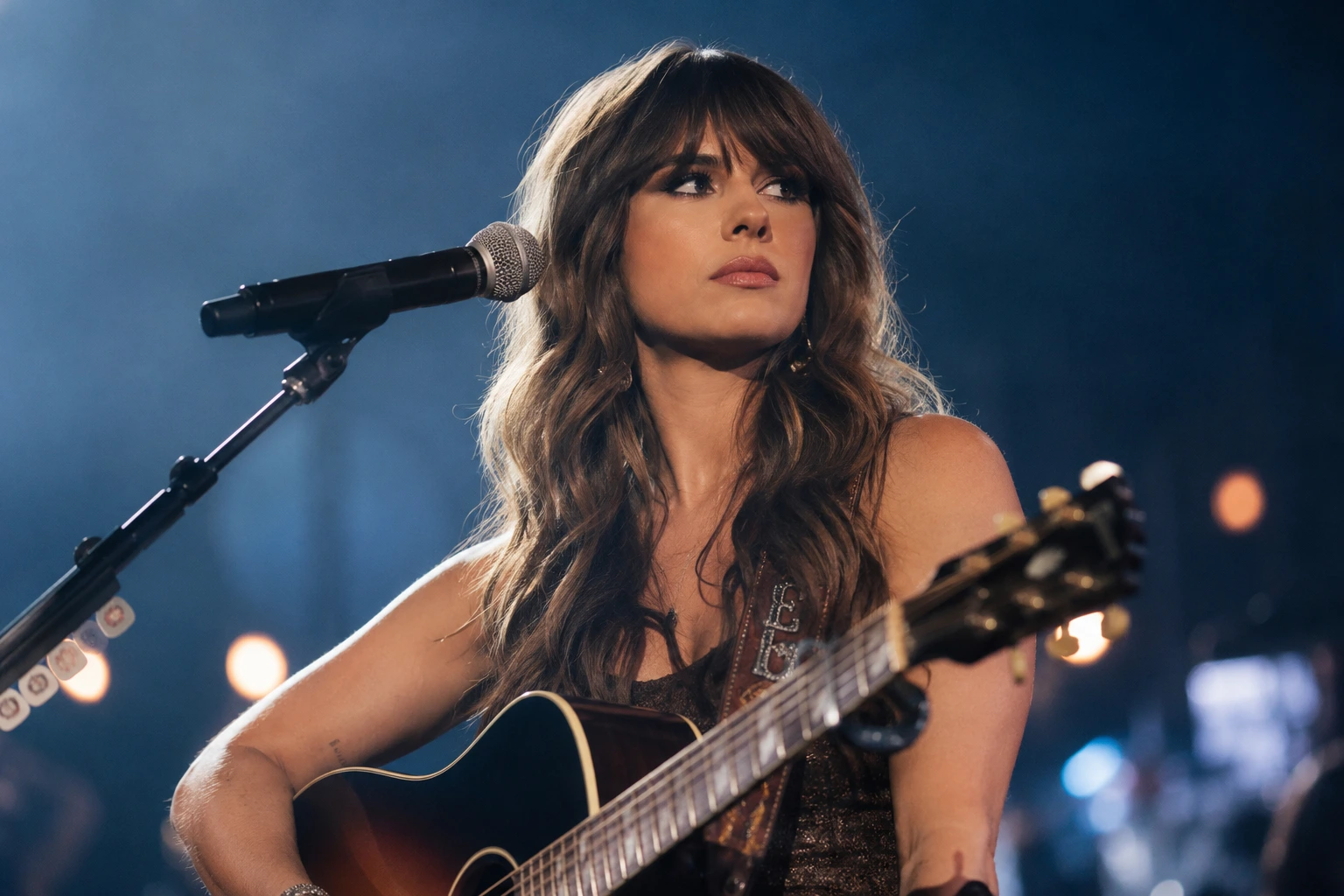
Country singer Ella Langley had a difficult message for fans after canceling her October 9 concert in Tulsa, Oklahoma, at the last minute: she would make the same decision again if it meant protecting their safety.
The singer was scheduled to perform at the BOK Center as part of her Dandelion Tour. However, a reported security threat involving gunfire and bombs led to the cancellation, leaving fans disappointed and raising questions about what had happened behind the scenes.
Langley addressed the situation the following night during her October 10 performance in Lubbock, Texas. She acknowledged the inconvenience caused by the cancellation but stood firmly by the decision.
“I would have made yesterday’s decision 10 billion times over,” she told the audience, making it clear that performing was never more important than protecting the people attending her shows.
Her response to the Tulsa concert cancellation offered a glimpse into the difficult balance between disappointing fans and taking precautions when a potential threat emerges.
Why Ella Langley Canceled Her Tulsa Concert
The cancellation happened on Friday, October 9, shortly before Langley was due to take the stage at Tulsa’s BOK Center.
In a statement shared on social media, the singer explained that the decision followed consultations with local authorities, venue management, and her security team.
“Due to a serious security threat involving the safety of my fans, the venue staff, and my team, the incredibly difficult decision was made to cancel tonight’s show,” she wrote.
She also apologized to those who had made arrangements to attend, recognizing that a concert involves more than simply purchasing a ticket. Fans may travel long distances, book accommodation, take time off work, or coordinate plans with friends and family.
Despite those considerations, Langley said she was unwilling to put anyone in harm’s way.
The BOK Center also announced the cancellation and indicated that ticket refund information would be provided to affected customers. The show had been expected to draw fans who had planned their evening around the performance.
The decision came down to a difficult judgment: whether to proceed with a major live event after a security warning or cancel it despite the disappointment and disruption that would follow.
What Police Discovered During the Security Searches
The circumstances surrounding the cancellation became clearer when Tulsa police explained the steps they had taken before the show was called off.
Officers initially searched the venue with bomb-detection dogs. That sweep did not uncover a threat, and authorities cleared the event to proceed.
However, police subsequently received another warning involving potential gunfire and bombs. Officers returned to the venue and conducted a second search.
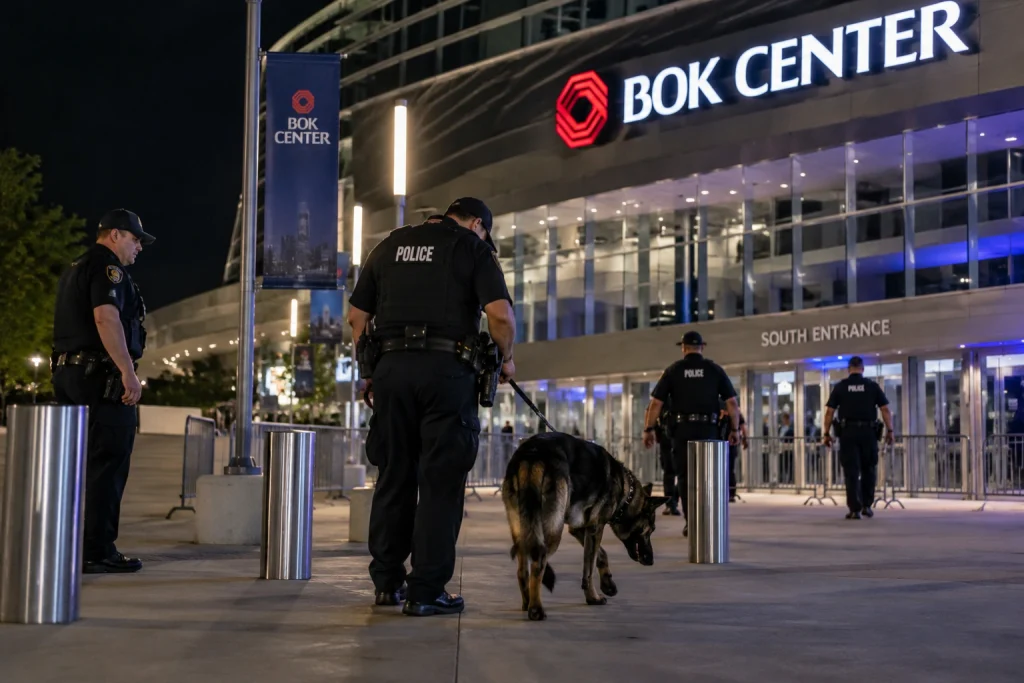
That search also failed to uncover a credible threat.
Tulsa Police Captain Richard Meulenberg said officers informed the performers that the searches had not identified a credible danger. Authorities maintained that the venue was safe, even as Langley’s team decided not to continue with the show.
The police account of the Tulsa cancellation provides important context about the searches and the response to the warning.
The distinction between a reported threat and a confirmed attack is essential. Police did not establish that an attack was imminent, and the searches did not uncover a credible threat. Nevertheless, the warning prompted a security response, and the artist and venue ultimately chose to cancel the event.
The incident also demonstrated how decisions at large public gatherings can be made under uncertainty. Security personnel must assess the information available to them while considering the potential consequences if a warning turns out to be genuine.
For Langley and her team, the priority was ensuring that fans, employees, and touring personnel could leave the venue without being exposed to an unacceptable risk.
Langley Defends Her Decision to Fans
By the time Langley returned to the stage in Lubbock on October 10, the Tulsa cancellation had become a major talking point among her fans.
Rather than avoiding the subject, she addressed it directly during the performance.
She acknowledged that canceling a show at the last minute was frustrating for people who had already made plans. However, she insisted that she would not hesitate to make the same decision if she believed an event could put people at risk.
Her declaration that she would make the decision “10 billion times over” was particularly emphatic. It communicated that the potential financial and logistical consequences of canceling a concert would not change her position on safety.
She also explained that she wanted her shows to remain places where people could gather, enjoy music, and feel secure.
“When it comes to keeping you safe and making sure that this show is a safe place for us to come and enjoy our music, then it will happen,” she told the crowd. “But the second it feels like it will not, I’m not doing it.”
The comments were a clear defense of her decision, but they also acknowledged the responsibility an artist has toward the people who attend a performance.
A concert brings together thousands of people who trust the venue, organizers, and performers to take reasonable precautions. When that trust is tested by a security warning, continuing as planned is not always the appropriate choice.
Langley’s explanation centered on that responsibility rather than on the controversy surrounding the cancellation.
How Faith Helped Her Return to the Stage
The Tulsa incident also affected Langley’s plans for the following evening.
After the cancellation, she considered calling off the Lubbock performance as well. She eventually decided to continue with the show, describing a personal sense of reassurance that helped her move forward.
Langley spoke about feeling a calling and a tug in her chest that told her it was safe to perform again.
Her reflections on prayer and returning to the stage highlighted the role faith played in her decision.
For Langley, the experience was not simply about resuming a tour after an unexpected interruption. It also involved finding the confidence to stand before another audience after a frightening and uncertain situation.
Her comments about faith offered a personal explanation for how she approached the decision. They did not suggest that she intended to disregard security warnings or treat future concerns lightly.
Instead, her position remained consistent: she was willing to perform when she believed it was safe, but she would not allow the pressure to deliver a show to outweigh the well-being of the people attending it.
That distinction matters. The Lubbock performance was not proof that the Tulsa cancellation had been unnecessary. It reflected a separate decision made after the circumstances surrounding the next event had been assessed.
What Happens to Tulsa Ticket Holders?
For fans affected by the cancellation, the immediate concern is what happens to their tickets.
Langley’s team and the BOK Center indicated that refund information would be provided. Customers should check the venue’s official communications and the ticket provider through which they made their purchase for instructions on eligibility and processing.
Fans should also keep their original booking confirmations and payment records until the refund process is complete.
A canceled concert can create expenses beyond the ticket price, particularly for people who traveled from outside Tulsa. Accommodation, transportation, and other bookings may have separate cancellation policies, so affected customers should contact the relevant providers directly.
The cancellation announcement did not establish a universal refund timeline for every customer. For that reason, ticket holders should rely on official updates rather than assume a particular processing date.
Meanwhile, the reported threat remains a separate matter from the ticket arrangements. Authorities asked anyone with relevant information about the incident to contact Tulsa Crime Stoppers.
A Difficult Moment During Langley’s Rise in Country Music
The cancellation came during an important period in Langley’s career.
The Alabama-born singer has attracted a growing audience through her country music, songwriting, and live performances. Her success has brought increased attention to her touring schedule, making the Tulsa incident particularly significant for fans following her rise.
But the events at the BOK Center also highlighted a reality of live entertainment: even carefully planned performances can be disrupted by circumstances beyond an artist’s control.
Canceling a show can carry substantial costs. Venues must coordinate staff and operations, touring teams must adjust their schedules, and fans may lose time and money. A late cancellation can also create uncertainty about subsequent performances.
Proceeding with a concert after a security warning, however, can involve consequences far more serious than a disrupted evening if a threat proves genuine.
Langley’s decision was made after consultation with venue management, local authorities, and her security team. Police reported that their searches did not uncover a credible threat, but the concert was canceled nonetheless.
That is the central tension in the story. A lack of evidence establishing an imminent attack does not automatically eliminate the concerns that can arise when a serious warning is received. At the same time, the cancellation should not be presented as proof that an attack was planned or that a credible threat was confirmed.
The available accounts support a more measured conclusion: a security warning prompted searches and a police response, and Langley’s team ultimately decided that the show should not proceed.
What Ella Langley’s Response Means for Her Fans
Langley’s message was ultimately about the responsibility she feels toward the people who attend her concerts.
She apologized to those whose plans were disrupted, acknowledged their disappointment, and explained why she believed canceling was the right decision.
Her return to the stage in Lubbock showed that she did not intend to abandon her tour simply because one performance had been called off. Instead, she continued performing after deciding that the circumstances allowed her to do so safely.
The incident also offered a reminder that the relationship between an artist and an audience extends beyond the music itself. Fans invest their time, money, and trust in live performances, while artists and organizers have a responsibility to take safety concerns seriously.
Langley did not claim that a confirmed attack had been prevented. Rather, she defended a precautionary decision made after a reported threat raised concerns about the safety of the event.
Her declaration that she would make the same choice “10 billion times over” left little room for doubt about where she stood.
For the singer, a canceled concert was disappointing. Putting the people who came to see her at risk would have been far worse.