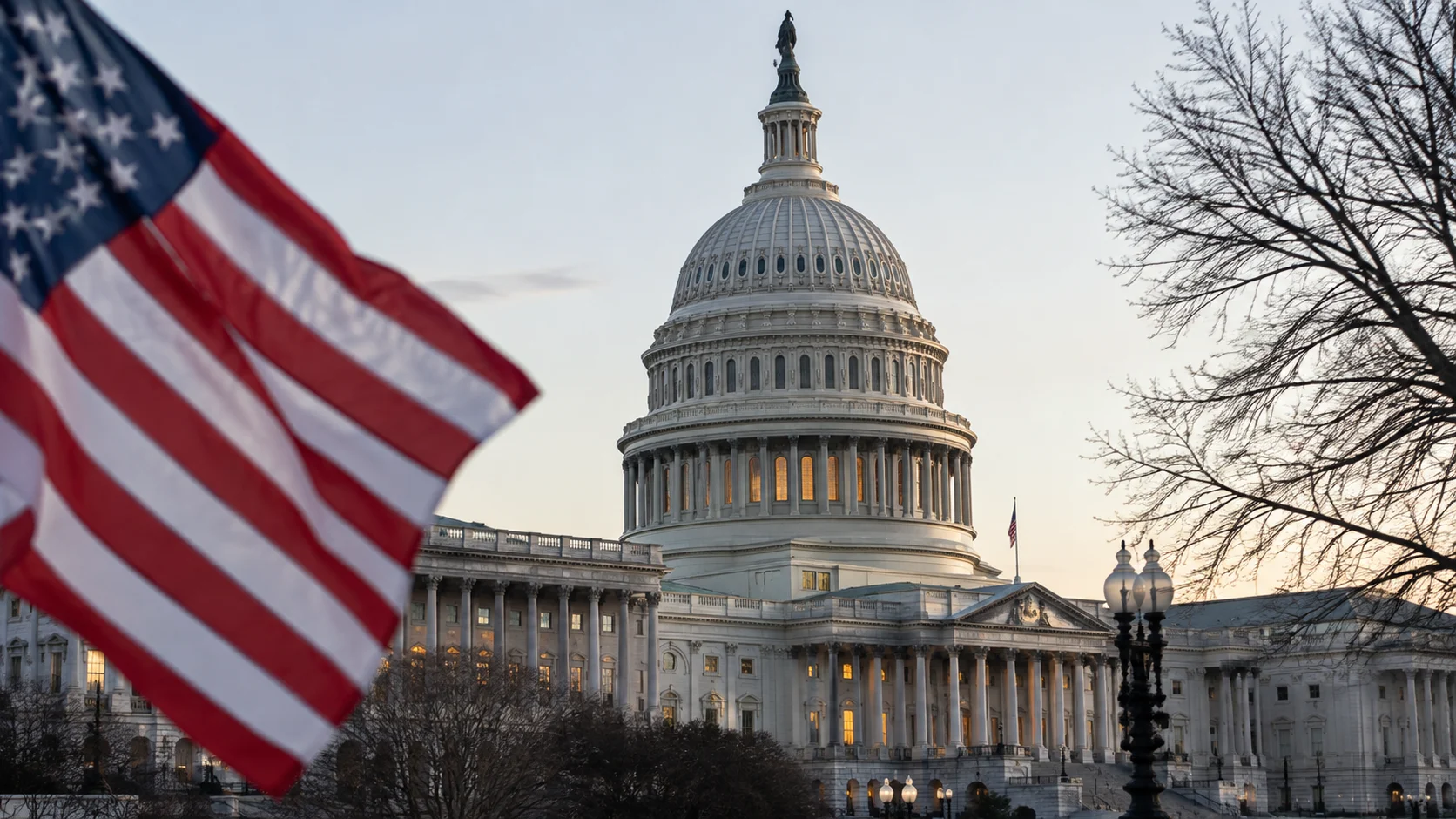
The U.S. Senate’s attempt to move forward with the CLARITY Act ended in a procedural setback on September 15, leaving a major piece of proposed cryptocurrency market-structure legislation stalled after months of negotiations.
Senators voted 49-50 against invoking cloture on the motion to proceed to H.R. 3633, according to the official Senate roll-call record. The motion required three-fifths of the Senate, meaning 60 votes, to advance.
The vote was not final passage of the CLARITY Act. It was a procedural vote to allow the Senate to begin consideration of the legislation. The Senate therefore did not reach a final vote on the bill’s substantive provisions.
That distinction matters because the legislation has already travelled a long way through Congress.
From House Passage to a Senate Roadblock
The legislation, formally known as the Digital Asset Market Clarity Act, is contained in H.R. 3633.
The House passed the bill on July 17, 2025, with 294 representatives voting in favor and 134 voting against, according to the House Clerk’s official vote record.
The legislation then moved into the Senate, where negotiations produced substantial revisions.
The Senate Banking Committee advanced its version in May 2026. The committee reported a 15-9 vote in favor of advancing the legislation following bipartisan negotiations, marking a significant step toward bringing the bill to the Senate floor. The Senate Banking Committee’s announcement described the measure as a framework intended to establish clearer rules for digital assets and divide regulatory responsibilities between the SEC and CFTC.
The bill subsequently underwent further negotiations as senators attempted to reconcile differences over market structure, decentralized finance, stablecoins, banking and ethics provisions.
By September, the legislation had become substantially more than a simple dispute over which agency should regulate cryptocurrency.
What the CLARITY Act Would Change
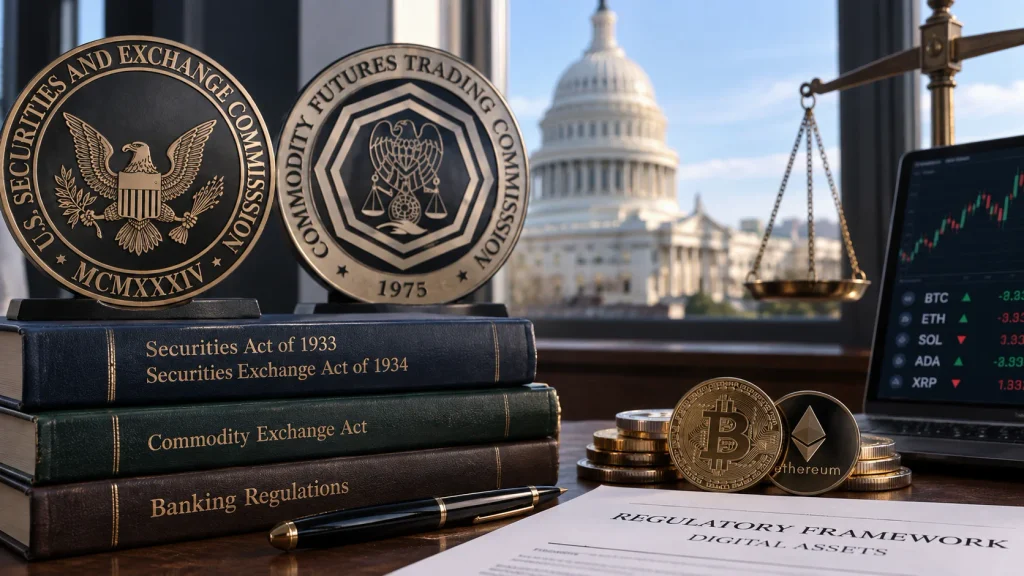
The legislation is designed to establish a federal regulatory framework for digital commodities and determine how responsibility would be divided between the Securities and Exchange Commission and the Commodity Futures Trading Commission.
The House committee report describes provisions that would give the CFTC authority over digital commodities while preserving SEC authority over securities and certain investment-contract transactions involving digital assets.
The bill also addresses registration requirements for digital-asset exchanges, brokers and dealers, customer protections and the secondary trading of digital commodities.
The statutory language is built around existing federal securities and commodities laws, including the Securities Act of 1933, the Securities Exchange Act of 1934 and the Commodity Exchange Act.
The full House legislation can be examined in the published text of H.R. 3633.
The proposed framework is important because cryptocurrency does not always fit neatly into the categories created by traditional financial legislation.
Why Classification Has Become So Important
For years, one of the most difficult issues in U.S. crypto regulation has been determining when a digital asset or transaction falls within federal securities law.
That debate is closely connected to the Supreme Court’s Howey test, established in SEC v. W.J. Howey Co., 328 U.S. 293 (1946).
Under that framework, an investment contract can qualify as a security when the required elements are present.
The SEC has relied on investment-contract principles in numerous cryptocurrency-related enforcement matters and regulatory interpretations.
The CLARITY Act would create more detailed statutory categories for digital assets rather than leaving the boundaries to be determined primarily through existing statutes, agency interpretations and individual court proceedings.
The result would be a more specific legislative framework for determining which activities fall under SEC supervision and which fall under CFTC oversight.
The SEC Is Already Changing Its Crypto Framework
Congress is not working on the CLARITY Act while the regulatory agencies remain inactive.
The SEC has independently moved forward with its own cryptocurrency regulatory initiatives.
In August 2026, the agency proposed Regulation Crypto Assets, a new framework covering certain investment contracts involving crypto assets.
The proposal includes two exemptions from securities-registration requirements: one covering offerings of up to $5 million over four years and another covering offerings of up to $75 million during a 12-month period, subject to specified conditions.
It also proposes a conditional safe harbor from the term “investment contract” in the statutory definition of a security.
The SEC’s Regulation Crypto Assets proposal is currently subject to public comment, with comments due October 20, 2026.
The regulatory developments make the stalled congressional legislation particularly significant. Even without a new statute, the SEC continues to develop rules governing crypto-related activities within its existing authority.
The Final Negotiations Became Broader
The final weeks before the Senate vote brought several additional disputes into the legislation.
Among them were provisions concerning stablecoin rewards, banking relationships, decentralized finance, blockchain software developers and ethics rules affecting public officials.
The negotiations became particularly sensitive because the legislation was being considered alongside broader debates over cryptocurrency’s growing role in the U.S. financial system.
The final Republican-backed draft was released shortly before the vote after negotiations involving Democratic senators.
Reuters reported that the legislation had become caught in disputes involving stablecoin rewards and ethics provisions, while Senate Republicans were attempting to secure enough Democratic support to reach the 60-vote threshold required for advancement.
Those negotiations ultimately did not produce enough votes.
The September 15 Vote
The Senate’s official record provides the clearest account of what happened.
The vote took place at 2:19 p.m. on September 15, 2026.
The result was:
- 49 senators: Yes
- 50 senators: No
- 1 senator: Not voting
The Senate classified the result as “Cloture on the Motion to Proceed Rejected.”
The official Senate floor log also records the CLARITY Act vote as a failed motion to invoke cloture on the motion to proceed to H.R. 3633.
The failed procedural vote prevented the bill from moving into the planned Senate consideration process.
The Vote Did Not Kill the Bill Permanently
The wording surrounding the vote is important.
The Senate did not vote on final passage of H.R. 3633.
It voted on whether to invoke cloture on a motion to proceed.
That means the September 15 vote should be described as a failure to advance the legislation, rather than a final Senate rejection of the entire CLARITY Act.
The Senate floor record also shows subsequent procedural activity concerning reconsideration.
For now, however, the bill has not moved forward to substantive Senate debate or final passage.
The Political Divide Inside the Senate
The vote also revealed the difficulty of assembling the coalition required for crypto market-structure legislation.
The official tally shows that four Republican senators voted against the procedural motion: Susan Collins, Josh Hawley, Jerry Moran and Thom Tillis.
Democrats who voted were opposed to advancing the measure, while Senator Chris Coons did not vote.
The final tally therefore left supporters 11 votes short of the 60 needed for cloture.
The breakdown is documented in the Senate’s complete vote-by-vote record.
The Industry Now Has to Work With the Existing Framework
The failed procedural vote does not remove existing cryptocurrency regulation.
The SEC continues to operate under the federal securities laws.
The CFTC continues to exercise authority under the Commodity Exchange Act.
Banks and other financial institutions remain subject to existing federal banking requirements.

Crypto businesses therefore continue operating under the legal framework that existed before the CLARITY Act reached the Senate floor.
What has been delayed is the creation of a broader congressional market-structure framework specifically designed around digital assets.
That distinction is particularly relevant for businesses attempting to determine whether a particular token, exchange, trading activity or decentralized-finance service falls within securities or commodities regulation.
The Next Stage Is Uncertain
There is currently no verified date for a final Senate vote on the CLARITY Act.
The September 15 procedural vote prevented the legislation from moving forward under the planned timetable.
A future attempt would require additional negotiations and sufficient support to overcome the Senate’s procedural requirements.
The legislative calendar also matters. With the 2026 election cycle approaching and Congress facing a limited legislative window, supporters have less time to resolve the remaining disputes if they want to revive the legislation during the current session.
Reuters reported after the vote that Congress was approaching a recess before the election, further narrowing the immediate legislative window.
Why the CLARITY Act Still Matters
The Senate setback does not eliminate the regulatory problems that prompted Congress to develop the legislation.
Digital-asset businesses still operate across legal categories created before blockchain technology existed. Regulators still have to determine how existing securities and commodities statutes apply to new forms of digital finance. Investors and companies still face questions about registration, disclosure, custody, market supervision and consumer protection.
The CLARITY Act was an attempt to address those issues through a comprehensive federal statute.
For now, that effort has stalled.
The House has already passed H.R. 3633. The Senate Banking Committee has already advanced its version. Federal regulators are continuing to develop their own crypto-related rules. Yet the Senate has not reached the point of voting on final passage.
The 49-50 procedural vote on September 15 therefore marks a major pause in the legislation’s progress, not the end of the broader debate over U.S. cryptocurrency regulation.
As the SEC continues developing its regulatory framework and lawmakers consider whether the CLARITY Act can return to the Senate floor, the legal structure governing America’s digital-asset market remains in transition.