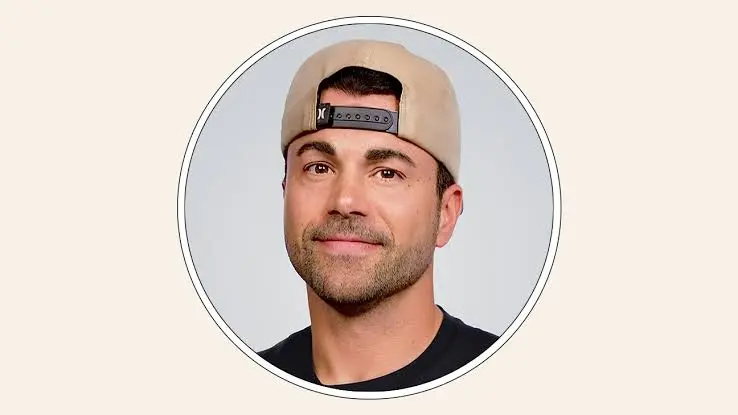
Mark Rober didn’t start out aiming to be one of the most popular creators on YouTube.
Rober was an engineer at NASA’s Jet Propulsion Laboratory long before he became well-known to millions of people for glitter bombs, complex engineering projects, and scientific documentaries. According to Rober’s own testimony in a PBS NewsHour interview, he worked for NASA for nine years, seven of those years spent on the Curiosity rover. The purpose of NASA’s Curiosity mission was to find out if microbial life could have existed on Mars in the past.
His career now looks extremely different.
Rober has amassed a massive YouTube following, launched the STEM education firm CrunchLabs, created subscription-based engineering products, and participated in some of the internet’s largest creator-led humanitarian initiatives.
This shift has also made his finances a source of public interest.
What is Mark Rober’s net worth?
Mark Rober’s exact net worth has not been made public.
Celebrity Net Worth estimates Rober’s fortune to be at $50 million. However, this should be regarded as an estimate rather than an audited amount released by Rober or his financial agents.
Another number offers crucial context.
Forbes’ creator coverage counts earnings rather than overall wealth. Because annual creator profits and personal net worth are separate financial measures, they should not be used interchangeably.
Rober’s financial journey is better understood by looking at how he created many income-generating businesses centered on engineering, entertainment, education, and his massive online audience.
Mark Rober’s Story Started With Engineering
Rober’s financial achievement makes more sense when considered in the context of his previous profession.
Growing up, he developed an interest in engineering and eventually went on to study mechanical engineering. After graduating, he worked at NASA’s Jet Propulsion Laboratory for nine years. Seven of those years were dedicated to the Curiosity rover, as he said in his PBS NewsHour interview.
Curiosity became one of NASA’s most well-known robotic explorers. According to NASA mission documents, the rover is part of the Mars Science Laboratory mission, which seeks to determine whether Mars ever had habitats capable of supporting microbial life.
For Rober, the experience gave more than just a strong résumé.
It also influenced how he tackled problems.
Identify the problem. Build something. Try it. Find out what happens.
That engineering attitude will later form the basis of his YouTube career.
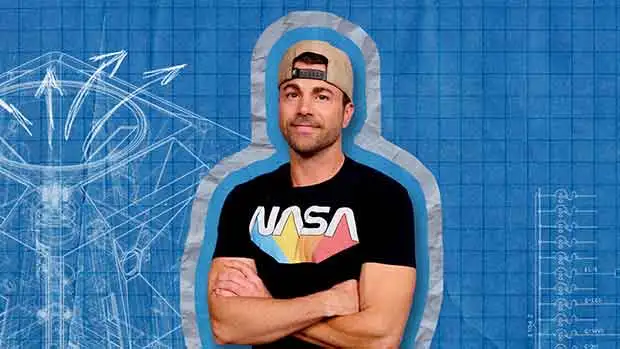
NASA to Apple
Rober did not abandon engineering right away.
He relocated to Apple after leaving NASA, where he was employed in the Special Projects Group. Rober stated in his PBS interview that he worked at Apple for roughly five years and was unable to talk about much of his work due to confidentiality restrictions.
He did, however, bring up a well-known patent related to self-driving cars and virtual reality.
Another experiment was developing at the same time.
YouTube.
The YouTube Experiment That Changed His Career
While still employed as an engineer, Rober started creating videos.
Over time, what began as a creative release grew into something much more. He clarified in his PBS interview that his first intention with YouTube was merely to have a creative outlet. Eventually, he discovered that a far wider audience could watch his engineering-based videos than he had anticipated.
Using technology to produce strange visual illusions was one of his first widely shared ideas.
The glitter bomb followed.
In his intricate package-theft experiments, Rober blended comedy, storytelling, engineering, and covert cameras. The idea turned into one of the initiatives most strongly linked to his internet persona.
The YouTube experiment has developed into a significant profession by 2019.
In a 2019 Reddit AMA, Rober said that he had amassed 10 million subscribers and had recently quit Apple to focus solely on YouTube.
What had begun as a pastime was becoming into a business.
How Mark Rober Earn Money
YouTube advertising alone cannot account for Rober’s financial performance.
His company has grown into a number of related fields.
YouTube
Rober’s creative business is still built on YouTube.
His films blend science, engineering, entertainment, and extensive experimentation. Many projects need teams, equipment, technical labor, and significant production time rather than a straightforward talking-head approach.
This generates a variety of income-generating options, such as sponsorships, advertising, and business alliances.
However, the audience itself may be the most valuable resource.
Rober is the company’s leader and a former NASA engineer, according to his official CrunchLabs biography. His educational charity, CrunchLabs.org, reports that his broader content ecosystem currently has over 80 million subscribers and over one billion monthly views.
These figures demonstrate the extent of the audience supporting his brand, even if subscription and view counts inevitably change over time.

CrunchLabs
CrunchLabs could be the larger business story.
Rober started CrunchLabs, a STEM-focused business centered on practical engineering experiences. The firm provides kids tasks they can physically construct instead of just demonstrating how things operate.
Through practical projects, the organization aims to “Think Like an Engineer” for both adults and children, according to its official website.
Build Box, which caters to younger learners, and Hack Pack, which focuses on robotics and coding for older users, are two of its subscription offerings.
Compared to YouTube, that model generates a different kind of business.
CrunchLabs Is Developing into a Brand for Education
Additionally, CrunchLabs has transcended tangible STEM toys.
The group claims to be creating free, standards-aligned scientific curriculum for teachers through CrunchLabs.org. The program blends interactive scientific exercises with video narratives.
The associated Class CrunchLabs program uses Rober’s science storytelling in conjunction with curriculum created in collaboration with educators and learning professionals to combine entertainment, education, and practical experiences.
This is a major extension of the original YouTube idea.
These days, Rober does more than just make science fun on the internet.
His businesses are also working to implement that kind of instruction in traditional classroom settings.
A viewer only sees a video once.
Products can be sent to a subscriber on a regular basis.
When analyzing how Rober has grown his firm beyond advertising income, this distinction is crucial.
TeamTrees and Mark Rober
Large-scale online philanthropy is also intimately related to Rober’s career.
He joined forces with Jimmy Donaldson, popularly known as MrBeast, in 2019 to launch #TeamTrees, a creator-led initiative focused on generating funds for tree planting.
$20 million was the initial target.
The official TeamTrees website claims that the campaign produced over one billion organic video views and raised over $24 million.
More than 25 million trees have been financed, according to the current TeamTrees website, with planting initiatives carried out by the Arbor Day Foundation.
Another method Rober might use his internet following was shown by the campaign.
He might point millions of people toward a practical endeavor rather than just drawing them to a video.
The Formula Went Into the Ocean with TeamSeas
Rober and MrBeast started another significant effort two years later.
This time, the emphasis was on marine pollution rather than forests. #TeamSeas was founded with the intention of raising $30 million to clear 30 million pounds of garbage from rivers, beaches, and seas.
In order to transform a social media campaign into a significant fundraising endeavor, the campaign joined together online artists and environmental groups.
The initiative adhered to the same fundamental strategy that had made TeamTrees successful: a straightforward objective, a sizable creative audience, and a highly visual campaign that could be readily conveyed through internet video.
TeamWater Maintained the Trend
Later, Rober and MrBeast made a comeback with #TeamWater, a significant fundraising initiative that aims to raise $40 million for access to clean water in 2025.
Once more, the campaign leveraged the artists’ massive internet audiences to raise awareness of a worldwide issue rather than merely treating philanthropy as a distinct activity.
Another significant aspect of Rober’s career is demonstrated by his involvement in initiatives like TeamTrees, TeamSeas, and TeamWater: his audience has developed into a resource that can be used for objectives other than amusement.
The Differences in Mark Rober’s Business Model
An uncommon illustration of how a single professional brand might develop is provided by Rober’s career.
He started off as a video-making engineer.
Then he became an engineer and YouTuber.
His commercial interests now include media, STEM products, and education.
The parts support each other.
He is knowledgeable about the issue because of his technical expertise.
People are captivated by his stories.
He has a fanbase thanks to YouTube.
CrunchLabs provides goods and educational opportunities to that demographic.
Additionally, he has the chance to leverage the same audience for significant fundraising efforts through his charitable endeavors.
Because of this, it is challenging to comprehend Rober’s financial situation by focusing just on YouTube advertising.
The Career Timeline of Mark Rober
NASA: According to his PBS NewsHour interview, Rober worked at NASA for nine years, seven of those years spent on the Curiosity rover.
Apple: According to the same PBS interview, he then worked at Apple’s Special Projects Group for around five years.
2019: According to his 2019 Reddit AMA, Rober quit Apple and started working full-time on YouTube after gaining 10 million followers.
2019: He and MrBeast assisted in the launch of #TeamTrees.
The #TeamSeas campaign was started in 2021 by Rober and MrBeast.
2022: Rober established CrunchLabs, a STEM-focused business that sells practical engineering goods.
2025: #TeamWater was introduced by Rober and MrBeast.
2026: Through Class CrunchLabs and CrunchLabs.org, Rober’s educational operations are still growing.
The 2026 Net Worth of Mark Rober
What is the value of Mark Rober, then?
According to Celebrity Net Worth, the most popular current estimate is $50 million. However, as Rober hasn’t made an audited personal balance sheet available to the public, that value should be regarded as an estimate rather than a verified amount.
How he established the companies behind the estimate is the most fascinating aspect of the narrative.
Rober transitioned from NASA technology design to YouTube experiment design. He then used his influence for initiatives like TeamTrees and CrunchLabs to turn that audience into a larger STEM brand.
As a result, his work serves as an example of a contemporary creator-business paradigm in which knowledge becomes content, content becomes an audience, and the audience may fund endeavors such as education and commerce.
The project gradually grew to be much more than just a video channel for the person who initially characterized YouTube as a creative outlet.
It developed into a corporate environment centered on research, engineering, and curiosity.