

When Netflix revisited the life of Ed Gein in Monster: The Ed Gein Story, viewers were once again drawn to the family behind one of America’s most notorious criminal cases. Among the lesser-known figures is George Philip Gein, Ed Gein’s father, whose life ended long before his son’s crimes became public.
George married Augusta Wilhelmine Lehrke in 1900, and the couple had two sons, Henry and Edward Theodore “Ed” Gein. The family first lived in La Crosse, Wisconsin, before moving to a farm near Plainfield. Historical accounts portray George as a struggling working man who dealt with alcohol problems and a deeply troubled home life. (People)
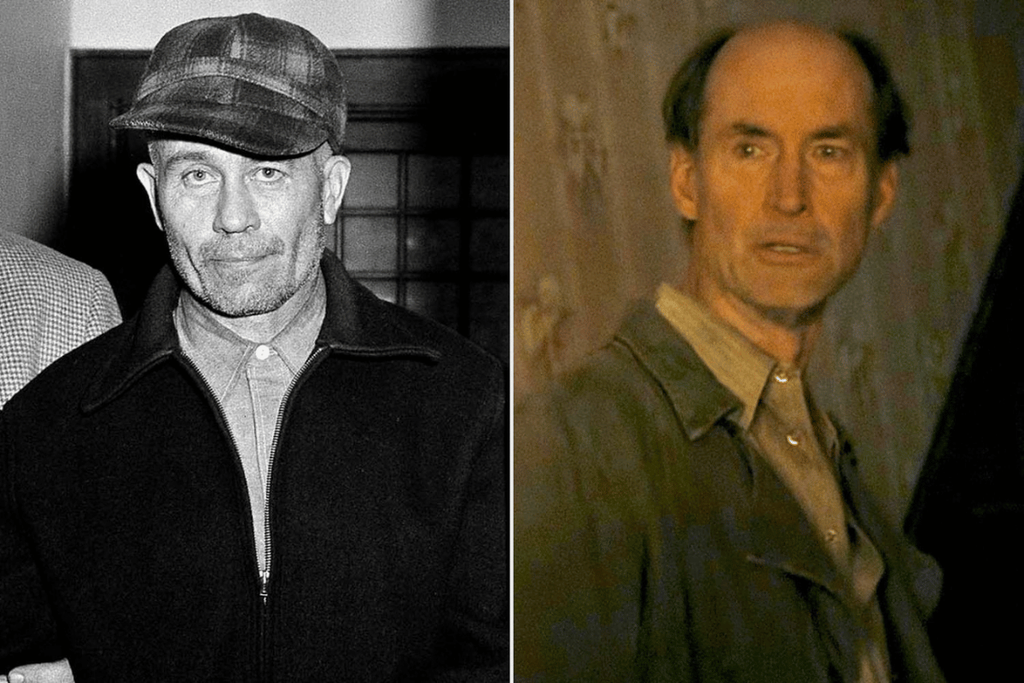
But one fact is particularly important when discussing him: George Philip Gein died in 1940, years before Ed Gein’s known murders and the investigation that made the family name infamous. (Ancestry)
Who Was George Philip Gein?
George Philip Gein was born in Wisconsin in 1873. The exact details of his early life are less certain than those of his famous son.
Genealogical records give his birth as August 4, 1873, with Ancestry placing it in Coon Valley, Vernon County, Wisconsin, while IMDb lists Bergen, Wisconsin. A historical publication from the Southwest Wisconsin History and Genealogy Museum notes that even George’s origins are complicated by inconsistent census records. (Ancestry)
That uncertainty is worth noting because many online biographies present every detail about George as settled fact when the surviving record does not support that level of certainty.
His working life, however, is better documented. A historical account based on old La Crosse city directories connects George with several occupations, including work for the Milwaukee Road railroad, labor at the Davis, Medary and Platz tannery, and employment as a fireman for the La Crosse Gas Company. The 1910 census also identified him as a retail grocery dealer. (SWCH Museum)
Later biographies commonly describe him as a carpenter, tanner and insurance salesman as well. (People)
George Philip Gein and Augusta Lehrke
George married Augusta Wilhelmine Lehrke in 1900. A FamilySearch record gives the marriage date as December 11, 1900, in Hamburg, Vernon County, Wisconsin. (Family Search)
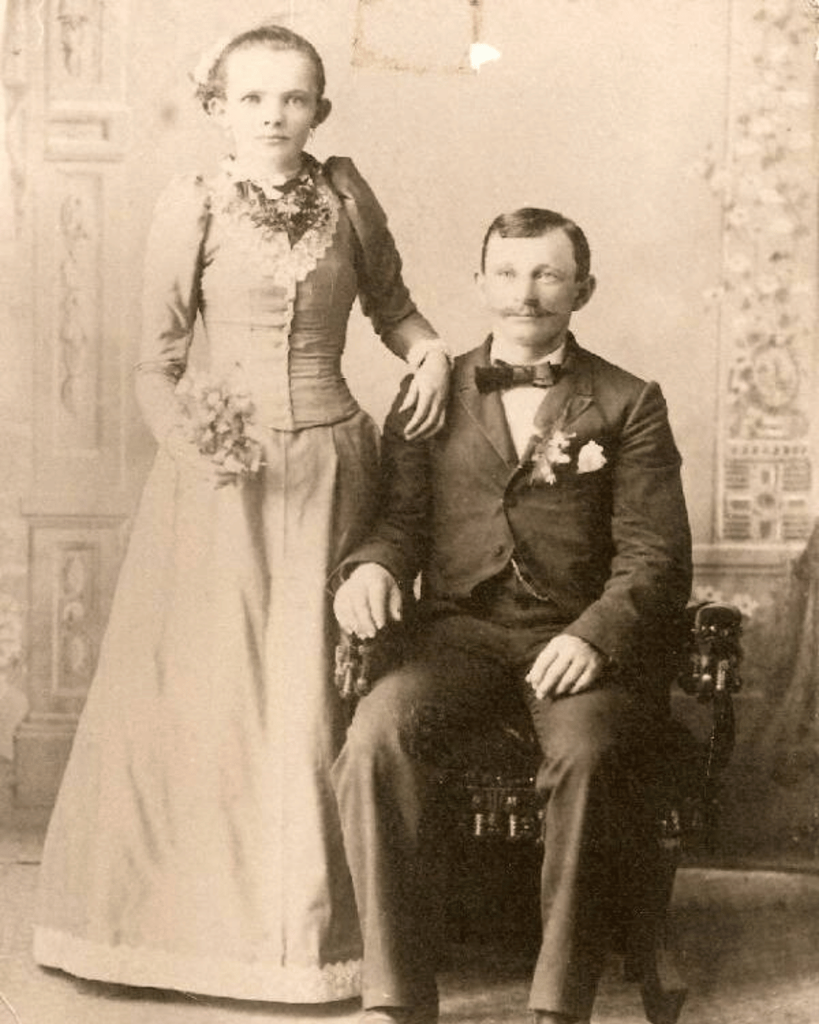
NLC; image credited there to ATI)
The couple eventually had two sons: Henry George Gein, the older child, and Edward Theodore Gein, born in 1906. The family lived in La Crosse before relocating to a rural farm near Plainfield around 1914–1915. (SWCH Museum)
Their marriage became significant in later biographies of Ed because the household was described as deeply dysfunctional. George was repeatedly characterized as a heavy drinker, while Augusta was portrayed as intensely religious and highly controlling. EBSCO’s research summary describes George as verbally and physically abusive toward both sons. (EBSCO)
Those accounts are important context, but they should not be turned into a simplistic explanation for Ed Gein’s later crimes. A troubled childhood can be part of a person’s history without proving a direct cause-and-effect relationship decades later.
Life on the Gein Farm
The move to rural Wisconsin changed the family’s circumstances. The historical record places the Geins on a farm near Plainfield, where George continued agricultural work while the family lived an increasingly isolated life. (SWCH Museum)
By his later years, George’s health had declined. The Southwest Wisconsin historical account describes him as a semi-invalid before his death. (SWCH Museum)
George’s role in the household was also increasingly overshadowed by Augusta. Later accounts consistently emphasize her influence over the boys, particularly Ed. After George’s death, Henry and Ed took on more responsibility for supporting the household through odd jobs. (People)
George Philip Gein Death: What Happened?
The most consistently supported record places George Philip Gein’s death on April 1, 1940, in Plainfield, Wisconsin. Ancestry’s indexed Wisconsin death record and Find a Grave record both give that date and list him as 66 years old. (Ancestry)
People, citing Britannica, reports that George died from heart failure in 1940. (People)
There is, however, a historical discrepancy worth acknowledging. The Southwest Wisconsin History and Genealogy Museum publication gives April 4, 1940, and age 65 rather than April 1 and 66. (SWCH Museum)
Because the indexed Wisconsin death record and several genealogical references support April 1, 1940, that is the date used here. The disagreement is a reminder that not every detail repeated online carries the same level of documentation.
Most importantly, George was not alive when Ed Gein’s known criminal activities came to light. Ed’s confirmed criminal period occurred years later, with his arrest in November 1957. EBSCO similarly places Gein’s active criminal period decades after his father’s death. (EBSCO)
What Happened to the Family After George’s Death?
George’s death left Augusta and her two adult sons on the family farm.
Four years later, the family suffered another loss when Henry Gein died in 1944 during a brush-fire incident near the farm. His death later attracted speculation about Ed’s possible involvement, but that accusation was never established as fact. EBSCO explicitly notes that the theory remained unproven. (EBSCO)
Augusta died in December 1945. With both his father and brother gone and his mother dead the following year, Ed was left alone on the property. His later criminal activities unfolded after these deaths, which is one reason the family timeline is so frequently discussed in accounts of his life. (People)
What Does Monster: The Ed Gein Story Show About George?
George is not a central character in Netflix’s Monster: The Ed Gein Story. PEOPLE reports that he appears in only one scene, portrayed by Darin Cooper. (People)

Netflix’s own materials describe the series as a dramatization based on the real life of Ed Gein, while PEOPLE’s reporting makes clear that George’s portrayal occupies only a small portion of the story. (Netflix Media Center)
That distinction matters. A television drama may compress events, combine incidents or create dialogue to build a narrative. George’s historical biography is much more limited and comes primarily from census records, local historical research and later accounts.
According to Celebs America, the most responsible way to understand George Philip Gein is not as a convenient explanation for Ed Gein’s crimes, but as one documented part of a troubled family history. The evidence supports descriptions of alcohol abuse, family conflict and an unstable household, but it does not justify reducing Ed’s later crimes to the actions of his father alone.
What Do We Know About George Gein’s Own Parents?
This is one of the least certain areas of George Philip Gein’s biography.
Ancestry and other family-history databases identify parents for George, but those profiles are based partly on compiled genealogical material and should be treated cautiously. The Southwest Wisconsin historical account adds further uncertainty, noting that census records gave inconsistent information about George’s parents and even describing an older record for a “George Gee” living with the Dingeldein family. (Ancestry)
For that reason, it is safer to say that George’s own parentage remains less firmly established than his relationship to Augusta and his two sons.
George Philip Gein lived an ordinary working life in Wisconsin before his family became the subject of national attention.
He married Augusta in 1900, worked a series of jobs, helped raise Henry and Ed, and eventually lived with his family on the Plainfield-area farm. Later accounts describe a household marked by George’s drinking and abuse alongside Augusta’s strict religious control. (FamilySearch)
George died in 1940, most reliably recorded as April 1, from heart failure. He therefore never witnessed Ed Gein’s 1950s crimes or the investigation that would permanently define the Gein name. (Ancestry)
Today, interest in George comes largely from renewed public fascination with Ed Gein and Netflix’s Monster: The Ed Gein Story. But the historical record suggests that George’s story is worth examining on its own terms rather than solely through the crimes of his son.
Sources:
- https://people.com/who-was-ed-gein-father-george-gein-11825038
- https://www.aol.com/articles/ed-geins-father-george-gein-130000972.html
- https://www.ebsco.com/research-starters/history/ed-gein
- https://www.swch-museum.com/wp-content/uploads/2020/07/Web-Version-1.pdf
- https://ancestors.familysearch.org/en/K2T8-V4N/augusta-wilhelmina-lehrke-1877-1945
- https://media.netflix.com/en/only-on-netflix/81783093