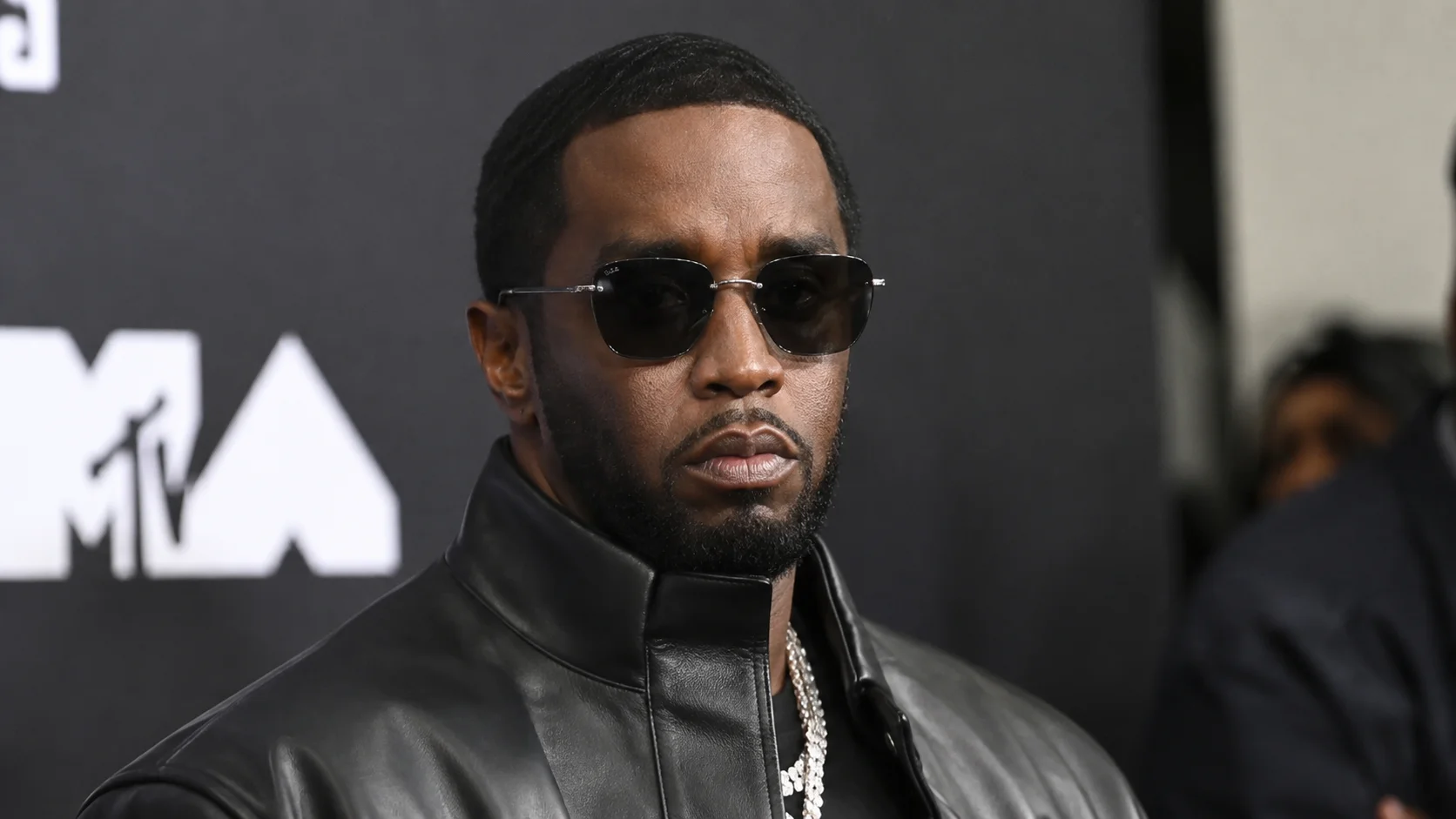
Sean “Diddy” Combs’ $100 million defamation lawsuit has taken another unexpected turn.
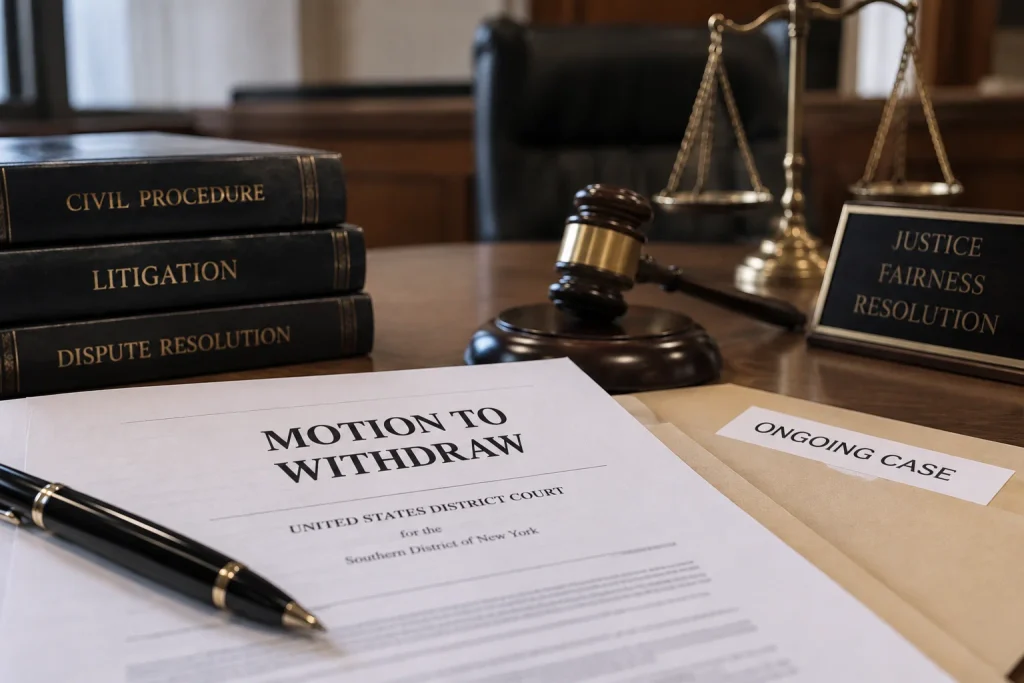
Just days after a federal judge allowed parts of Combs’ defamation case to move forward, lawyers from New York firm Sher Tremonte LLP asked the court for permission to withdraw from representing him. The lawyers say Combs has not paid a substantial balance of legal fees, costs and expenses for more than six months and that communication between the client and firm has broken down.
Combs disputes that explanation.
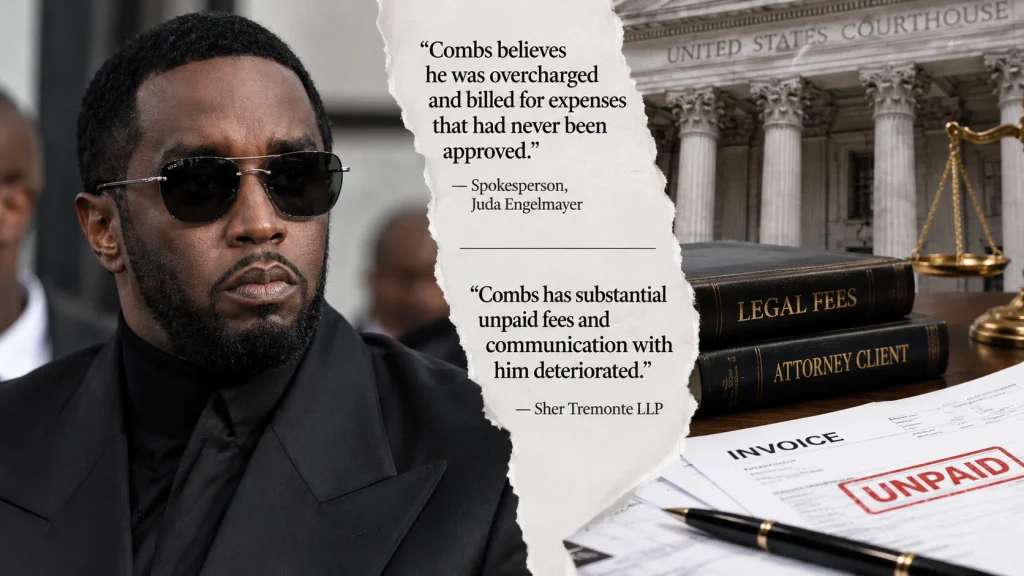
Through his spokesperson, Juda Engelmayer, Combs said he made the decision to change lawyers because he believed the firm was overcharging him and billing expenses that had not been approved.
The dispute creates a new legal issue for Combs while his separate $100 million defamation lawsuit remains pending in the U.S. District Court for the Southern District of New York.
According to the September 14 court filing reported by ABC News, attorney Michael Tremonte said Sher Tremonte had been representing Combs in civil litigation but had not received payment on a substantial balance for months.
The development raises two separate questions: why did Combs’ lawyers seek to withdraw, and what happens to the $100 million lawsuit if they are allowed to leave?
Why Did Sean Combs’ Lawyers Seek To Withdraw?
The withdrawal request came from Sher Tremonte LLP, the firm representing Combs in his civil litigation.
Michael Tremonte, a partner at the firm, told the court that Combs was more than six months behind on legal fees, costs and expenses. The filing also alleged that Combs had not made himself available for timely and substantive communications about his cases for more than four months.
According to NBC News’ report on the withdrawal filing, Tremonte described the situation as a “total breakdown” in cooperation and communication between Combs and the firm.
The firm argued that the communication problems had made its representation unreasonably difficult and prevented it from continuing to provide effective legal services.
This is important because the lawyers are not simply saying that they would prefer to stop representing Combs. They are asking the federal court for permission to withdraw from an active case.
How Much Does Sean Combs Allegedly Owe His Lawyers?
The exact amount of the alleged unpaid legal fees has not been publicly identified in the reporting and court materials reviewed for this article.
What the lawyers have alleged is that Combs has not paid a substantial balance of attorney fees, costs and expenses for more than six months.
The filing reportedly says the firm’s most recent payment from Combs covered fees and expenses incurred in late 2025.
That means it would be misleading to publish a specific dollar figure as Combs’ unpaid legal bill unless the amount is established in a public filing.
The dispute is therefore about an alleged substantial outstanding balance, not a publicly established figure that can safely be described as the exact amount Combs owes.
Sean Combs Disputes The Lawyers’ Version
Combs has offered a very different explanation for the breakdown.
His spokesperson, Juda Engelmayer, said Combs made the decision to switch lawyers because he believed he was being overcharged and billed for expenses that had never been approved.
In other words, Combs does not accept the characterization that the situation is simply a matter of him refusing to pay his legal bills.
Rolling Stone’s report on the dispute quotes Combs’ position that the disagreement concerns allegedly excessive and unapproved billing.
Sher Tremonte has rejected the suggestion that it improperly overcharged Combs.
This leaves two competing accounts:
- Sher Tremonte says Combs has substantial unpaid fees and that communication with him deteriorated.
- Combs says he chose to change lawyers because he believed the firm was overcharging him and running up unauthorized bills.
Neither side’s characterization should be treated as a final judicial finding about the fee dispute.
What Is The $100 Million Defamation Case About?
The fee dispute is connected to a separate civil lawsuit filed by Combs against Courtney Burgess, attorney Ariel Mitchell and Nexstar Media Inc., the company that owns NewsNation.
The case is Sean Combs v. Courtney Burgess, Ariel Mitchell and Nexstar Media Inc., No. 25 Civ. 650 (JPC), in the U.S. District Court for the Southern District of New York.
Combs originally filed the lawsuit in January 2025 seeking $50 million in damages. He later amended the complaint and increased the damages demand to at least $100 million. The amended complaint alleges a single cause of action for defamation.
The lawsuit concerns statements made publicly about Combs between his September 2024 federal indictment and his 2025 criminal trial.
According to the federal court’s September 4, 2026 opinion, Combs alleges that Burgess claimed to possess videos showing Combs sexually assaulting celebrities and minors.
Combs also alleges that Mitchell, who represented Burgess, repeated or supported Burgess’ allegations and made additional statements about Combs.
The lawsuit further alleges that Nexstar amplified some of those statements through NewsNation broadcasts.
These are allegations made by Combs in the civil lawsuit. They should not be presented as established facts.
Why Did Sean Combs File The Defamation Lawsuit?
The lawsuit focuses on statements that Combs says were false and damaging to his reputation.
The amended complaint identifies seven allegedly defamatory statements. They include allegations concerning supposed recordings of Combs, claims about secretly recorded sexual encounters, an alleged police report concerning a rape accusation and statements involving drug-laced baby oil.
The federal court summarized these allegations in its September 4 opinion.
The lawsuit therefore does not ask the court to retry the criminal case against Combs.
Instead, the civil case asks whether statements made by the defendants about Combs satisfy the legal requirements for defamation under applicable law.
That distinction matters when discussing the case because a civil defamation lawsuit and a criminal prosecution involve different legal claims, standards and questions.
What Did The Federal Judge Decide On September 4?
The timing of the lawyers’ withdrawal request is especially notable because the federal judge had issued an important ruling only days earlier.
On September 4, 2026, Judge John P. Cronan ruled on motions filed by Nexstar and Ariel Mitchell seeking dismissal of Combs’ amended complaint.
The result was mixed.
The court granted Nexstar’s motion to dismiss in part and denied it in part. Mitchell’s motion to dismiss was denied in its entirety.
That means Combs’ lawsuit was not dismissed in full.
However, it would also be inaccurate to describe the ruling as a finding that Combs had proven defamation.
At the motion-to-dismiss stage, the court was deciding whether the complaint contained sufficient allegations to proceed under the applicable legal standards. It was not conducting a trial to determine whether the challenged statements were ultimately true or false.
The court itself explained the procedural nature of the ruling in its opinion.
Which Claims Survived The Dismissal Stage?
The September 4 ruling provides more detail than many of the news reports about the dispute.
Combs’ amended complaint identified seven allegedly defamatory statements.
Four were alleged against Nexstar, six against Mitchell and two against Burgess.
The court allowed Combs’ claims against Mitchell to proceed past the motion-to-dismiss stage. Nexstar, meanwhile, succeeded in having some claims dismissed while other portions of the lawsuit remained alive.
This distinction is important for readers searching for the latest status of the case.
The lawsuit is still pending.
There has been no trial deciding the $100 million damages claim, and the September 4 order did not establish that the defendants committed defamation.
What Happened To Courtney Burgess In The Case?
Courtney Burgess is another important part of the lawsuit.
The federal court’s September 4 opinion states that Burgess did not appear in the action. The court had previously allowed Combs to serve him through alternative means.
Combs filed affidavits of service in January 2026, and the Clerk of Court entered a certificate of default against Burgess on April 30, 2026.
The September 4 opinion specifically states that Combs’ claim against Burgess was not addressed in that particular opinion because the motions being decided were brought by Nexstar and Mitchell.
That means readers should not assume that the September 4 ruling resolved all of Combs’ claims against every defendant.
Why Does The Lawyers’ Withdrawal Matter Now?
The timing makes the withdrawal request significant.
The court had just ordered the parties to address the next stage of the litigation. The September 4 order required counsel to appear for a conference on September 17 and directed the parties to discuss issues including discovery and whether the case should be referred to mediation or a settlement conference.
The U.S. District Court for the Southern District of New York’s proceedings calendar also listed a telephone conference in Combs v. Burgess et al. for September 17, 2026.
That makes the representation dispute more than a side issue.
The lawsuit is moving into another stage, while Combs’ existing lawyers are asking the court for permission to leave the case.
What Happens If The Court Allows The Lawyers To Withdraw?
If the court permits Sher Tremonte to withdraw, Combs will need to address his representation in the ongoing civil litigation.
That could mean obtaining new counsel or, depending on the court’s orders and the circumstances, taking steps to proceed without the firm.
The withdrawal itself does not automatically end the $100 million lawsuit.
The underlying case remains pending unless the court dismisses it, the parties reach a settlement, judgment is entered, or another procedural development brings the litigation to an end.
The exact consequences will depend on the court’s ruling on the withdrawal request and what happens with Combs’ representation afterward.
Could The Case Go To Mediation Or Settlement?
Possibly.
The September 4 order specifically required the parties to address whether they wanted a referral to the court-annexed mediation program or a settlement conference before another judge.
That does not mean the parties agreed to settle.
It means the court instructed them to address whether mediation or a settlement conference could help resolve the dispute.
If mediation occurs, the process would generally be aimed at reaching an agreement without a trial. If no agreement is reached, the litigation can continue.
At the time of this article, there is no verified public information establishing that the $100 million case has been settled.
What Happens Next In Sean Combs’ Defamation Case?
The immediate issue is Combs’ legal representation.
Sher Tremonte has asked the federal court to allow the firm to withdraw, citing alleged unpaid fees and a breakdown in communication. Combs disputes that explanation and says he chose to change lawyers because of what he considers excessive and unauthorized billing.
The next significant developments are therefore likely to involve the court’s decision on counsel, the status of discovery and the parties’ discussions concerning mediation or a settlement conference.
The underlying defamation claims can continue separately from the fee dispute.
The September 4 ruling already established that the case was not being dismissed in its entirety. The court denied Mitchell’s motion to dismiss and partially denied Nexstar’s motion.
There is also no need to assume that a change in lawyers means the $100 million lawsuit is over. It does not.
Instead, the case has entered a new procedural chapter at a time when Combs is also dealing with a dispute over the lawyers representing him.
Why The Unpaid Legal Fees Story Matters
The latest development illustrates how a major civil lawsuit can become complicated by issues that have little to do with the underlying allegations.
Combs’ lawsuit seeks at least $100 million in damages, but the immediate dispute is about something much more practical: whether his current civil lawyers can continue representing him.
The lawyers say unpaid fees and communication problems have made the relationship untenable.
Combs says the decision to change lawyers came from his concerns about billing.
Those competing accounts remain unresolved.
Meanwhile, the underlying defamation lawsuit remains active, and the federal court has already ruled that some of Combs’ claims can proceed beyond the initial dismissal stage.
For now, the biggest unanswered question is not whether the $100 million claim has been won or lost.
It is who will represent Sean Combs as the lawsuit moves into its next phase.