
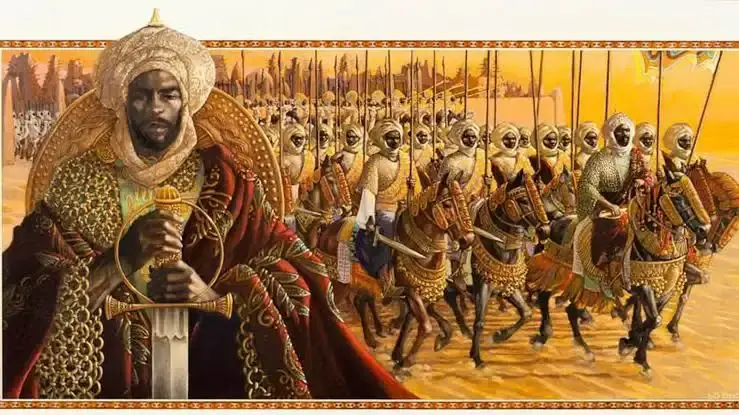
Few rulers in medieval history became as closely associated with wealth as Mansa Musa, the 14th-century ruler of the Mali Empire. His name has survived for centuries through stories of gold, enormous caravans, lavish generosity and a pilgrimage that reportedly affected the gold market in Cairo.
But one question continues to bring readers back to his story: What was Mansa Musa’s net worth?
The figure most commonly repeated today is approximately $400 billion in modern-equivalent wealth. Celebrity Net Worth’s Mansa Musa profile currently gives that estimate, while acknowledging the difficulty of calculating the fortune of a ruler who lived nearly 700 years ago.
That distinction is important. Mansa Musa did not leave behind a modern financial statement showing exactly how much he owned. His wealth was closely connected to the Mali Empire, its gold resources, taxation and control of major trans-Saharan trade networks.
So while $400 billion is widely used as an estimate, it should not be presented as a precise historical balance sheet.
Who Was Mansa Musa?
Mansa Musa, also known as Musa I of Mali, ruled the Mali Empire during the first half of the 14th century. The Metropolitan Museum of Art’s historical research on Mansa Musa places his life around 1280 to 1337 and describes him as one of the most celebrated rulers in the history of the Sahel.
His importance came from more than personal wealth.
Mali occupied a strategically important position in West Africa’s gold-producing and trans-Saharan trading world. The Metropolitan Museum of Art’s overview of the trans-Saharan gold trade explains that gold and salt were among the principal commodities moving through the region’s long-distance trade networks.
Mansa Musa ruled at a time when Mali had access to enormous economic resources.
That combination of political authority, natural resources and trade helped turn his reign into one of the most famous periods in medieval West African history.
Mansa Musa Net Worth: Was He Really Worth $400 Billion?
The short answer is that there is no historically verified figure for Mansa Musa’s personal net worth.
The $400 billion figure comes from modern attempts to translate the scale of his wealth and the resources under his control into today’s money. Celebrity Net Worth lists his modern-equivalent net worth at $400 billion and describes him as one of history’s wealthiest figures.
However, the number should be treated as an estimate rather than a documented fact.
The difficulty comes from the nature of medieval wealth. Mansa Musa was not simply a private individual who owned a collection of assets. He was the ruler of an empire whose economic strength came from land, taxation, trade and natural resources.
That makes comparisons with modern billionaires imperfect.
Even Celebrity Net Worth’s later discussion of Mansa Musa’s wealth describes the $400 billion figure as a contemporary estimate rather than an exact historical measurement.
Where Did Mansa Musa’s Wealth Come From?
Understanding the source of Mansa Musa’s wealth is more revealing than simply repeating a dollar figure.
Gold Was Central to Mali’s Wealth
Gold played a major role in the economy of the Mali Empire.
The Metropolitan Museum of Art explains that gold and salt remained principal mediums of long-distance trade in the region during the period associated with Mansa Musa.
Mali’s position gave its rulers significant influence over trade between West Africa and North Africa. Gold moved north across the Sahara, while other commodities moved south and across the wider trading network.
This economic geography was one of the foundations of Mali’s prosperity.
Salt Was Also Extremely Valuable
Gold tends to dominate modern stories about Mansa Musa, but salt was another important commodity in the trans-Saharan economy.
The Metropolitan Museum of Art notes that gold and salt were principal commodities in the long-distance trade of the period.
The Mali Empire’s economic strength therefore cannot be reduced to a single gold mine or a pile of royal treasure. Its power came from participating in and controlling important commercial networks.
The Pilgrimage That Made Mansa Musa Famous
The event that transformed Mansa Musa’s reputation beyond West Africa was his pilgrimage to Mecca.
Around 1324, Mansa Musa set out on the Hajj, traveling through North Africa and reaching Cairo before continuing toward the holy cities.
The Metropolitan Museum of Art’s account of Mansa Musa describes his 1324 pilgrimage through Cairo as a major event that created connections between Mali and the wider Islamic world.
The journey itself became legendary because of the size and wealth of Musa’s entourage.
Modern accounts sometimes repeat enormous figures for the number of people and the amount of gold carried by the caravan. However, the exact size of the procession varies between historical accounts, so those figures should be treated carefully rather than presented as independently verified statistics.
What is less disputed is the broader significance of the journey.
Mansa Musa was a powerful ruler from a wealthy West African empire entering one of the major centers of the medieval Islamic world with a huge entourage and considerable quantities of gold.
Cairo took notice.
What Happened When Mansa Musa Reached Cairo?
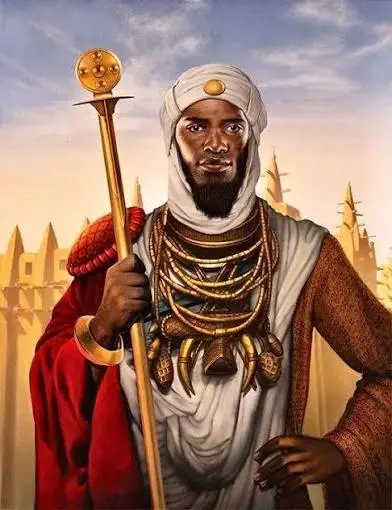
Mansa Musa’s arrival in Cairo became one of the most famous episodes associated with his wealth.
According to historical accounts, Musa distributed and spent large quantities of gold during his stay.
The Metropolitan Museum of Art states that Mansa Musa arrived in Cairo in 1324–25 carrying approximately a ton of gold and that his arrival caused the gold market to crash.
That episode is one of the main reasons his wealth became legendary.
The significance was not simply that Musa possessed gold. It was that he reportedly possessed enough and distributed enough of it to have an effect on the value of the metal in one of the major economic centers of the medieval world.
Did Mansa Musa Really Crash the Gold Market?
Historical evidence supports the claim that Musa’s arrival affected the value of gold in Cairo, although modern descriptions can sometimes make the event sound more precise than the surviving evidence allows.
The Metropolitan Museum of Art’s research directly connects Musa’s arrival with a sharp decline in the value of gold.
This episode also helps explain why Mansa Musa became famous outside Mali.
A ruler who could enter Cairo with such a large quantity of gold was demonstrating the economic strength of the Mali Empire on an international stage.
Mansa Musa Was More Than a Wealthy Ruler
The fascination with Mansa Musa’s net worth can sometimes overshadow another important part of his story: his role in the cultural and religious development of Mali.
His pilgrimage strengthened Mali’s connections with the wider Islamic world.
The Metropolitan Museum of Art notes that Mansa Musa’s pilgrimage forged connections beyond West Africa and that, after returning home, he contributed to the development of Timbuktu as a center of Islamic study.
His wealth therefore became connected to architecture, scholarship and religious institutions.
Mansa Musa and Timbuktu
Timbuktu became one of the most famous intellectual centers of medieval West Africa, and Mansa Musa’s reign played an important role in its development.
The city’s historical importance is recognized by UNESCO’s World Heritage Centre, which identifies Timbuktu’s Djingareyber, Sankore and Sidi Yahia mosques as major monuments.
UNESCO also records that the initial construction of the Djingareyber Mosque dates to Sultan Kankan Moussa following his return from pilgrimage to Mecca.
The buildings associated with his reign therefore provide a physical reminder of how the resources of Mali were used.
Mansa Musa’s wealth was not simply a story of gold being accumulated. Some of that wealth was also directed toward religious and cultural projects.
Mansa Musa Appeared on a Medieval Map
His reputation eventually reached Europe.
One of the most famous representations of Mansa Musa appears on the Catalan Atlas of 1375, where the ruler of Mali is shown holding a gold object.
The Metropolitan Museum of Art explains that Mansa Musa appeared prominently on maps produced by Majorcan cartographers only about 15 years after his pilgrimage to Mecca.
The image became an enduring symbol of Mali’s legendary gold wealth.
It also shows how quickly stories about Musa’s power traveled beyond the African and Islamic worlds.
Mansa Musa Net Worth Today: What Would His Wealth Be Worth Now?
Searches for “Mansa Musa net worth today” require an important clarification.
Mansa Musa died centuries ago, so he does not have a current personal net worth.
What readers usually want to know is what his historical wealth would be equivalent to in modern currency.
The most widely circulated modern estimate is $400 billion. Celebrity Net Worth currently uses that figure.
But there is no single accepted method for converting the economic power of a medieval emperor into a modern net worth.
A modern billionaire’s fortune can be calculated from company shares, property, investments and other identifiable assets.
Mansa Musa’s wealth was fundamentally different.
His economic power was connected to the resources and revenues of an empire.
For that reason, the $400 billion figure is best described as an estimated modern equivalent, not a verified personal fortune.
Was Mansa Musa the Richest Person in History?
Mansa Musa is frequently described as the richest person in history.
Celebrity Net Worth’s historical wealth analysis places his estimated wealth around $400 billion and has historically used that figure in comparisons with other extremely wealthy figures.
But comparisons between medieval rulers and modern billionaires are complicated.
A medieval ruler could control the economic resources of an entire state, whereas modern net worth calculations generally concern individually identifiable assets.
That distinction means claims about who was “the richest person ever” depend heavily on methodology.
What can be said with much greater confidence is that Mansa Musa controlled extraordinary economic resources for his time.
What Happened to Mansa Musa’s Wealth After His Death?
Mansa Musa died around 1337, after ruling Mali for roughly 25 years.
The wealth and influence associated with his reign did not simply disappear overnight. The Mali Empire continued for generations after him.
However, political disputes and challenges gradually weakened Mali’s position.
The empire eventually faced competition from the rising Songhai Empire, which became the dominant regional power.
The Metropolitan Museum of Art’s history of the trans-Saharan gold trade notes that when Mali declined, the rising Songhai Empire relied on many of the same regional resources and trade networks.
This is another reason it is difficult to treat Mansa Musa’s wealth as a conventional personal fortune.
His economic power was deeply connected to the political strength of Mali itself.
Mansa Musa’s Lasting Legacy
Nearly seven centuries after his death, Mansa Musa remains one of the most recognizable rulers in African history.
The number attached to his name—$400 billion—is what often brings modern readers to his story.
But the historical record tells a much larger story.
Mansa Musa ruled an empire positioned at the center of West Africa’s gold and salt trade. His pilgrimage to Mecca brought him to the attention of the wider Islamic world. His spending in Cairo became part of the historical record, while his patronage contributed to the development of Timbuktu as a center of Islamic scholarship.
The Metropolitan Museum of Art describes his pilgrimage as an event that forged connections across regions and contributed to Timbuktu’s development as a center of Islamic study.
The $400 billion estimate may never be possible to prove precisely.
The evidence for Mansa Musa’s extraordinary economic and political influence, however, is much stronger.
His story survives not simply because he was rich, but because his wealth was tied to one of the most powerful empires in medieval West Africa—and because his journey across Africa and the Middle East made that power visible to the wider world