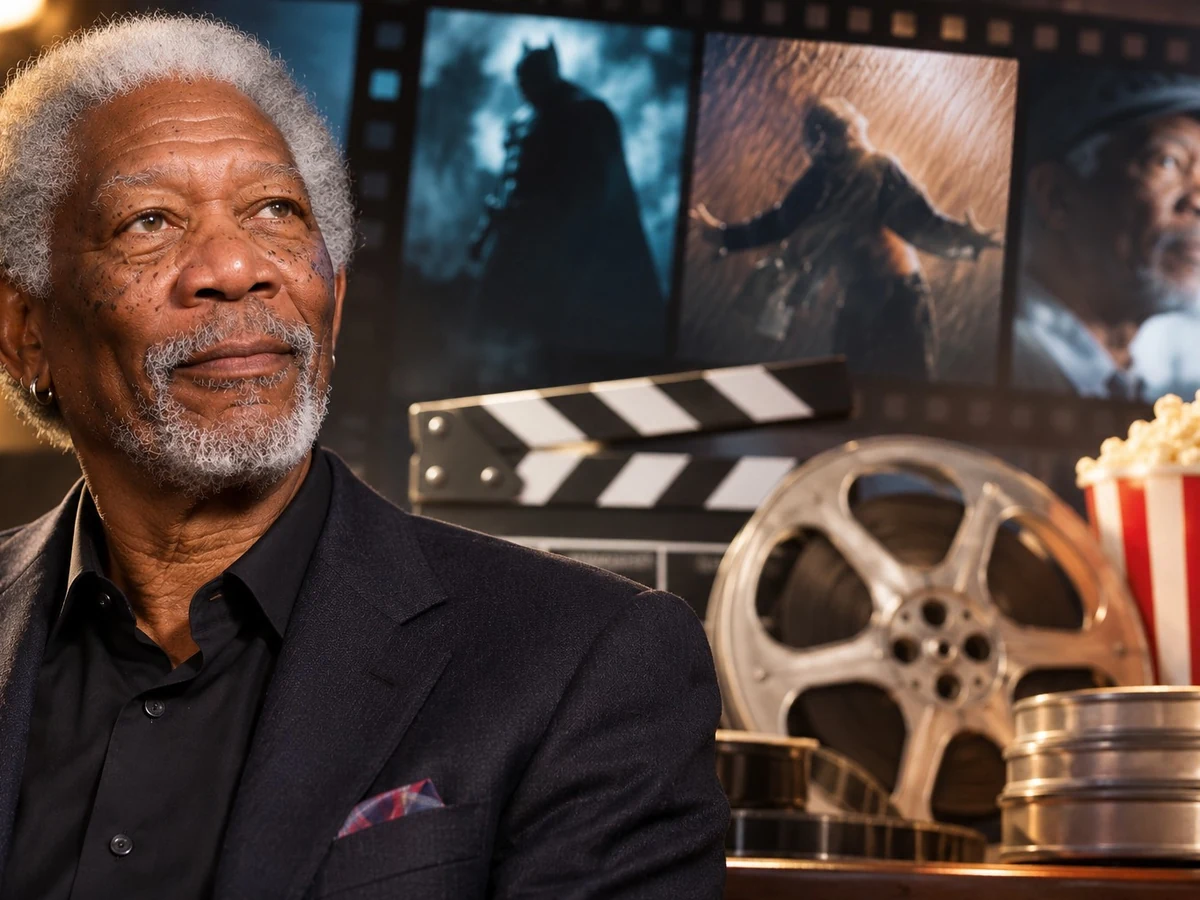
Morgan Freeman did not become one of Hollywood’s wealthiest actors overnight. Before audiences recognized him as Lucius Fox in Christopher Nolan’s Batman trilogy or heard his voice narrating major documentaries, he spent years working in theater, television and smaller film productions.
His breakthrough came relatively late compared with many Hollywood stars. Freeman was already 49 when his performance in Street Smart earned him his first Academy Award nomination in 1987. Rather than fading after that breakthrough, he went on to build a career spanning major film franchises, award-winning dramas, documentary narration and film production.
That long career has also attracted considerable attention to his finances. As of November 2026, Morgan Freeman’s net worth is estimated at $250 million, according to Celebrity Net Worth. The figure was last updated on September 16, 2026. It is an independent estimate, not a financial statement released by Freeman or his representatives.
His fortune reflects several decades of professional work across different areas of entertainment. However, the precise value of his assets, liabilities and individual income streams remains private.
Morgan Freeman Net Worth in 2026
Morgan Freeman has an estimated net worth of $250 million in 2026, according to Celebrity Net Worth. The publication identifies him as an actor, producer, director, narrator and businessman.
A January 2026 report by Parade also cited the same valuation. However, Parade relied on Celebrity Net Worth rather than presenting an independent financial assessment.
The estimate reflects Freeman’s long-running involvement in the entertainment industry, including acting contracts, documentary narration, commercial work and production activities. Neither publication provides an independently verified balance sheet showing his complete financial position.
There is no publicly available audited statement confirming that Freeman personally holds $250 million in net assets. The figure should therefore be understood as a third-party estimate rather than confirmed financial information.
How Acting Built His Hollywood Fortune
Freeman’s financial success developed alongside a career that took decades to reach its full commercial potential.
Born in Memphis, Tennessee, on June 1, 1937, he developed an interest in acting during childhood. After serving in the United States Air Force, he pursued performance opportunities in theater and television.
His early professional years involved stage productions, television appearances and smaller film roles. He also became familiar to American audiences through the children’s television program The Electric Company, which ran from 1971 to 1977.
However, television recognition did not immediately translate into major Hollywood salaries.
Street Smart Changed His Career
Freeman’s performance as Fast Black in the 1987 crime drama Street Smart earned him an Academy Award nomination for Best Supporting Actor.
He followed that achievement with Driving Miss Daisy in 1989, earning another Oscar nomination, this time for Best Actor.
The film won the Academy Award for Best Picture and established Freeman as a leading dramatic performer.
His subsequent appearances in Glory, Unforgiven and The Shawshank Redemption strengthened his position in the industry and helped establish the reputation that would eventually allow him to negotiate larger roles.
The Shawshank Redemption and Its Lasting Success
Freeman’s portrayal of Ellis Boyd Redding in The Shawshank Redemption remains one of the defining performances of his career.
Released in 1994, the film initially struggled to attract a large theatrical audience compared with its eventual cultural reputation. It later developed a substantial following through television broadcasts, home video and repeated audience discovery.
Reports have placed Freeman’s salary for the film at approximately $300,000. However, this amount has not been confirmed through a publicly available contract or a statement from the actor.
The film’s eventual commercial success should not be confused with his original compensation. His reported salary represents an individual payment, while the film’s subsequent revenue belongs to the wider commercial performance of the production.
Batman and Major Studio Productions
Freeman’s financial opportunities expanded further when he joined Christopher Nolan’s Batman franchise as Lucius Fox.
He appeared in:
- Batman Begins (2005)
- The Dark Knight (2008)
- The Dark Knight Rises (2012)
Parade has reported that Freeman received approximately $5 million for each film, suggesting a combined $15 million across the trilogy. These are reported salary figures, not publicly verified contractual disclosures.
His involvement in other commercial productions also expanded his earning opportunities. He appeared in Bruce Almighty, Evan Almighty, Olympus Has Fallen, London Has Fallen and Angel Has Fallen.
His compensation varied between projects, and publicly reported figures do not provide a complete record of his career earnings.
Film Box Office Revenue Is Not Morgan Freeman’s Income
Freeman’s filmography includes productions that generated billions of dollars in cumulative worldwide ticket sales.
A biography published by Yale University’s Chubb Fellowship previously reported that films featuring Freeman had generated more than $3 billion in cumulative ticket sales.
That figure demonstrates the commercial reach of his film career, but it does not establish how much Freeman personally received.
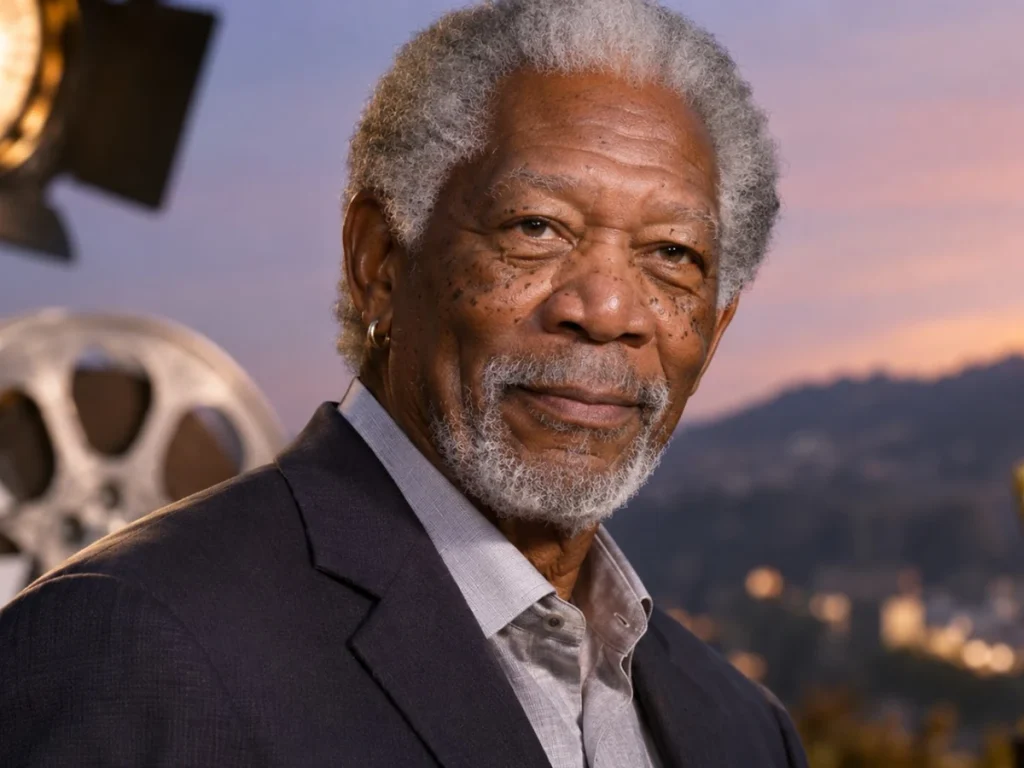
For example, The Dark Knight generated substantial worldwide box office revenue, but ticket sales were not paid directly to its cast.
The financial structure of a major film production involves several separate parties.
| Financial category | What it represents |
| Worldwide box office gross | Ticket revenue collected through theatrical distribution |
| Production budget | Money spent making the film |
| Marketing and distribution | Expenses associated with promoting and distributing the production |
| Actor compensation | Contractual payments made to performers |
| Producer compensation | Fees or other contractual benefits associated with production responsibilities |
| Personal wealth | The individual’s assets minus liabilities |
Production companies, distributors, cinema operators and other commercial partners have financial interests in a film’s performance.
An actor’s compensation depends on the contract negotiated for that particular project. It may include an upfront salary, additional payments or performance-related arrangements, depending on the agreement.
Consequently, box office success demonstrates the commercial reach of Freeman’s filmography, not the amount of money he accumulated personally.
Narration and Commercial Voice Work Added Another Income Stream
Freeman’s voice became a valuable part of his professional identity.
His narration work opened opportunities beyond traditional acting, allowing him to participate in documentaries, television productions and advertising campaigns.
One of his most recognizable narration projects was the 2005 documentary March of the Penguins. The film became an international commercial success and received the Academy Award for Best Documentary Feature.
Parade has reported that Freeman received approximately $1 million for narrating the documentary. However, the figure is not supported by a publicly disclosed contract.
He also narrated projects such as Through the Wormhole, Our Universe and Life on Our Planet.
His commercial voice work includes campaigns for Visa, while his 2022 appearance in a Turkish Airlines Super Bowl advertisement demonstrated the continued commercial appeal of his distinctive delivery.
The precise compensation for these individual projects has not been consistently disclosed. Nevertheless, narration and advertising provided additional earning opportunities without requiring the same filming commitments as major motion pictures.
Revelations Entertainment Expanded His Work Beyond Acting
Freeman did not limit his professional activities to appearing in front of cameras.
In 1996, he co-founded Revelations Entertainment with producer Lori McCreary. The company develops and produces films, television programs and documentaries.
Freeman serves as its president and co-founder, while McCreary serves as its CEO and co-founder, according to the company’s official team page.
Its projects include Invictus, Through the Wormhole with Morgan Freeman and Madam Secretary.
The production company represents another dimension of Freeman’s career because it places him in a position beyond that of an actor hired for individual performances.
Producing can involve compensation, ownership interests and participation in projects, depending on the agreements involved. However, Revelations Entertainment does not publicly disclose a financial breakdown of Freeman’s ownership stake, annual earnings or distributions.
It would therefore be inaccurate to assign a specific dollar amount to his production interests without supporting financial information.
Morgan Freeman’s Divorce and the Reported Settlement
Freeman’s personal finances also attracted attention following the end of his marriage to costume designer Myrna Colley-Lee.
The couple married in 1984 and separated in 2007. Their divorce was finalized in September 2010 after 26 years of marriage.
Reports surrounding the divorce circulated estimates ranging from $100 million to $200 million, with some publications suggesting even higher amounts.
However, the exact financial terms were not publicly confirmed. The proceedings were conducted under seal, and the couple reached a settlement without a public trial establishing the division of their assets.
Celebrity Net Worth has also discussed the speculation but acknowledges that the precise settlement amount remains unknown.
Consequently, claims that Freeman paid a specific $100 million or $200 million divorce settlement should not be presented as established financial facts.
The divorce is relevant when examining his financial history, but insufficient public information exists to calculate its exact effect on his current net worth.
Morgan Freeman’s Business Interests and Personal Assets
Freeman has maintained interests outside the film industry, particularly in Mississippi.
One notable venture is Ground Zero Blues Club in Clarksdale, Mississippi, which he helped establish in 2001 with business partners. The club supports the region’s blues heritage and reflects his longstanding interest in music and local culture.
He has also maintained a large property in Mississippi, where he established honeybee colonies as part of an effort to support declining bee populations.
These activities demonstrate that his professional and personal interests extend beyond acting.
However, the current market value of his property, the value of his business interests and the income generated by these ventures have not been established through a comprehensive public financial disclosure.
Property ownership alone does not reveal personal wealth. Mortgages, operating expenses, taxes, ownership arrangements and other liabilities all affect the final calculation.
For that reason, these ventures should be considered part of his broader financial profile rather than assigned speculative values.
What Is Publicly Known About Morgan Freeman’s Wealth?
The available information provides several useful reference points, but not a complete financial picture.
| Financial detail | Reported information |
| Estimated net worth | $250 million |
| Net worth source | Celebrity Net Worth |
| Last estimate update | September 16, 2026 |
| Films’ cumulative ticket sales | More than $3 billion, according to Yale’s published biography |
| Reported Batman trilogy salary | Approximately $15 million |
| Reported Shawshank Redemption salary | Approximately $300,000 |
| Reported March of the Penguins narration fee | Approximately $1 million |
| Revelations Entertainment | Co-founded in 1996 |
| Divorce settlement | Exact amount undisclosed |
The salary figures are media-reported amounts, not verified contractual records. Similarly, the box office figure represents ticket sales across films, not Freeman’s personal income.
The $250 million valuation remains a third-party estimate. There is no publicly disclosed financial statement confirming his complete assets, investments, liabilities or annual earnings.
Production expenses also cannot be calculated from the available information. In particular, there is no reliable public breakdown of the costs associated with Freeman’s management, representation, production interests or individual film contracts.
These limitations prevent a precise reconstruction of his fortune.
Final Thoughts on Morgan Freeman’s Net Worth
Morgan Freeman’s estimated $250 million fortune reflects a career that developed over more than six decades. His journey from theater and television to award-winning performances, major Hollywood franchises, documentary narration and film production created several avenues for earning income.
His commercial success is evident in the worldwide reach of his films, while his work with Revelations Entertainment demonstrates an interest in the business side of filmmaking. However, neither box office revenue nor reported acting salaries provides a complete measure of his personal wealth.
As of November 2026, the $250 million estimate remains the most widely cited valuation, but Freeman’s exact financial position has not been publicly verified.
For another look at how entertainment careers translate into personal wealth, explore our coverage of Millie Bobby Brown’s Netflix earnings and business interests and Lil Wayne’s music deals, touring revenue and business ventures. Our Rihanna net worth analysis also examines the difference between business valuations, commercial revenue and personal wealth.